

| Number of standard finish levels | 5 (flat, eggshell, satin, semi-gloss, high-gloss) |
| Best finish for ceilings | Flat or matte |
| Best finish for bathrooms and kitchens | Satin to semi-gloss |
| Most durable finish for trim and doors | Semi-gloss |
| Finish most forgiving of wall imperfections | Flat/matte |
| Finish requiring smoothest surface prep | High-gloss |
Why Paint Finish Matters as Much as Color
Most homeowners spend considerable time selecting a paint color, then choose a finish almost as an afterthought. In practice, the sheen level affects how a surface looks in different lighting, how well it resists stains and moisture, and how forgiving it is when walls aren't perfectly smooth. Picking the wrong finish can mean a beautiful color still looks flat in a bright kitchen or shows every imperfection in a hallway.
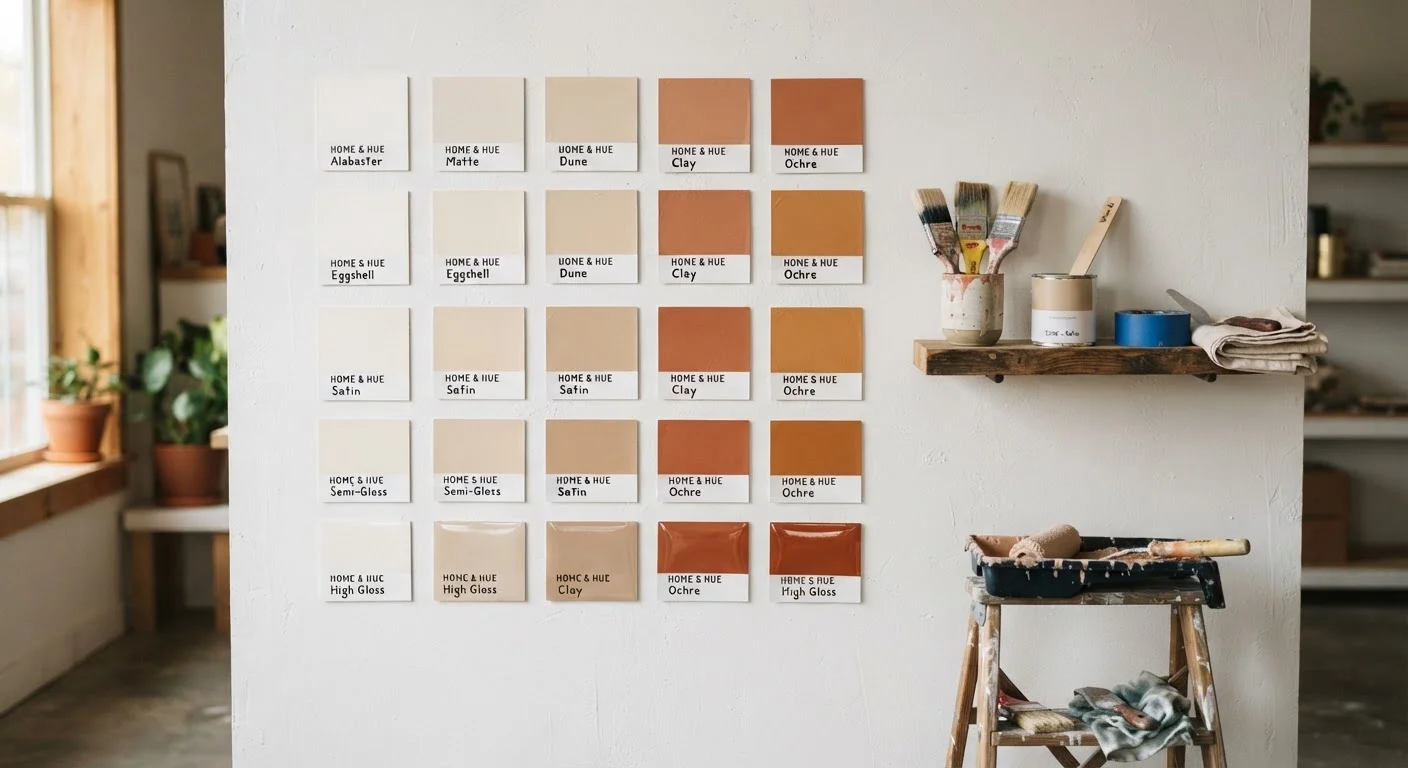
Paint finishes are defined by their sheen level - the amount of light they reflect. From lowest to highest reflectivity, the standard options are: flat/matte, eggshell, satin, semi-gloss, and high-gloss. Each sits in a practical sweet spot for certain surfaces and conditions.
| Number of standard finish levels | 5 (flat, eggshell, satin, semi-gloss, high-gloss) |
| Best finish for ceilings | Flat or matte |
| Best finish for bathrooms and kitchens | Satin to semi-gloss |
| Most durable finish for trim and doors | Semi-gloss |
| Finish most forgiving of wall imperfections | Flat/matte |
| Finish requiring smoothest surface prep | High-gloss |
The Five Main Finishes Explained
Sheen
The degree to which a dried paint surface reflects light. Higher sheen means more light reflection and generally greater durability and washability.
Flat/Matte Finish
A paint finish with very low light reflectivity. It hides surface imperfections well but is less resistant to staining and scrubbing than higher-sheen options.
Eggshell Finish
A paint finish with a slight, soft sheen similar to the surface of an eggshell. It offers a balance between the hide of matte and the cleanability of satin.
Satin Finish
A mid-range sheen finish with a silky appearance. It resists moisture and can be wiped clean, making it suitable for kitchens, bathrooms, and active living spaces.
Semi-Gloss Finish
A noticeably shiny finish that repels moisture and withstands cleaning. Commonly used on trim, doors, and cabinetry where durability is a priority.
High-Gloss Finish
The most reflective paint finish, offering maximum durability and moisture resistance. Best suited for cabinets, furniture, and detailed millwork rather than large wall surfaces.
Skim Coat
A thin layer of joint compound or plaster applied over a wall surface to create a smooth base before painting. Often used to prepare imperfect walls for higher-sheen finishes.
Flat and Matte
These finishes reflect very little light, which helps disguise surface imperfections like nail pops, uneven texture, or old repairs. That makes them a practical choice for adult bedrooms, formal dining rooms, and ceilings - spaces where walls are rarely touched and moisture isn't a concern. The trade-off is durability: flat paint scuffs and stains more easily, and aggressive scrubbing can leave shiny spots.
Eggshell
Named for the subtle sheen of an eggshell, this finish reflects slightly more light and holds up to light cleaning. It's a versatile option used widely in living rooms, dining rooms, and hallways - areas with moderate traffic. It still provides a soft look while being easier to wipe down than flat paint.
Satin
Satin has a silky, pearl-like appearance and is notably more durable than eggshell. It handles moisture and repeated cleaning better, making it the go-to for kitchens, bathrooms, laundry rooms, and children's bedrooms. It does highlight surface imperfections more than matte finishes, so proper wall prep matters.
Semi-Gloss
With a noticeably shiny surface, semi-gloss repels moisture and cleans up easily - making it the standard choice for trim, baseboards, window casings, and door frames. Many painters also use it in high-humidity areas like bathrooms. Its reflectivity makes dings and surface flaws visible, so it works best on smooth, well-prepped surfaces.
High-Gloss
The most reflective option, high-gloss is extremely durable and moisture-resistant. It's typically reserved for cabinetry, furniture, and accent millwork where a hard, wipeable surface is needed. Applying it to large wall areas is unusual because it amplifies every imperfection.
Surface-by-Surface Recommendations
Matching finish to surface is a practical exercise more than a design rule. Consider traffic, moisture exposure, and how often the surface will be cleaned.
Higher Sheen Means More Surface Prep
As sheen level increases, so does the visibility of surface flaws. Dents, patches, and texture variations that disappear under flat paint can become obvious under satin or semi-gloss. If your walls have had repairs or are older, invest time in thorough sanding and priming before applying a higher-sheen finish. The extra prep pays off in a smoother, more professional-looking result.
- Ceilings: Flat or matte - low traffic and no cleaning needed; hides texture inconsistencies.
- Living rooms and bedrooms: Flat to eggshell - comfortable, soft appearance with minimal abrasion.
- Hallways and entryways: Eggshell to satin - higher foot traffic demands light cleanability.
- Kitchens: Satin - resists grease splatter and tolerates wiping.
- Bathrooms: Satin to semi-gloss - moisture resistance is the priority.
- Trim, doors, and baseboards: Semi-gloss - durable enough for repeated contact and cleaning.
- Cabinets and furniture: High-gloss - hardest finish, easiest to clean.
For exterior surfaces facing heat, UV exposure, and seasonal moisture swings, finish selection also plays a role in paint longevity. See our guide to preparing your home's exterior for summer for context on how surface conditions affect exterior paint performance.
Practical Tips Before You Buy
A few considerations can save you from a costly repaint:
- Test in natural and artificial light. Higher-sheen finishes look different under incandescent, LED, and daylight. Apply a sample patch and observe it at different times of day.
- Account for surface condition. Bumpier or older walls benefit from lower sheen. If you're committed to satin on an imperfect wall, thorough prep work - skim coating or sanding - is essential.
- Consider the occupants. Homes with young children or pets generally benefit from satin or higher in heavily used rooms, because the walls need cleaning more frequently.
- Don't ignore the primer. The right primer improves adhesion and helps the chosen finish perform as intended. Some primers are formulated to pair with specific sheen levels.
When in doubt, consult with a professional painter before committing to a finish for large or complex surfaces. A knowledgeable painter can assess your walls' condition and recommend the right combination of prep and finish for lasting results.