

Key Takeaways
- A high-pitched squeal is usually your brake pad's built-in wear indicator doing exactly what it was designed to do.
- Grinding sounds indicate metal-on-metal contact - a more urgent condition requiring prompt professional inspection.
- A pulsing or vibrating brake pedal often points to warped rotors rather than pad wear alone.
- Most brake pads have a usable life between 25,000 and 65,000 miles, depending on driving style and conditions.
- Delaying brake service after warning signs appear can turn a straightforward pad replacement into a costlier rotor repair.
Brake Pad Wear Indicator
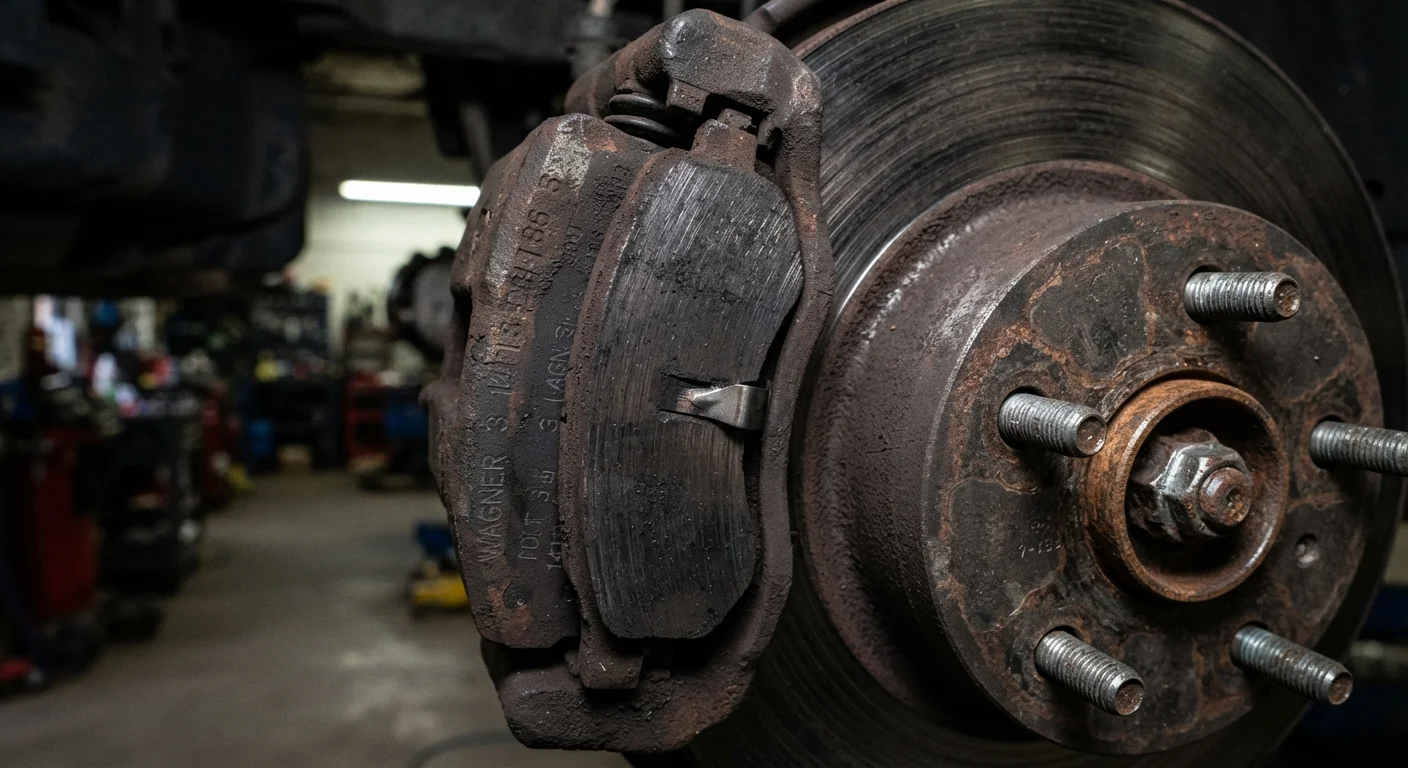
A brake pad wear indicator is a built-in feature - usually a small metal tab - that signals when your brake pads have thinned to a point where replacement is needed. Most pads start at around 10-12 mm of friction material and should be inspected seriously below 4 mm. The indicator produces an audible squeal or, in some vehicles, triggers a dashboard warning when the pad reaches its service limit.
Some modern vehicles use electronic wear sensors - a wire embedded in the pad that completes a circuit when friction material erodes to the threshold, illuminating a dedicated brake warning light on the instrument cluster.
How Brake Pads Work - and Why They Wear
Every time you press the brake pedal, hydraulic pressure forces two brake pads to clamp against a spinning metal disc called a rotor. The friction that slows your vehicle gradually erodes the pads' friction material - a composite of organic, semi-metallic, or ceramic compounds bonded to a steel backing plate. This wear is entirely normal and expected. What matters is recognizing when that wear has progressed far enough to compromise safety or cause secondary damage to other components.
Pad longevity varies widely. Driving in stop-and-go city traffic, towing loads, or frequently descending steep grades accelerates wear considerably compared with steady highway driving. As a general range, brake pads commonly last between 25,000 and 65,000 miles, but your actual driving pattern is the dominant variable - not mileage alone.
Decoding the Sounds Your Brakes Make
Not every brake noise carries the same message. Understanding the distinction can help you gauge urgency before speaking with a mechanic.
25,000-65,000 mi
Typical brake pad lifespan range
Actual mileage varies significantly based on driving style, vehicle weight, and braking frequency - city driving accelerates wear considerably versus highway use.
~3-4 mm
Friction material thickness triggering inspection
Most manufacturers and automotive technicians recommend professional evaluation when pad thickness reaches this range; minimum safe thickness is generally cited at 2 mm.
2 types
Brake wear indicator designs in common use
Mechanical squealer tabs and electronic sensor wires are the two standard systems found across modern passenger vehicles sold in the US market.
High-Pitched Squeal
This is the most common - and often the most reassuring - brake sound, because it's intentional. Manufacturers attach a small hardened-steel tab to the pad. When the friction material wears to roughly 2-3 mm, this tab contacts the rotor and vibrates, producing a persistent squeal. Think of it as your car's built-in reminder. The brakes still function, but the clock is ticking on scheduling service.
Grinding or Growling
A harsh grinding noise, especially felt through the pedal or steering wheel, means the friction material has likely worn through entirely. The steel backing plate is now contacting the rotor directly - metal grinding on metal. This is a more urgent situation. Stopping distances can increase, and continued driving risks scoring or cracking the rotor, which transforms a pad replacement into a significantly more involved repair.
Squealing Only When Cold or Wet
A brief squeal during the first few stops in wet or cold weather is typically surface rust being cleared from the rotor - a normal phenomenon. The noise should stop after a handful of brake applications. If it persists into normal driving conditions, treat it like a standard wear indicator signal and investigate further.
Pedal Pulsation
A vibrating or pulsing pedal under braking usually points to rotor thickness variation - rotors that have developed uneven surfaces over time. This can result from prolonged aggressive braking, sudden stops from high speed that overheat the rotor, or simply age. Warped rotors often accompany worn pads but are a distinct finding that a mechanic will evaluate separately. You can learn more about recognizing other warning signals in our guide to reading your dashboard warning lights.
What Wear Indicators Actually Look Like
Most passenger vehicles use one of two indicator types. The mechanical type - the steel squealer tab described above - requires no electronics and costs nothing extra to maintain. The electronic type embeds a small wire sensor in the pad material itself. When the friction wears to the threshold, the sensor circuit breaks and illuminates a dedicated brake warning light on the instrument cluster. If your vehicle has this system, that light is not the same as the red brake warning for low fluid or an engaged parking brake - consult your owner's manual to distinguish them. Our article on understanding warning light systems offers useful context on how sensor-based alerts work across your vehicle.
Check Pads at Every Tyre Rotation
Scheduling a brake pad visual check at every tyre rotation - typically every 5,000 to 7,500 miles - gives a technician a regular opportunity to measure remaining friction material before wear indicators engage. Catching pads at 4 mm rather than 2 mm often means avoiding rotor damage entirely, which keeps service costs lower and predictable.
Many vehicles also allow a rough visual inspection through the wheel spokes. The pad's friction material should be visibly present against the rotor face. A thickness that looks thinner than a standard pencil eraser - roughly 3-4 mm - warrants a professional measurement and assessment.
When to Seek a Professional Inspection
A consistent squeal that persists beyond the first few stops of the day is the clear signal to schedule service - not panic, but act. Grinding or growling sounds, vibration through the pedal or steering wheel, the vehicle pulling to one side under braking, or a longer stopping distance than you're used to are each individually good reasons to have a qualified technician inspect the brake system promptly.
Brake work - beyond a straightforward visual check through the wheel - involves hydraulic lines, caliper pistons, and torque specifications that directly affect stopping capability. Tasks involving brake system components should be performed by a qualified mechanic, particularly if you are unfamiliar with the system. Maintaining a consistent inspection schedule (often every 12,000 miles or at each tire rotation) is one of the simplest ways to stay ahead of wear before sounds ever appear. Routine vehicle upkeep like tyre pressure checks goes hand in hand with brake awareness - see our guide to checking your tyre pressure the right way for a complementary maintenance habit.