

Key Takeaways
- Incremental plate changes are more sustainable than complete dietary overhauls.
- Adding nutrient-dense foods often crowds out less nutritious ones naturally.
- Protein, fiber, and healthy fats at each meal support steadier energy and satiety.
- Reading nutrition labels helps you make more informed everyday food choices.
- Pairing better eating habits with regular movement amplifies overall health benefits.
What you will need
Why Small Changes Stick Better Than Complete Overhauls
Most people who successfully improve their long-term diet don't do it through strict elimination or dramatic overnight transformation. Behavioral research on habit formation consistently points to the same pattern: modest, specific changes layered gradually over time are far more likely to become permanent than sweeping dietary rules that conflict with real-life schedules, preferences, and budgets.
The goal of building a healthier plate isn't to achieve a perfect diet - it's to shift the overall pattern of what you eat in a direction that supports your health over the long term. Individual meals matter much less than cumulative habits across weeks and months. This framing reduces the psychological burden that causes many well-intentioned nutrition changes to stall after a few weeks.
It's also worth noting that healthier eating doesn't have to be expensive or time-intensive. Many of the most nutritionally valuable foods - beans, lentils, frozen vegetables, eggs, oats, and canned fish - are among the most affordable and convenient options available. A working knowledge of nutrition labels can help you compare options more confidently without relying on marketing claims.
Understand What's Actually in Your Food
Learning to read a nutrition label is one of the most practical skills for improving your diet without guesswork. Our guide to reading nutrition labels breaks down each section so you know which numbers actually matter at the store.
What to Expect as You Make Gradual Changes
As you work through the steps below, expect some weeks to feel easier than others. Disruptions to routine - travel, stress, busy schedules - are normal and don't erase progress. Returning to your adjusted habits after a difficult stretch is itself the skill being built.
Avoid All-or-Nothing Thinking
Framing food choices as entirely 'good' or 'bad' can create an unhealthy relationship with eating. Research consistently links rigid dietary rules with poorer long-term adherence and, in some cases, disordered eating patterns. Aim for gradual, sustainable improvement rather than perfection.
Many people find that improvements in how they eat begin to influence other health habits. Better energy levels and more stable moods are commonly reported by people who increase vegetable, protein, and whole grain intake - though individual responses vary and should not be treated as guaranteed outcomes. If you're interested in how nutrition intersects with mood and emotional wellbeing, building a daily mental wellness routine is a complementary area worth exploring.
What you will need
The steps that follow are designed to be applied one at a time, not simultaneously. Work through them at a pace that feels manageable rather than attempting all changes at once.
Audit one meal you eat most consistently
Pick the one meal you eat most reliably - breakfast, lunch, or dinner - and look at what's currently on the plate. Note roughly how much space vegetables, protein, whole grains, and other components occupy. You're not tracking calories; you're building awareness of your starting point.
Add before you subtract
Rather than immediately removing foods you enjoy, focus first on adding something more nutrient-dense. A handful of leafy greens alongside a regular lunch, or a serving of legumes added to a familiar dinner, often naturally shifts the meal's overall nutritional profile without creating a sense of deprivation.
Apply the rough half-plate principle
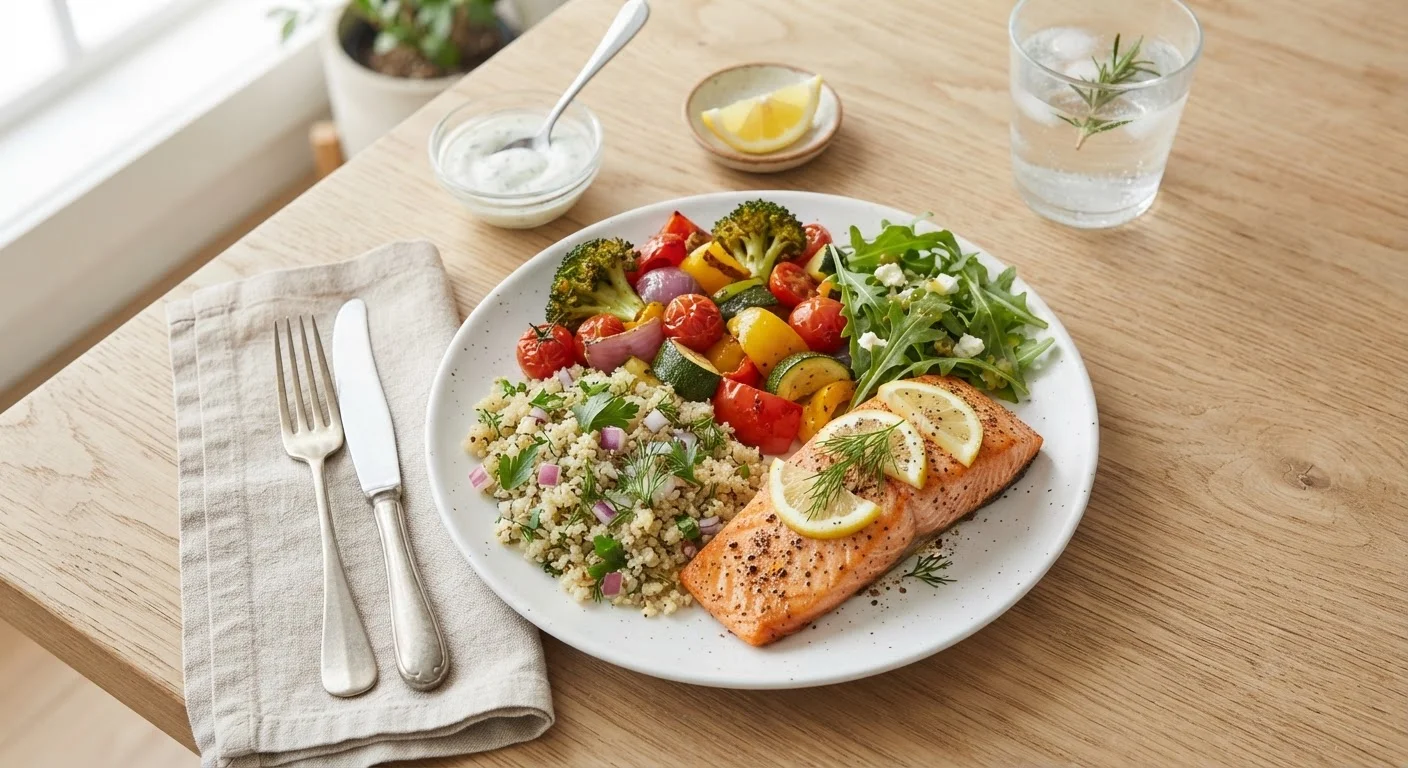
A widely referenced guideline from nutrition researchers and public health bodies suggests aiming for roughly half your plate to be non-starchy vegetables or fruits, one quarter lean or plant-based protein, and one quarter whole grains or starchy vegetables. This is a useful visual framework - not a rigid prescription - that can guide meal assembly without counting anything.
Anchor meals with protein and fiber
Protein and dietary fiber are two of the most consistently supported nutrients for promoting satiety and maintaining steadier blood sugar levels after meals. Practical sources include eggs, fish, poultry, tofu, legumes, and dairy for protein; and vegetables, whole grains, beans, and fruit for fiber. Aiming to include a source of each at most meals is a practical, achievable target for most people.
For a deeper look at how these principles connect to day-to-day energy, see nutrition habits linked to sustained energy.
Swap refined grains for whole grains one meal at a time
Whole grains - such as oats, brown rice, whole wheat bread, quinoa, and barley - retain more fiber, B vitamins, and minerals than their refined counterparts. Substituting one refined grain serving per day with a whole grain equivalent is a low-effort change that compounds over time. Many people find the flavor and texture difference minimal or even preferable once the habit is established.
Rethink beverages alongside your plate
Liquid calories from sugar-sweetened beverages can significantly affect overall diet quality without providing meaningful satiety or nutrients. Gradually reducing sugary drinks - and increasing water, plain sparkling water, or unsweetened tea - is one of the higher-leverage shifts available without changing solid food at all. If you drink alcohol regularly, general public health guidance notes that reducing intake supports overall health, though specifics are best discussed with your doctor.
Pair dietary changes with consistent movement
Nutrition and physical activity work together rather than independently. Consistent, moderate movement supports metabolic health, appetite regulation, and overall wellbeing in ways that diet alone cannot fully replicate. Even brief activity spread throughout the day has measurable value - our overview of movement snacks explains how short bursts of activity can fit into a busy schedule. Exploring the Fitness & Movement hub is a useful next step once your eating habits feel more settled.
This article is for general informational and educational purposes only and is not a substitute for personalized medical or dietary advice. Consult a qualified healthcare provider or registered dietitian before making significant changes to your diet.