
Fixed vs. Variable Expenses: What the Distinction Actually Means for Your Budget

Key Takeaways
- Fixed expenses are predictable; they don't change based on your behavior in a given month.
- Variable expenses fluctuate and are often where you have the most control over spending.
- Separating the two categories makes it easier to identify where budget cuts are realistic.
- Semi-variable expenses - like utility bills - blend fixed and usage-based components.
- Budgeting for irregular expenses requires a third category beyond fixed and variable.
Fixed vs. Variable Expenses
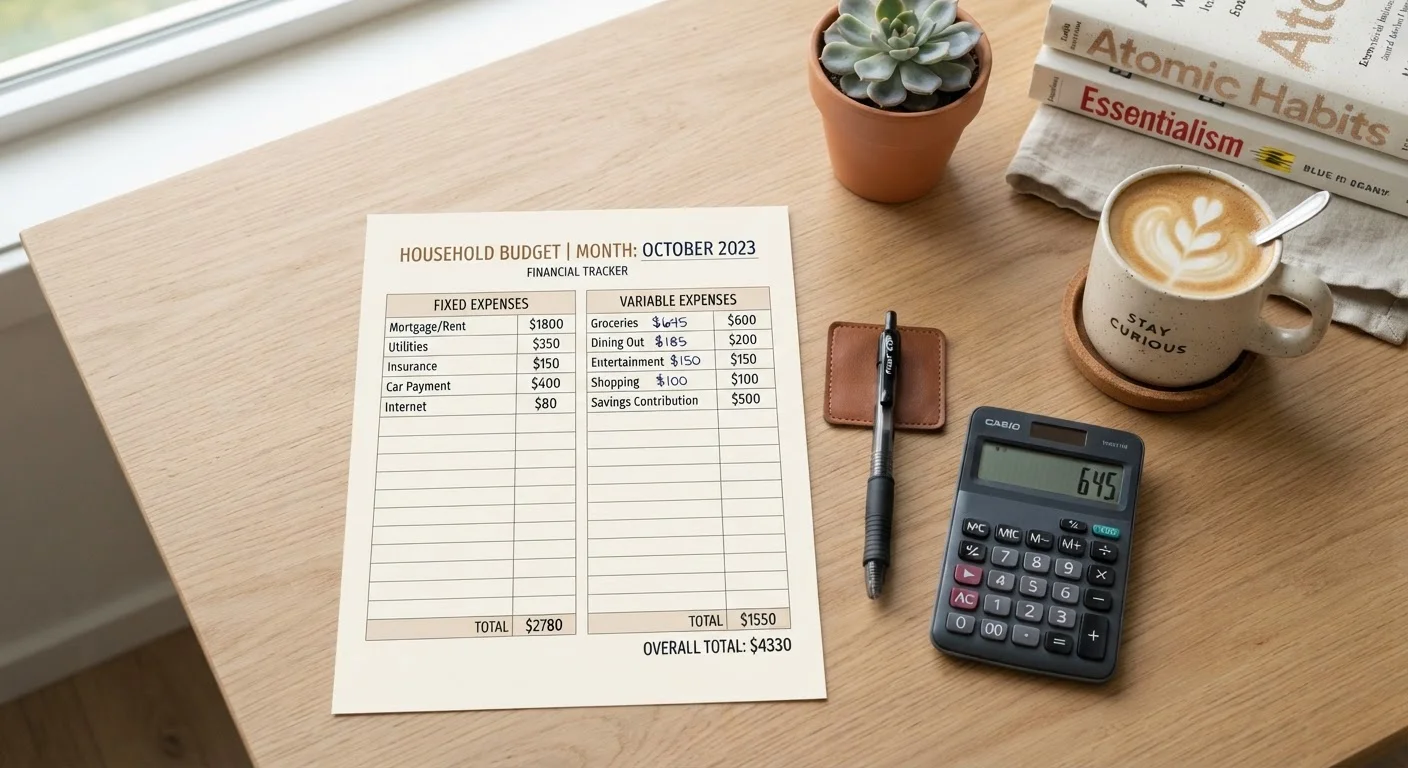
Fixed expenses are costs that stay the same amount every billing cycle - like rent or a car payment. Variable expenses are costs that fluctuate from month to month based on usage, choices, or circumstance - like groceries, utilities, or entertainment. Understanding which category each cost falls into helps you predict your spending more accurately and find the right places to cut back when needed.
Some expenses are described as 'semi-variable' or 'mixed' - they have a fixed base component plus a variable usage charge, such as a cell phone plan with a flat monthly fee and variable data overage charges.
Why This Distinction Matters More Than It Might Seem
Most budgeting advice starts with tracking your spending, but tracking alone doesn't tell you which costs you can realistically change and which ones you can't - at least not quickly. That's where the fixed vs. variable framework becomes genuinely useful. It's not just a labeling exercise; it fundamentally changes how you approach shortfalls, savings goals, and financial trade-offs.
When income drops or an unexpected bill arrives, people often panic-cut without a clear sense of what's actually flexible. Understanding your expense structure prevents that. It helps you respond strategically rather than reactively. For a fuller picture of how this framework fits into the overall budgeting process, see the complete personal budgeting resource.
~33%
Americans living paycheck to paycheck
Federal Reserve survey data has consistently found that a significant share of U.S. adults would struggle to cover an unexpected $400 expense without borrowing - underscoring the importance of understanding and controlling recurring costs.
$1,050+
Average monthly fixed housing cost for US renters
According to U.S. Census Bureau data, median gross rent has surpassed $1,000 nationally, making housing the single largest fixed expense for most renter households.
15-20%
Typical share of budget going to food
The U.S. Bureau of Labor Statistics Consumer Expenditure Survey finds that American households typically allocate between 12 and 20 percent of after-tax income to food, making it one of the most significant variable expenses to track.
Fixed Expenses: Predictable but Not Unchangeable
A fixed expense is any recurring cost with a consistent amount each billing period. Common examples include:
- Rent or mortgage payments
- Auto loan payments
- Health, auto, or renters insurance premiums
- Minimum debt payments (credit card minimums, student loans)
- Monthly subscription services billed at a flat rate
Fixed expenses are predictable, which makes them easier to plan around. You know exactly what's coming out of your account and when. The downside is that they're harder to reduce quickly - lowering a fixed expense usually requires a contract change, refinancing, moving, or canceling a service entirely.
That said, fixed doesn't mean permanent. Reviewing your fixed costs once or twice a year can reveal opportunities to negotiate, bundle, or eliminate costs that no longer serve you.
Review Fixed Costs at Least Once a Year
Even though fixed expenses feel locked in, many can be renegotiated or reduced over time. Insurance premiums, internet service, and subscription bundles are worth comparing against alternatives annually. A single successful renegotiation can free up meaningful room in your monthly budget without changing your lifestyle at all.
Variable Expenses: Where Your Spending Flexibility Lives
Variable expenses shift each month based on your choices, habits, or circumstances. Examples include:
- Groceries and dining out
- Gas and rideshare costs
- Utility bills (electricity, water, gas)
- Personal care and clothing
- Entertainment, hobbies, and travel
Because these costs respond to your behavior, they're where most people find room to trim when money is tight. Reducing dining out by two meals a week, for instance, can meaningfully lower monthly spending without restructuring your life.
Variable expenses also require more active monitoring. Unlike fixed costs, they can quietly creep upward over time - especially in categories like food delivery or retail shopping - without feeling like a deliberate choice. Reviewing these line items monthly helps keep them aligned with your actual priorities.
It's also worth noting that some expenses commonly thought of as variable - such as utilities - actually include a fixed base charge from your provider. These semi-variable costs straddle both categories and deserve their own line in a detailed budget.
A Third Category Worth Knowing: Irregular Expenses
Fixed and variable cover most monthly spending, but there's a third category that trips up many budgeters: irregular expenses. These are costs that don't appear every month but are entirely predictable if you plan ahead - annual insurance premiums, car registration fees, holiday gifts, and periodic home maintenance are common examples.
The mistake most people make is treating irregular expenses as surprises when they arrive. A better approach is to divide the annual cost by 12 and set that amount aside each month into a separate savings buffer. That way, when the bill lands, the money is already there.
For a detailed look at how to manage these costs without derailing your budget, see budgeting for irregular expenses. You may also want to review commonly overlooked spending categories - many of them fall into this irregular bucket.
Putting It All Together in Your Budget
When building or refining your budget, start by listing every recurring expense and labeling it as fixed, variable, or irregular. For each fixed cost, note the exact amount and due date. For variable costs, look at three to six months of past spending to calculate a realistic average. For irregular costs, calculate a monthly savings target.
This structure immediately tells you two things: your minimum monthly financial commitment (fixed costs), and your range of flexibility (variable costs). The gap between your income and your fixed costs is your working budget - the money available for variable spending, saving, and discretionary choices.
From there, you can apply any budgeting method you prefer - percentage-based frameworks, zero-based budgeting, or envelope-style allocation - with much greater precision than if you were treating all expenses as a single undifferentiated pile.
This article is for general informational and educational purposes only and does not constitute personalized financial advice. For guidance specific to your financial situation, consider consulting a qualified financial professional.