

Key Takeaways
- Secured credit requires collateral; the lender can seize that asset if you default.
- Unsecured credit relies on your creditworthiness alone, typically resulting in higher interest rates.
- Secured loans often allow larger borrowing amounts and longer repayment terms.
- Missing payments on either type damages your credit score and financial standing.
- Your credit profile and risk tolerance should drive which type you pursue.
Option A
Secured Credit
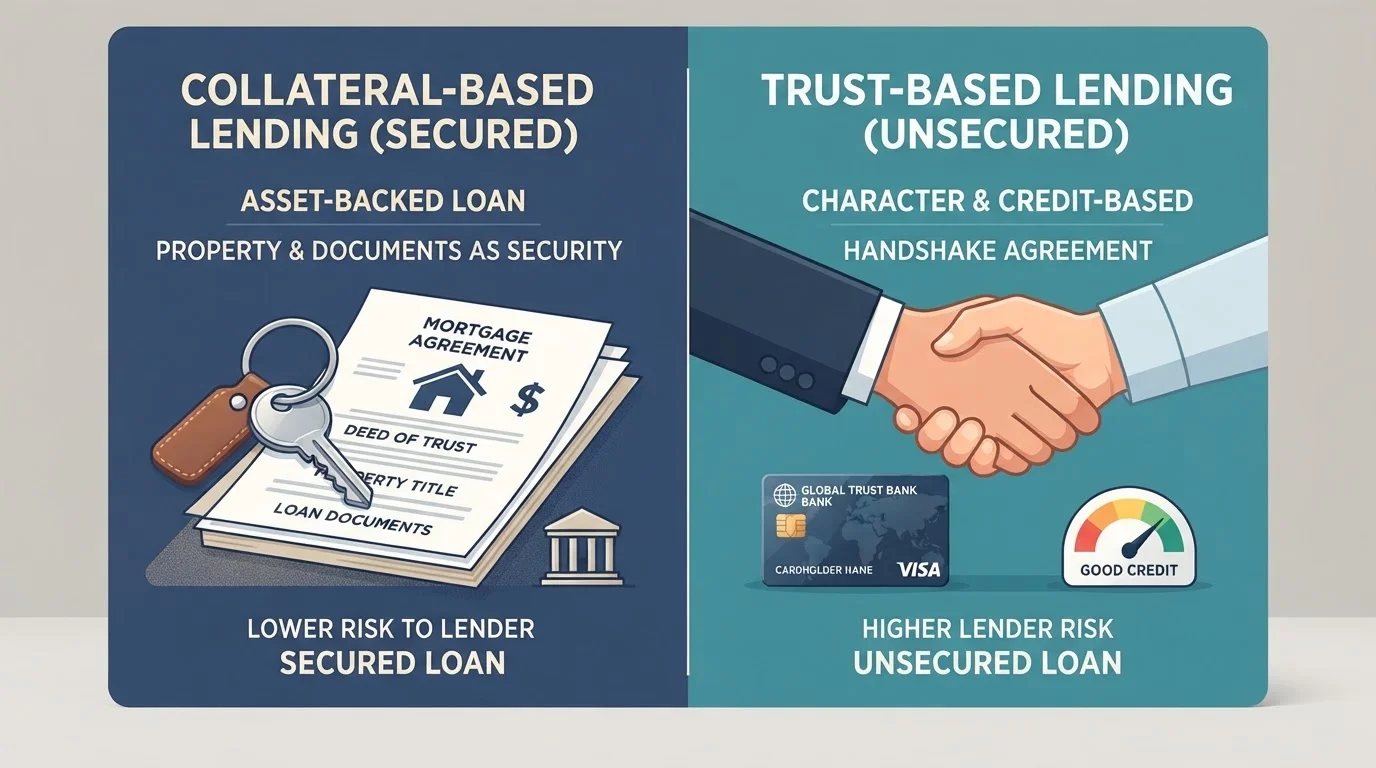
Collateral-backed borrowing with lower risk for lenders.
Best for: Borrowers willing to pledge an asset - like a home or car - to access lower interest rates or higher loan amounts.
Option B
Unsecured Credit
Trust-based borrowing with no asset on the line.
Best for: Borrowers with strong credit histories who want flexibility without risking specific personal property.
If you need a large loan and have an asset to pledge
Secured Credit
Pledging collateral reduces lender risk, which typically translates to lower rates and higher borrowing limits - important when financing major purchases like a home or vehicle.
If you have strong credit and don't want to risk an asset
Unsecured Credit
A solid credit history gives lenders enough confidence to extend funds without collateral, making unsecured options practical for qualified borrowers needing flexibility.
If you're rebuilding credit with limited options
Secured Credit
Secured credit cards and credit-builder loans use deposits or assets to reduce lender risk, making approval more accessible during credit recovery.
If you need short-term funds for everyday expenses
Unsecured Credit
Personal loans and credit cards don't require collateral, making them practical for day-to-day borrowing needs - though interest rates will reflect the added lender risk.
The Core Difference: What Backs the Loan
When a lender evaluates your application, one of the first structural questions is whether the loan will be secured or unsecured. This single distinction shapes your interest rate, borrowing limit, approval odds, and what happens if you can't repay.
Secured credit means the loan is tied to a specific asset - called collateral - that the lender has a legal right to claim if you default. Common examples include mortgages (backed by your home), auto loans (backed by your vehicle), and secured credit cards (backed by a cash deposit). The collateral reduces the lender's financial exposure, which is why secured products often carry lower interest rates.
Unsecured credit carries no such asset attachment. The lender extends funds based on your creditworthiness - your credit score, income, debt load, and repayment history. Personal loans, most credit cards, and student loans are typically unsecured. Because the lender has no asset to recover if things go wrong, the risk is higher - and borrowers generally pay for that in the form of elevated interest rates.
For a broader introduction to the vocabulary surrounding borrowing, see our plain-language glossary of credit and debt terms.
| Criterion | Secured Credit | Unsecured Credit |
|---|---|---|
| Collateral required | Yes - asset pledged | No - creditworthiness only |
| Typical interest rates | Generally lower | Generally higher |
| Borrowing limits | Often higher | Typically lower |
| Approval with imperfect credit | More accessible | Harder to obtain |
| Risk of asset loss | Yes - lender can claim collateral | No specific asset at risk |
| Common examples | Mortgage, auto loan, secured card | Personal loan, credit card, student loan |
How Each Type Affects Your Borrowing Experience
The secured versus unsecured distinction isn't just theoretical - it has real, practical consequences at every stage of borrowing.
Interest Rates and Cost of Borrowing
Because secured loans carry less risk for the lender, they typically come with lower APRs. Unsecured loans carry higher rates to compensate for the absence of collateral. Even a modest difference in APR compounds meaningfully over a multi-year repayment term.
Loan Amounts and Terms
Secured loans generally allow larger amounts and longer repayment periods, precisely because the lender has an asset backstop. Unsecured loans tend to be capped at lower limits - and shorter terms - since repayment depends entirely on the borrower's financial behavior.
Approval Requirements
Secured credit can be accessible even with imperfect credit, since the collateral offsets some lender risk. Unsecured credit typically requires a stronger credit profile. That said, approval criteria vary by lender and product type.
What Happens When You Miss Payments
With secured debt, default can trigger repossession or foreclosure - the lender exercises its right to the collateral. With unsecured debt, the lender can't seize a specific asset, but they can pursue collection actions, sue for repayment, or sell the debt to a collections agency. In either case, late or missed payments damage your credit score. See our loan readiness checklist to evaluate your profile before applying.
~6%
Avg. rate gap: secured vs. unsecured personal loans
Federal Reserve consumer credit data has consistently shown a meaningful spread between secured installment loan rates and unsecured personal loan rates, often several percentage points.
1 in 5
Americans have a credit score below 600
According to FICO data, roughly 20% of U.S. consumers fall in the subprime credit range, making secured credit options a more realistic path for a significant share of borrowers.
Matching the Right Credit Type to Your Situation
Neither secured nor unsecured credit is universally superior - context determines which fits your needs.
If you're financing a vehicle, the loan structure itself is typically secured by the car. Understanding terms like APR and loan length within that structure matters just as much as the secured/unsecured distinction - our guide to auto loan terminology explains those mechanics in plain language.
If you carry revolving credit card balances, knowing how much of your available credit you're using - your credit utilization ratio - affects your score directly. This matters whether the card is secured or unsecured. Our credit utilization explainer walks through how to manage it effectively.
As a general principle: use secured credit when you need better terms and are comfortable pledging collateral you're not at risk of losing. Use unsecured credit when you have the credit profile to qualify and want flexibility without putting a specific asset at stake. In both cases, borrow only what you can realistically repay - and consult a licensed financial advisor if your situation involves significant debt decisions.
This article is for general informational and educational purposes only. It does not constitute personalized financial, legal, or investment advice. For decisions specific to your financial circumstances, consult a qualified financial professional.
Secured Credit Cards: A Special Case
Secured credit cards work differently from secured installment loans. Instead of pledging a physical asset, you deposit cash - typically equal to your credit limit - as collateral. This makes them a common tool for building or rebuilding credit. Used responsibly, they report payment activity to the major credit bureaus just like standard cards, helping establish a positive payment history over time. The deposit is generally returned if you close the account in good standing or transition to an unsecured card.