

Key Takeaways
- An AAFCO nutritional adequacy statement is one of the most important things to look for on any pet food label.
- Life-stage suitability matters - a food formulated for adults may not meet the needs of puppies, kittens, or seniors.
- Marketing terms like 'natural' or 'holistic' have no regulated nutritional meaning; focus on verified ingredients instead.
- Guaranteed analysis percentages help you compare macronutrient content across different food formats.
- When in doubt about a specific food, your veterinarian is the best first resource for guidance.
Summary
18 items · 20-40 minutes
Why a Checklist Approach Makes Sense
Walk down any pet food aisle - or scroll through an online store - and the sheer volume of options can feel overwhelming. Bags are covered with claims about superfoods, ancestral formulas, and farm-fresh ingredients. Without a structured way to evaluate what you're looking at, it's easy to be swayed by packaging rather than content.
This checklist is designed to cut through the noise. It focuses on what regulatory bodies, veterinary nutritionists, and established animal science actually point to as meaningful markers of a nutritionally sound food. Before you reach for the label, it helps to understand what you're looking for - our companion article on reading a pet food label without the jargon walks through the anatomy of a label in detail.
Work through each group below at your own pace. You don't need to complete every check in one sitting, but flagging any gaps is always worth a follow-up with your veterinarian.
AAFCO Official Resource
Used to verify nutritional adequacy standards and understand what AAFCO statements mean on labels.
FDA Pet Food Recall Database
Used to check whether a specific product or manufacturer has been involved in safety recalls.
Calculator for Dry-Matter Basis Conversion
Used to fairly compare the macronutrient content of wet and dry foods by removing moisture from the equation.
Your Veterinarian
Used to validate food choices for pets with health conditions, allergies, or life-stage-specific needs.
How to Use the Checklist
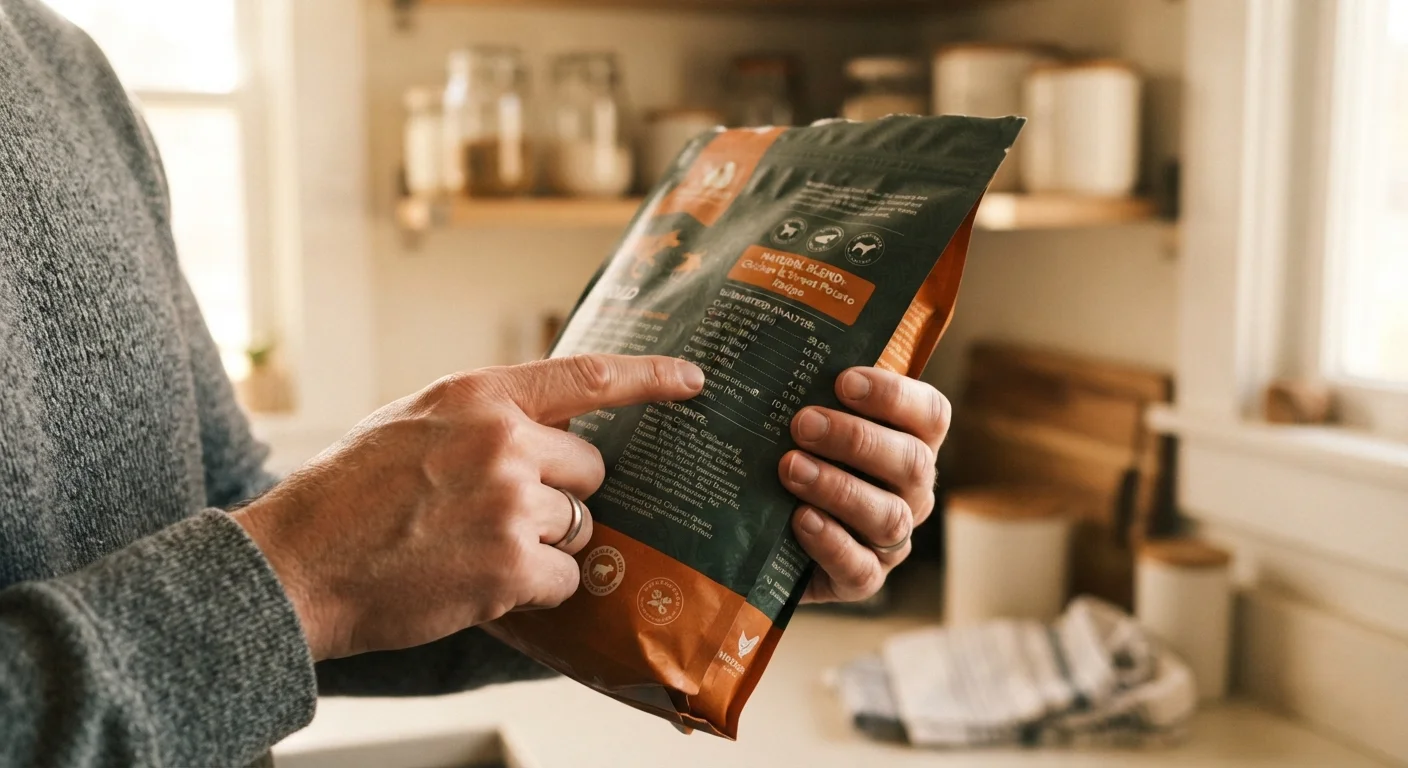
Have the pet food packaging in front of you - physical or a high-resolution image of both sides of the bag or can. You'll need access to the full ingredient list, guaranteed analysis panel, and any statements printed on the back or side panels.
Cats Have Non-Negotiable Nutritional Needs
Unlike dogs, cats are obligate carnivores and cannot synthesise certain nutrients - including taurine and arachidonic acid - in sufficient quantities on their own. Feeding a cat a diet that lacks these nutrients, even briefly, can lead to serious health consequences. Always ensure a cat food carries an AAFCO statement specifically for cats, and never substitute dog food as a primary diet.
Work through each checklist group in order. Label verification comes first because a missing or vague AAFCO statement is a dealbreaker regardless of what the ingredients look like. If you're evaluating food for a cat, pay particular attention to the life-stage and species suitability section - cats have nutritional requirements that are genuinely distinct from dogs, as outlined there.
If your pet has a specific health condition, is pregnant or nursing, or is at a life stage with elevated needs (growth or senior), this checklist is a starting framework - not a substitute for a conversation with your vet. For life-stage-specific guidance, cat nutritional needs across life stages is a useful companion resource.
Label Verification
Ingredient List Review
Guaranteed Analysis
Life-Stage and Species Suitability
Manufacturer Transparency
After the Checklist: Next Steps
Once you've worked through the checklist, you'll likely fall into one of three categories. First, the food checks out across all groups - a reassuring outcome that suggests it meets basic nutritional standards for your pet. Second, you've flagged one or two items worth clarifying, such as a missing manufacturer address or an unfamiliar ingredient - these are worth investigating before committing. Third, the food fails a must-level check, such as lacking an AAFCO statement or being formulated for the wrong species - this is a signal to look elsewhere.
Trending Diets Are Not Automatically Better
Grain-free, raw, and boutique diets are popular, but popularity is not a marker of nutritional completeness. Some grain-free diets have been the subject of ongoing research into potential links with heart disease in certain dogs. Before switching to a trendy format, review the evidence and speak with your vet - our overview of raw diet arguments offers a useful starting point.
If you're planning to change foods based on your evaluation, a gradual transition is strongly recommended to avoid digestive upset. Our guide on switching your pet's food without upsetting their stomach explains a practical approach.
Finally, if this checklist has you wondering whether your pet needs supplements on top of their diet, it's worth understanding the evidence first. Most pets eating a complete and balanced commercial diet do not require supplementation - explore what the research says in our article on supplement marketing versus what pets usually need.
This article is for general informational and educational purposes only and is not a substitute for professional veterinary advice. Always consult a qualified veterinarian regarding your specific pet's dietary needs, health conditions, or before making significant changes to their diet.