

| Species most affected by grapes/raisins | Dogs (cats also at risk) (ASPCA Animal Poison Control Center) |
| Garlic toxicity vs. onions (cats) | ~5× more toxic by body weight (Veterinary toxicology literature) |
| Theobromine: highest-risk chocolate type | Baking chocolate and dark chocolate (Merck Veterinary Manual) |
| Xylitol dangerous quantity (small dogs) | As little as one or two sticks of gum (ASPCA Animal Poison Control Center) |
| Common hidden xylitol sources | Sugar-free gum, some peanut butters, mouthwash, vitamins |
| When to call poison control | Immediately after known or suspected ingestion |
Why Some Human Foods Are Genuinely Dangerous
Not every food that humans eat safely is just "unhealthy" for pets - some are metabolically incompatible with canine or feline biology at the most fundamental level. Dogs and cats lack certain enzymes, have different liver detoxification pathways, and process specific compounds in ways that produce toxic metabolites. Understanding why a food causes harm - not just that it does - helps owners make faster, more confident decisions when something goes wrong.
This reference is intended as a lookup guide, not a complete clinical resource. If you suspect your pet has ingested any of the foods listed here, contact your veterinarian or a pet poison helpline immediately. Do not wait for symptoms to appear - with many toxins, early intervention dramatically affects outcomes.
For broader context on what pets actually need nutritionally, see the nutrients every dog actually needs.
| Species most affected by grapes/raisins | Dogs (cats also at risk) (ASPCA Animal Poison Control Center) |
| Garlic toxicity vs. onions (cats) | ~5× more toxic by body weight (Veterinary toxicology literature) |
| Theobromine: highest-risk chocolate type | Baking chocolate and dark chocolate (Merck Veterinary Manual) |
| Xylitol dangerous quantity (small dogs) | As little as one or two sticks of gum (ASPCA Animal Poison Control Center) |
| Common hidden xylitol sources | Sugar-free gum, some peanut butters, mouthwash, vitamins |
| When to call poison control | Immediately after known or suspected ingestion |
The Most Significant Food Hazards by Category
Fruits and Vegetables
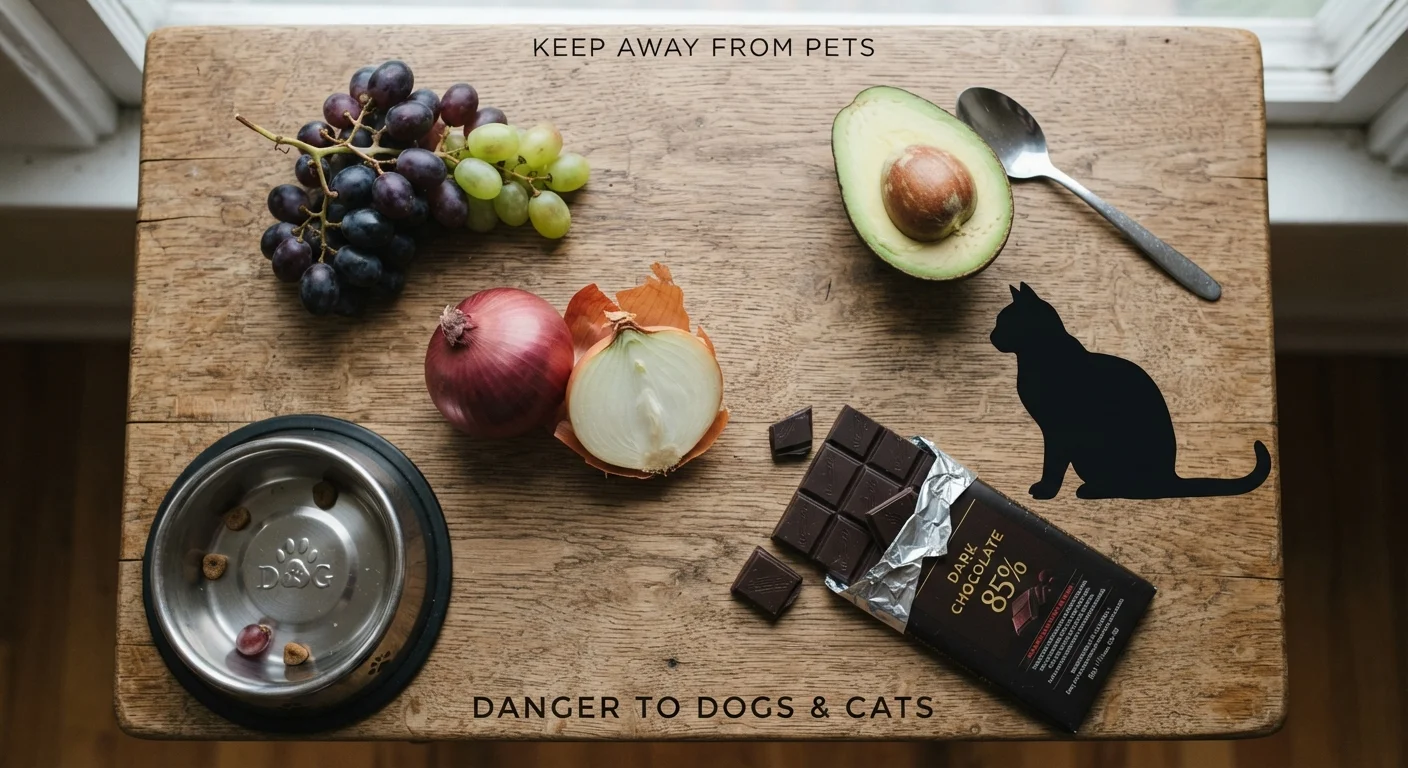
Grapes and raisins are among the most acutely dangerous foods for dogs. Even small quantities have been associated with sudden kidney failure, and the exact toxic compound is not yet fully identified - meaning there is no established "safe" dose. Cats are believed to be similarly at risk, though documented cases are less common.
Onions, garlic, leeks, and chives - whether raw, cooked, or powdered - contain thiosulfate compounds that damage red blood cells in both dogs and cats, leading to hemolytic anemia. Cats are particularly sensitive; garlic is estimated to be approximately five times more toxic to cats than to dogs by body weight.
Avocado contains persin, a fungicidal toxin found in the flesh, skin, pit, and leaves of the plant. Dogs and cats can experience vomiting, diarrhea, and in larger quantities, cardiovascular distress. Birds and small mammals face even greater risk.
Stimulants and Sweeteners
Chocolate contains theobromine and caffeine, both methylxanthines that dogs and cats metabolize far more slowly than humans. Dark chocolate and baking chocolate carry the highest concentration. Clinical signs include vomiting, muscle tremors, seizures, and cardiac arrhythmias.
Xylitol (now also labeled as birch sugar) is an artificial sweetener found in sugar-free gum, some peanut butters, dental products, and baked goods. In dogs, xylitol causes a rapid, severe insulin release leading to hypoglycemia, and can also cause acute liver failure. Even small quantities - a stick or two of gum - can be fatal in small dogs. Cats appear less commonly affected but the risk is not negligible.
Caffeine in any form - coffee grounds, tea, energy drinks, certain supplements - is toxic to both species through the same methylxanthine pathway as chocolate.
Other Household Hazards
Macadamia nuts cause weakness, hyperthermia, vomiting, and tremors in dogs within 12 hours of ingestion. The mechanism is not yet fully understood. Cats are considered susceptible though reports are rarer.
Alcohol - including alcohol from fermented fruit or bread dough - is metabolized poorly by pets and causes ethanol toxicity at far lower doses than in humans.
Raw yeast dough poses a dual threat: it continues fermenting in the warm stomach, producing carbon dioxide (causing dangerous bloat) and ethanol simultaneously.
Theobromine
A methylxanthine compound found naturally in cacao. Dogs and cats metabolize it far more slowly than humans, allowing it to accumulate to toxic levels and affect the heart and nervous system.
Thiosulfate
An organosulfur compound present in allium vegetables (onions, garlic, leeks). It oxidizes red blood cells in dogs and cats, causing a type of anemia called hemolytic anemia.
Xylitol
A sugar alcohol used as a sweetener in many human products. In dogs, it triggers an exaggerated insulin response causing low blood sugar and can also lead to acute liver damage at higher doses.
Persin
A natural fungicidal toxin produced by the avocado plant, found throughout the fruit, skin, pit, and leaves. It can cause vomiting, diarrhea, and cardiac complications in dogs and cats.
Hemolytic anemia
A condition in which red blood cells are destroyed faster than they can be replaced, reducing the blood's ability to carry oxygen. In pets, this can result from ingestion of allium vegetables.
Methylxanthines
A class of naturally occurring compounds that includes caffeine and theobromine. They stimulate the central nervous and cardiovascular systems and are poorly tolerated by dogs and cats at doses safe for humans.
What to Watch For and When to Act
Symptoms of food toxicity vary by substance but common early signs include vomiting, diarrhea, lethargy, excessive drooling, tremors, pale gums, or unusual behavior. Some toxins - particularly grape/raisin toxicity and xylitol - can cause organ damage before outward symptoms are obvious.
If you know or strongly suspect ingestion, call your vet or a pet poison helpline without waiting for symptoms. Time-sensitive interventions such as induced vomiting are only safe within a specific window and must be guided by a professional - never attempt them without veterinary direction.
Keeping a list of ingredients in shared household products (including peanut butter brands and sugar-free foods) is a practical protective habit. Feeding habits that introduce human table food gradually can also quietly increase cumulative risk - something explored further in feeding habits that quietly undermine your pet's health.
For a wider look at what veterinary evidence actually supports - versus common misconceptions - common pet health myths vets wish would disappear is a useful companion read.
This article is for general informational purposes only and is not a substitute for veterinary advice. Always consult a licensed veterinarian for guidance specific to your pet's health and any suspected poisoning emergency.