

Key Takeaways
- Choosing the right carry-on dimensions before packing is essential - airline size limits vary and are strictly enforced.
- Rolling clothes and using packing cubes can reduce bulk by up to a third compared to folding flat.
- Liquids must be in containers of 3.4 oz (100ml) or less, all fitting inside one quart-sized clear bag.
- A well-planned clothing system around 2-3 versatile base colors makes outfit repetition feel intentional, not limited.
- Electronics and valuables should always travel in your personal item or the most accessible part of your carry-on.
- Checking your specific airline's carry-on policy before packing can prevent gate-check surprises.
What you will need
Know Your Constraints Before You Pack a Single Item
The single most important step in carry-on-only travel isn't choosing what to bring - it's understanding what you're allowed to bring. Carry-on size limits vary meaningfully between airlines and even between fare classes on the same carrier. A bag that fits in a domestic overhead bin may be gate-checked on an international partner flight.
Check the specific dimensions and weight limits for every airline operating your itinerary, including any connecting legs. Pay attention to the distinction between a carry-on and a personal item - most carriers allow one of each, and both counts toward your no-check strategy. This two-bag system is your packing canvas.
It's also worth confirming whether your destination country or any transit airport has additional security screening rules that differ from U.S. TSA standards. For a full pre-flight administrative rundown, see our pre-departure logistics checklist.
What you will need
Building a Clothing Strategy That Actually Works
Long-haul trips don't require more clothes - they require smarter clothes. The standard framework used by experienced carry-on travelers is the 1-2-3-4-5-6 method: one pair of shoes, two bottoms, three tops, four pairs of socks, five pairs of underwear, and six days of coverage through mixing and matching. Adjust the ratios for your specific trip length, but the logic holds: versatile pieces in 2-3 complementary base colors create more outfit combinations than you'd expect.
Plan Outfits, Not Just Items
Rather than packing individual pieces and hoping they'll combine, lay out complete outfits before you pack. If an item doesn't appear in at least two planned outfits, it probably doesn't need to come. This exercise reliably trims the list by two to four items for most travelers.
Fabric choice matters as much as item count. Merino wool and performance synthetics resist odor, dry overnight when hand-washed, and pack down lighter than cotton. A single merino base layer can serve as a sleep shirt, a layering piece, and a light top - covering three functional roles in one item.
For shoes, the limiting factor is bulk. Plan your footwear around your most demanding activity. Wear your bulkiest pair on travel days - they never go in the bag. Pack one lighter alternative that covers everything else.
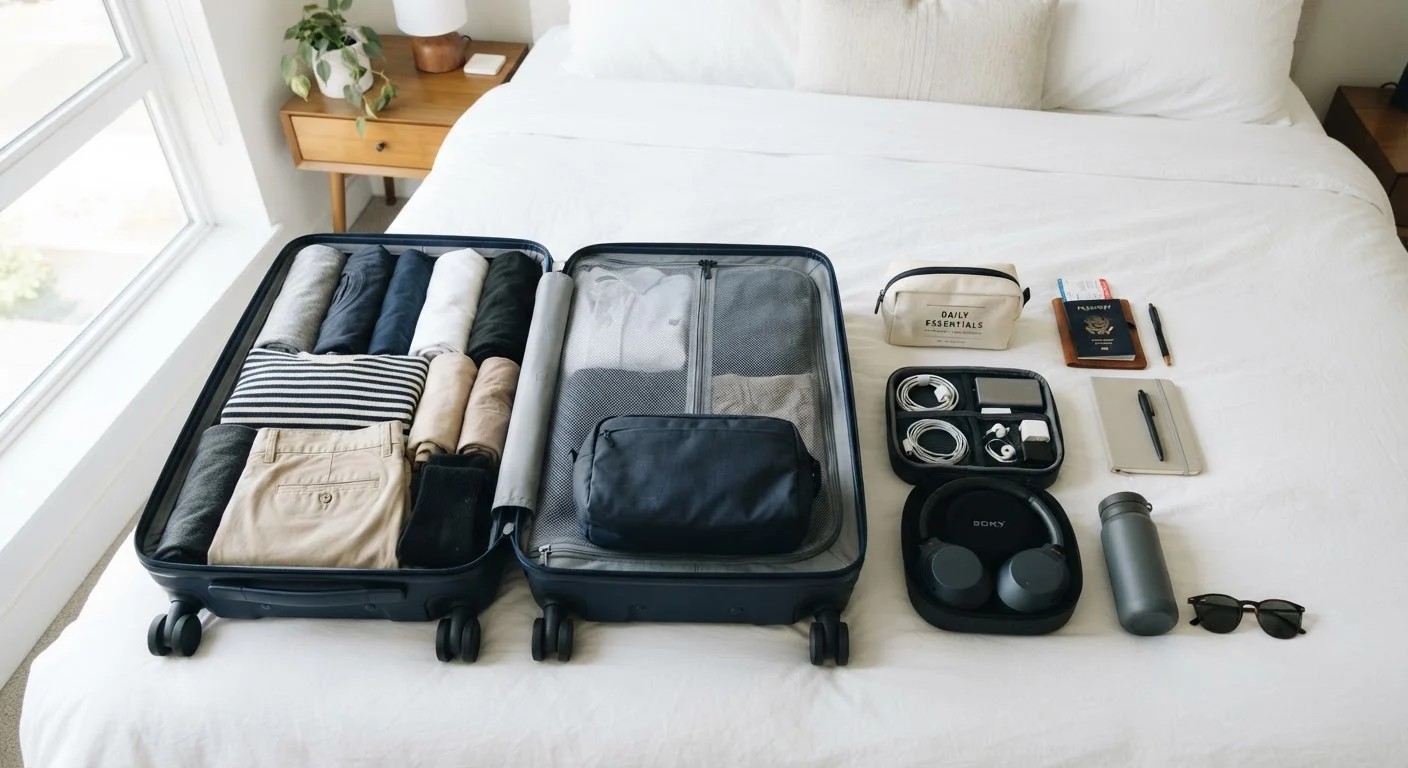
Rolling clothing rather than folding it is well-established as more space-efficient. Using packing cubes by category (tops, bottoms, sleep/lounge) keeps the bag organized across multiple destinations and reduces the time you spend unpacking and re-packing. This matters more on a multi-stop itinerary than a single-hotel stay.
Navigating Liquids, Toiletries, and the TSA 3-1-1 Rule
The TSA's 3-1-1 liquids rule applies to all carry-on bags on U.S. flights: liquids, gels, aerosols, creams, and pastes must be in containers of 3.4 ounces (100ml) or smaller, and all of them must fit inside a single quart-sized, zip-top clear plastic bag. One bag per passenger.
International Liquids Rules May Differ
Some international airports and airline routes apply different or stricter liquids restrictions - particularly for flights departing certain high-security terminals or transiting specific countries. Always verify the rules for every departure airport on your itinerary, not just your origin airport. Official government and airline sources are the most reliable references for current screening requirements.
The most effective way to stay within this limit is to rethink format first. Solid alternatives exist for many standard toiletries - shampoo bars, conditioner bars, solid sunscreen, and toothpaste tabs all bypass the liquid rule entirely and often last longer per ounce than their liquid equivalents. They're also less prone to leaking at altitude.
For items that must remain liquid - contact lens solution, prescription medications, medicated creams - prioritize them in your quart bag. Medications are exempt from the 3.4 oz limit but should be in original packaging when possible and may require additional screening.
Purchasing toiletries at your destination is a practical alternative for longer trips, particularly for items you'll use up anyway (shampoo, body wash). Factor this into your trip budget checklist so the cost isn't a surprise.
Packing Electronics for a Long-Haul Flight
Electronics are the category most likely to cause a security bottleneck if not organized well. At U.S. airport checkpoints, laptops must be removed from bags and placed separately in a bin. Having your laptop easily accessible - not buried under clothes - saves time and stress at security.
Consolidate all cables, adapters, power banks, and earbuds in a dedicated electronics pouch in your personal item rather than your carry-on. This keeps them accessible during the flight without having to access the overhead bin. A universal travel adapter, noise-canceling earbuds or headphones, and a fully charged power bank cover most in-flight needs.
Note that most airlines restrict lithium battery power banks to carry-on bags only - they cannot be checked. This is another reason the carry-on-only strategy works in your favor: you maintain control over your batteries throughout the journey.
For the broader logistics of a long trip - including what to organize before you even get to the airport - our complete trip logistics framework walks through the full planning sequence end to end.