

Key Takeaways
- Most car batteries last 3-5 years, regardless of how well the vehicle runs otherwise.
- Slow engine cranking and flickering interior lights are early warning signs drivers frequently ignore.
- Extreme temperatures - both hot and cold - significantly accelerate battery wear.
- A simple load test at most auto parts stores can confirm whether your battery is still healthy.
- Waiting for a no-start event to replace a battery is the most costly mistake drivers make.
Why Car Batteries Fail Sooner Than Drivers Expect
A car battery doesn't announce its decline with a single dramatic event. It fades - gradually losing the capacity to deliver the burst of current your starter motor needs. Most lead-acid batteries are engineered for three to five years of reliable service, but real-world conditions routinely shorten that window. Heat accelerates internal chemical degradation, while cold reduces the battery's ability to deliver power right when you need it most.
Short trips compound the problem. When a vehicle is driven for fewer than 15-20 minutes, the alternator may not have enough time to fully recharge the battery after startup. Over weeks and months, this partial-discharge cycle slowly drains reserve capacity without any visible symptoms - until the morning the engine simply won't turn over.
3-5 years
Typical car battery lifespan
Industry guidance from automotive maintenance organizations consistently places average battery life between three and five years under normal driving conditions.
~50%
Battery capacity lost in extreme cold
According to the Battery Council International, a fully charged lead-acid battery can lose roughly half its cranking power at 0°F (−18°C).
Understanding the lifespan of your specific battery begins with knowing when it was installed. Check the battery case for a date code - typically a letter representing the month and a digit for the year of manufacture. If that date is more than three years ago, routine testing becomes essential rather than optional.
Common Mistakes Drivers Make With Battery Maintenance
Ignoring slow or labored engine cranking during startup.
Why it happens: Drivers often attribute a sluggish crank to cold weather or a car that 'just does that,' normalizing what is actually a measurable drop in battery output.
Overlooking flickering or dimming interior lights and gauges.
Why it happens: Electrical fluctuations are easy to dismiss as a minor nuisance, especially when the car starts fine moments later.
Skipping battery checks during routine maintenance.
Why it happens: Battery health isn't always on a standard oil-change checklist, and drivers rarely ask for it unless a problem is obvious.
Assuming a jump-start means the battery is fine.
Why it happens: A successful jump-start feels like a solution, so drivers conclude the problem is solved and move on without further investigation.
Neglecting terminal corrosion until it causes a no-start event.
Why it happens: Corrosion builds gradually and is only visible when you open the hood, which most drivers rarely do between service appointments.
Don't Wait for a Dead Battery
A battery that fails unexpectedly can leave you stranded far from help - at night, in poor weather, or in an unsafe location. If your battery is older than three years and showing any warning signs, have it tested proactively. Replacement on your schedule is always safer and less expensive than emergency road assistance.
Being proactive about battery health also matters when evaluating a used vehicle. A used car's electrical history - including whether the battery has been replaced - can sometimes surface in a vehicle history report, though battery records are less consistently documented than collision history. Ask the seller directly and inspect terminals yourself during any pre-purchase walkthrough.
Corrosion Is More Than Cosmetic
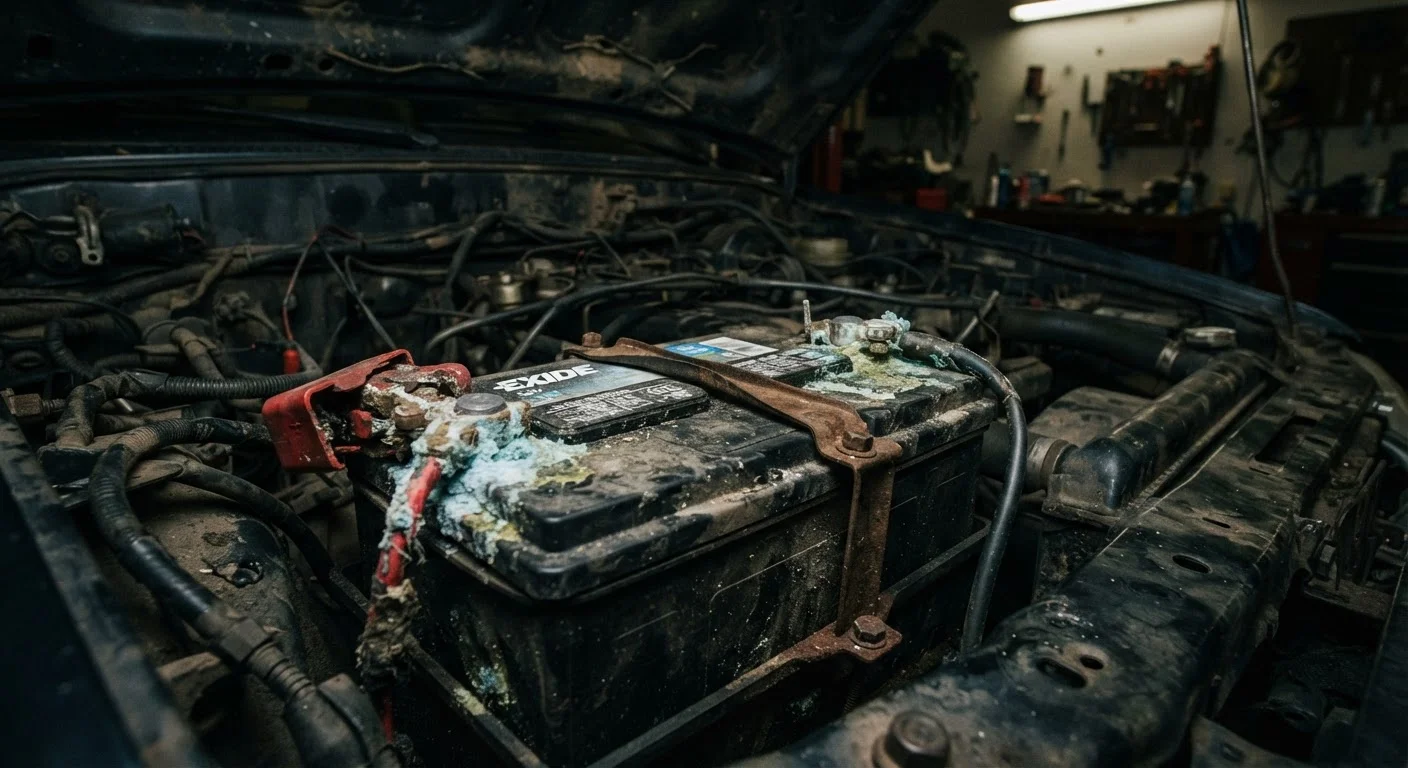
The white or blue-green powdery buildup around battery terminals isn't just unsightly - it actively resists electrical flow and can cause intermittent starting problems that are difficult to diagnose. Cleaning terminals carefully with a battery terminal brush and a baking soda solution can restore connection quality, but persistent or heavy corrosion may indicate the battery is venting gases abnormally, which warrants professional inspection.
How to Stay Ahead of Battery Failure
The most effective strategy is combining regular testing with attentive observation. A load test - which simulates the demand of engine startup - gives a far more accurate picture of battery health than a simple voltage reading. Voltage alone can look normal even in a significantly degraded battery.
Before any extended road trip, battery condition should be on your checklist alongside tires, fluids, and lights. Review a structured pre-trip safety check to make sure no system gets overlooked. A battery that performs adequately on daily commutes may not have enough reserve capacity to handle the sustained electrical demands of a long highway drive with the A/C, navigation, and phone charging running simultaneously.
When a battery does need replacing, keep the date and battery specifications noted in your vehicle records. That single piece of information helps every mechanic or service advisor who works on your car in the future make faster, more accurate recommendations - and helps you spot when another replacement cycle is approaching before it becomes an emergency.