

Key Takeaways
- Water is an essential nutrient that supports digestion, circulation, and nutrient absorption.
- Food contributes meaningfully to daily fluid intake - roughly 20% for most adults.
- Mild dehydration can affect energy, concentration, and appetite perception.
- Fluid needs vary by body size, activity level, climate, and health status.
- Plain water is generally the most effective hydration source for most people.
- Consulting a healthcare professional is recommended for specific hydration or dietary needs.
Hydration as a Nutrient
Water is classified as an essential nutrient - meaning your body cannot function properly without an adequate daily supply. Unlike vitamins or minerals, water doesn't provide energy, but it enables nearly every biological process, from digestion and nutrient transport to temperature regulation. Treating hydration as part of your overall diet - not an afterthought - reflects how your body actually works.
Water accounts for roughly 60% of adult body weight and serves as the medium in which biochemical reactions occur, including the absorption of water-soluble vitamins such as B and C.
Why Water Belongs in the Nutrition Conversation
When most people think about diet and nutrition, they picture food - protein, carbohydrates, fats, and the vitamins and minerals woven through them. Water rarely gets equal billing, yet it's involved in virtually every process those nutrients depend on. The body uses water to transport nutrients through the bloodstream, regulate internal temperature, support kidney function, and cushion joints and organs.
Framing water as a nutrient - rather than just a thirst-quencher - changes how you approach your overall diet. Just as you might think about getting enough iron or vitamin C (explored further in our overview of vitamins and minerals), consistent hydration deserves the same intentional attention.
~60%
Of adult body weight is water
According to general physiology references, water comprises approximately 60% of total body weight in adults, underscoring its foundational role.
~20%
Of daily fluid intake comes from food
The National Academies of Sciences, Engineering, and Medicine estimate that roughly 20% of total daily water intake comes from food rather than beverages.
1-2%
Body water loss before impairment begins
Research indicates that losing as little as 1-2% of body water can begin to impair cognitive performance and physical endurance.
How Water Interacts With Digestion and Nutrient Absorption
Digestion begins the moment food enters your mouth, and water plays a supporting role at every stage. Saliva - which is mostly water - initiates the breakdown of carbohydrates. In the stomach, water helps dissolve food particles and mix digestive enzymes. Further along the digestive tract, water assists in moving waste efficiently and absorbing nutrients across the intestinal lining.
Water-soluble vitamins (the B vitamins and vitamin C) are absorbed in aqueous environments, meaning adequate hydration directly supports your body's ability to extract value from the foods you eat. Conversely, dehydration can slow gastric motility - the rate at which food moves through the digestive system - contributing to sluggishness and discomfort. If you're exploring eating habits that support sustained energy, hydration is a foundational variable worth considering alongside food choices.
Hydration Needs Vary Significantly
General fluid intake guidelines are population-level averages, not individual prescriptions. Factors like body size, physical activity, climate, pregnancy, breastfeeding, and certain medical conditions all influence how much fluid a person needs. If you have a chronic health condition or specific concerns about fluid balance, consult a healthcare professional rather than relying solely on general guidance.
Food as a Source of Fluid
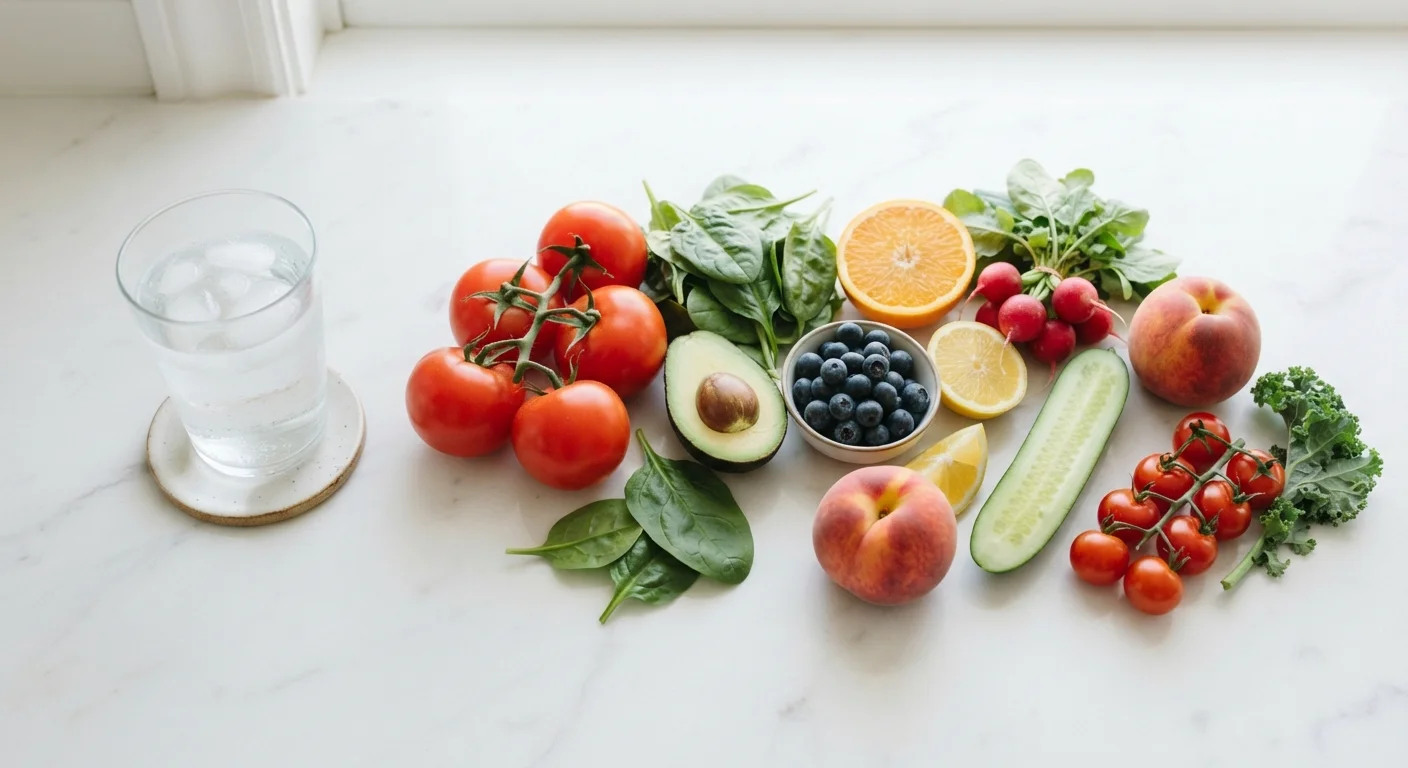
Many foods deliver meaningful amounts of water alongside their nutritional content. Fruits and vegetables - already among the most nutrient-dense food groups - often have water content above 90% by weight. Cucumbers, celery, strawberries, watermelon, tomatoes, and leafy greens all fall into this category. Even cooked grains like oatmeal and soups contribute to daily fluid totals.
This overlap between food and hydration is one reason nutrient-dense food choices tend to support hydration as a side effect - a diet rich in whole produce naturally supplies more fluid than one dominated by dry, processed foods. Understanding this connection can make it easier to see hydration and nutrition as a single, integrated system rather than two separate concerns.
It's also worth noting that certain eating patterns - like consuming very high amounts of sodium or protein - can increase fluid requirements, since the kidneys need more water to process and excrete waste products from these nutrients.
Recognizing Your Body's Hydration Signals
Thirst is a reliable early signal of fluid need, but it isn't always the first or only one. Mild dehydration - well before you feel noticeably thirsty - can present as fatigue, difficulty concentrating, or headaches. Some research also suggests that dehydration can be confused with hunger, potentially influencing how much people eat. These signals underscore why hydration isn't separate from your eating habits; it's woven through them.
Urine color remains a practical, low-tech indicator: pale yellow generally suggests adequate hydration, while darker urine may signal that more fluid is needed. Conversely, completely clear urine throughout the day may indicate excess fluid intake. These are general reference points, not diagnostic tools - anyone with health conditions affecting kidney function or fluid balance should work with a healthcare professional rather than relying on general guidelines. It's also worth reading about common diet patterns that quietly undermine health, as inadequate water intake is one of several overlooked factors.
This article is for general informational purposes only and is not a substitute for professional medical or dietary advice. Consult a qualified healthcare provider for guidance specific to your health needs.