

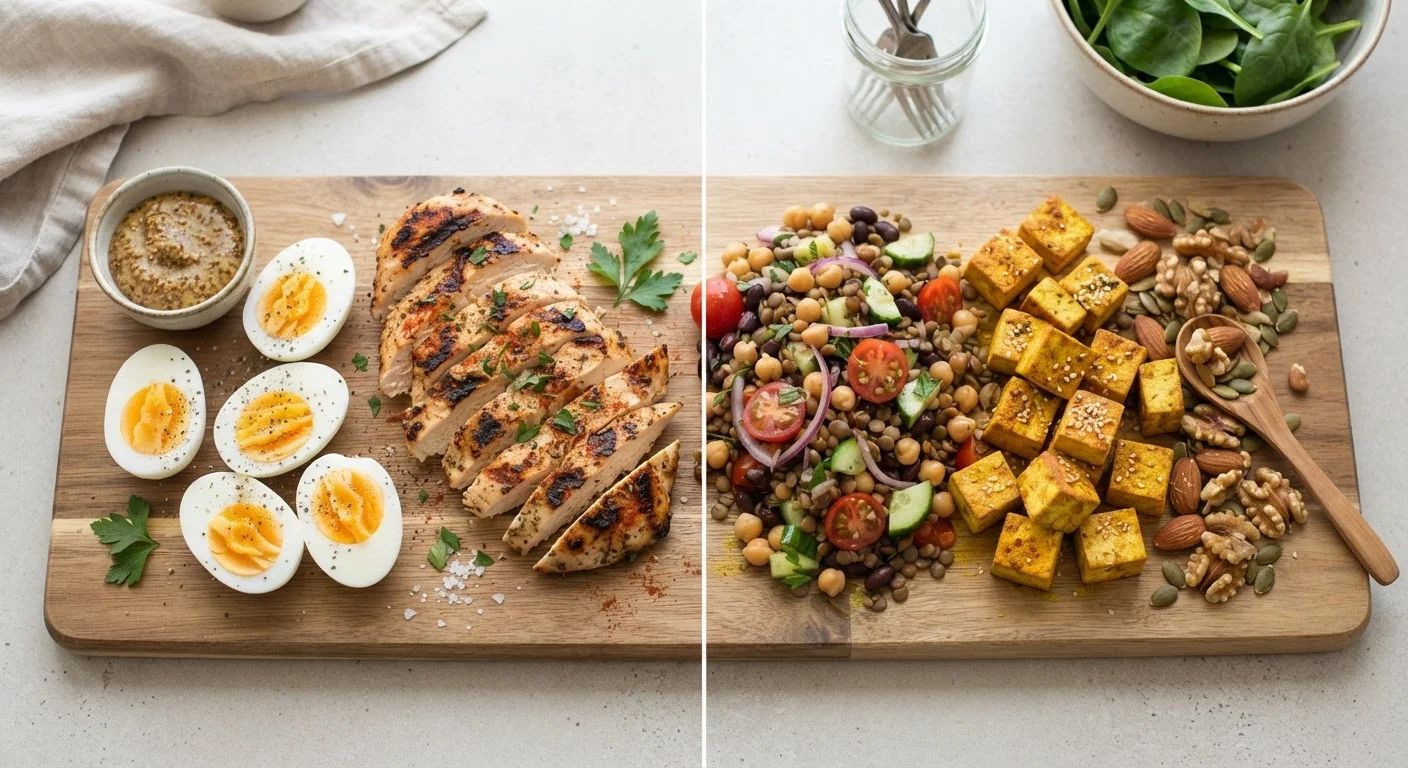
Key Takeaways
- Animal proteins contain all essential amino acids in proportions the body uses efficiently, making them 'complete' proteins.
- Most plant proteins are low in one or more essential amino acids, but eating a variety of plant foods across the day addresses this gap.
- Digestibility differs: animal proteins are generally absorbed more efficiently, though this gap narrows with well-prepared plant foods.
- Long-term health research links higher plant protein intake to reduced risk of certain chronic diseases, though diet patterns matter overall.
- Neither source is universally superior - the best approach for most people depends on total diet quality and individual health context.
Option A
Animal Protein
The complete, highly bioavailable protein source.
Best for: People seeking complete amino acid profiles from a single food source, including those with higher protein demands such as older adults or athletes.
Option B
Plant Protein
The fiber-rich, environmentally lighter protein option.
Best for: People following vegetarian or vegan diets, or those looking to diversify protein sources while gaining additional fiber and phytonutrient benefits.
If you want the most straightforward path to meeting daily protein needs
Animal Protein
Animal proteins deliver all essential amino acids in a single food source and are digested efficiently, simplifying protein planning without requiring strategic food combining.
If you want to support long-term cardiovascular and metabolic health
Plant Protein
Diets higher in plant protein are consistently associated with lower LDL cholesterol and better long-term metabolic outcomes in population research, alongside fiber and phytonutrient benefits.
If you are following a vegetarian or vegan lifestyle
Plant Protein
A well-planned varied plant-based diet can meet all essential amino acid needs; some individuals may benefit from monitoring nutrients like B12, iron, and zinc with professional guidance.
If you are an older adult focused on maintaining muscle mass
Animal Protein
Research suggests older adults may benefit from the leucine-rich profile of animal proteins - particularly dairy and eggs - which supports muscle protein synthesis more readily.
If you want to incorporate both sources into a flexible, balanced diet
Animal Protein
Using animal protein as one component of a diet rich in legumes, whole grains, and nuts combines the amino acid completeness of animal foods with the fiber and disease-protective benefits of plant foods.
The Amino Acid Question: Complete vs. Incomplete
Protein's nutritional value isn't just about quantity - it's about the amino acids it delivers. The human body requires 20 amino acids to function, nine of which are classified as essential because the body cannot synthesize them on its own. These must come from food.
Animal proteins - including meat, poultry, fish, eggs, and dairy - contain all nine essential amino acids in ratios that closely match human needs. This is why they are called complete proteins. Most plant proteins, by contrast, are low in at least one essential amino acid. Legumes tend to be low in methionine; grains are typically low in lysine.
This doesn't mean plant protein is inadequate - it means variety matters. Eating a range of plant protein sources across the day (beans, lentils, tofu, whole grains, nuts, seeds) allows the body to pool amino acids effectively. The older concept of strictly pairing foods at every meal has largely been set aside by nutrition researchers, though overall dietary variety remains essential. For a broader look at how food quality shapes nutrition, see our guide to whole foods vs. processed foods.
| Criterion | Animal Protein | Plant Protein |
|---|---|---|
| Amino acid completeness | All 9 essential amino acids | Usually missing 1-2 essential amino acids |
| Digestibility (DIAAS score) | Generally high (0.9-1.1+) | Moderate to high (0.5-0.9 varies by source) |
| Fiber content | None | Significant (especially legumes) |
| Saturated fat | Varies; higher in red meat and full-fat dairy | Generally low (except coconut products) |
| Leucine content (muscle synthesis) | High, particularly in dairy and eggs | Lower; soy is the best plant source |
| Phytonutrient content | Minimal | Rich in antioxidants and polyphenols |
| Chronic disease associations | Mixed; processed red meat linked to higher risk | Higher intake linked to lower cardiovascular risk |
| Dietary planning complexity | Lower - single source meets amino acid needs | Requires variety to cover all essential amino acids |
Digestibility and Bioavailability: What Gets Absorbed
Even if two foods contain similar amounts of protein by weight, not all of that protein reaches the body's tissues. Digestibility - how thoroughly the gut breaks down and absorbs dietary protein - differs meaningfully between sources.
A widely used measurement is the DIAAS, which evaluates both how digestible a protein is and how well its amino acid profile meets human needs. Animal proteins generally score higher on this scale than most plant proteins. Eggs and dairy, for example, consistently achieve near-perfect scores. Isolated soy protein and pea protein concentrate perform better than whole legumes because processing reduces certain compounds - like phytates and tannins - that interfere with digestion.
Cooking and preparation also matter. Soaking, sprouting, and fermenting legumes can significantly improve their protein digestibility. This means that a well-prepared plant-based meal can narrow - though rarely eliminate - the digestibility gap with animal protein sources.
~1.0
DIAAS score for whole egg protein
The Food and Agriculture Organization of the United Nations uses DIAAS as the preferred method for evaluating protein quality; a score at or above 1.0 indicates a high-quality source.
~0.64
DIAAS score for cooked black beans
Published FAO research shows whole legumes typically score lower than animal proteins, though processing like isolation or concentration can raise scores considerably.
19%
Lower cardiovascular mortality risk
A 2020 analysis published in JAMA Internal Medicine found an association between replacing red meat calories with plant protein and reduced cardiovascular mortality in large US cohorts.
Long-Term Health Outcomes: What Population Research Suggests
Beyond amino acids and absorption rates, researchers have examined how protein source relates to health outcomes over time. The picture here is nuanced and doesn't declare a clear winner.
Large observational studies - including data from the Nurses' Health Study and the Health Professionals Follow-up Study at Harvard - have found associations between higher plant protein intake and lower risk of cardiovascular disease and type 2 diabetes. These associations are difficult to fully separate from the broader dietary patterns that tend to accompany plant-heavy eating.
Meanwhile, animal protein - particularly from processed red meat - has been linked in some studies to higher risks of certain chronic conditions. Unprocessed lean meats, fish, and dairy tell a more mixed story, with dairy in particular showing neutral to modestly positive associations in cardiovascular research.
Importantly, no individual protein source operates in isolation. A diet high in plant protein that is also high in refined carbohydrates, sodium, or ultra-processed foods is not inherently protective. The overall dietary pattern - its variety, fiber content, and degree of processing - shapes health outcomes far more than any single nutrient decision.
This article is for general informational purposes only and does not constitute medical or dietary advice. Speak with a qualified healthcare provider or registered dietitian before making significant changes to your diet, particularly if you have a chronic health condition or specific nutritional needs.
A Note on Special Populations
Protein needs and the ability to meet them vary significantly across life stages. Older adults may have higher protein requirements to counter age-related muscle loss (sarcopenia). Pregnant or breastfeeding individuals, children, and people managing chronic kidney disease have distinct considerations that general guidance cannot fully address. If you fall into any of these groups, consulting a registered dietitian or qualified healthcare provider is strongly recommended before restructuring your protein intake.