

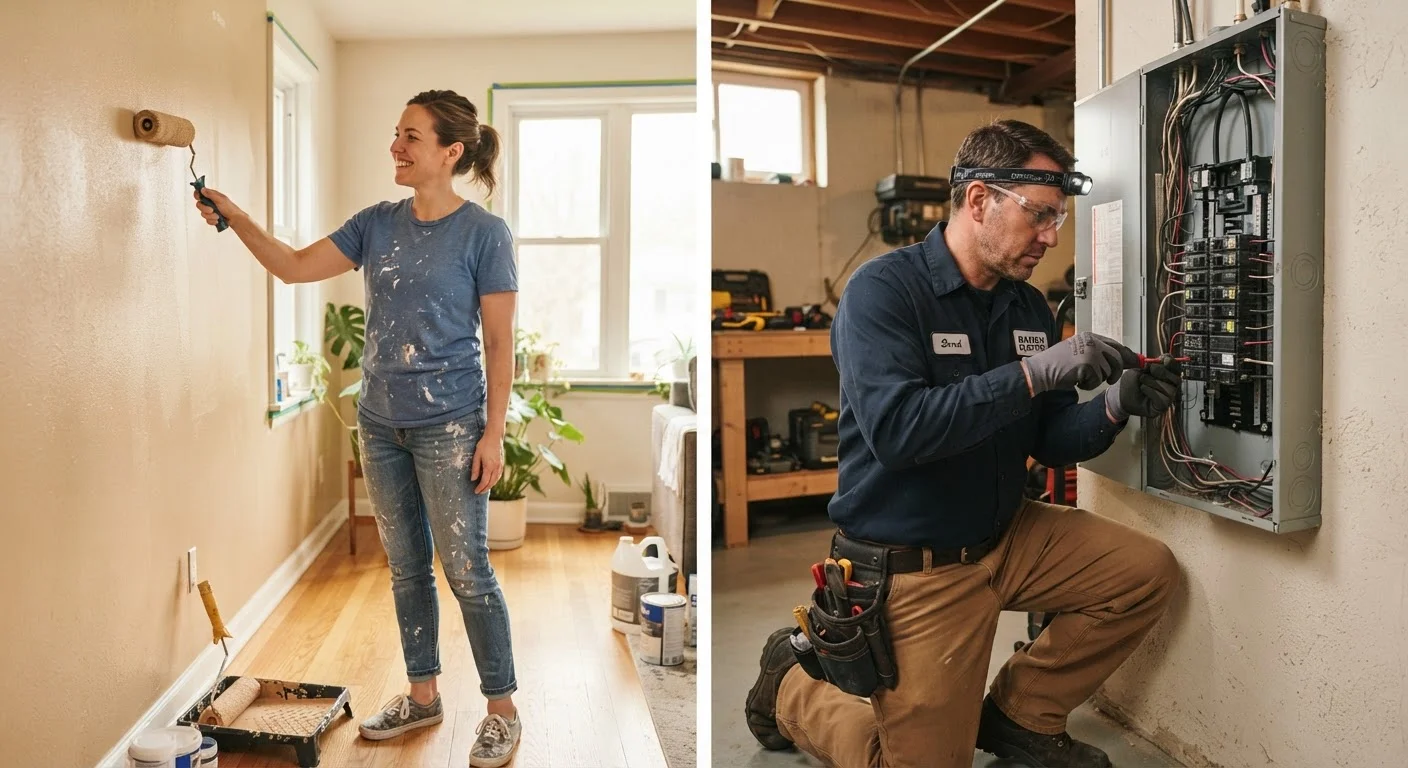
Key Takeaways
- DIY is generally safe for cosmetic, low-risk tasks like painting, caulking, and minor landscaping.
- Electrical, structural, gas, and plumbing-into-mains work typically requires a licensed professional.
- Unpermitted or improperly completed work can affect home insurance coverage and resale value.
- Your skill level, available tools, and realistic time commitment all factor into the DIY decision.
- Calling a professional is not a failure - it is often the most cost-effective long-term choice.
Our Verdict
Most homeowners can confidently handle cosmetic and simple maintenance tasks, while structural, mechanical, and safety-critical work almost always warrants professional involvement. The deciding factors are rarely just skill - permits, liability, and the cost of mistakes matter equally. When in doubt, getting a professional assessment before starting is rarely wasted money.
| Best for | Recommended |
|---|---|
| Budget-conscious homeowners with basic tool skills | DIY |
| Electrical, gas, structural, or permitted renovation work | Hire a Professional |
| First-time homeowners uncertain about project scope | Hire a Professional |
| Straightforward cosmetic updates with clear instructions | DIY |
Why the DIY vs. Professional Question Matters More Than You Think
Every homeowner faces it: a leaky faucet, a dated bathroom, a sagging gate. The instinct to save money by doing it yourself is understandable - and sometimes entirely correct. But making the wrong call can mean more than a botched paint job. Certain projects carry real risk of injury, code violations, voided warranties, or expensive repairs that dwarf the original cost.
This isn't about confidence levels alone. The DIY-vs.-professional decision involves four distinct factors: safety risk, permit and licensing requirements, your actual skill and tool access, and the true cost of getting it wrong. Weighing all four honestly is the starting point for every project decision.
For a broader look at the same question applied to vehicles, see DIY Car Maintenance vs. Leaving It to a Mechanic, which applies similar logic to a different domain.
Tasks That Are Generally Appropriate for Confident DIYers
A wide range of home improvement work sits comfortably within reach of homeowners who are willing to research, follow instructions carefully, and respect their own limits. These tasks tend to be low-stakes: mistakes are visible, reversible, and unlikely to harm anyone.
- Interior painting - Proper prep work (cleaning, sanding, priming) is the main determinant of quality. No permits required.
- Basic landscaping and garden beds - Planting, mulching, edging, and irrigation timer adjustments are well within DIY territory.
- Caulking and weatherstripping - Sealing gaps around windows, doors, and tubs is straightforward with the right materials.
- Replacing interior door hardware - Swapping knobs, hinges, or deadbolts requires only basic tools and patience.
- Minor drywall patching - Small holes from nails or minor impacts can be repaired with patch kits and a bit of practice.
- Installing light fixtures or ceiling fans - Provided the circuit is switched off and confirmed dead, swapping a fixture for a like-for-like replacement is generally manageable. Always confirm your local codes, as some jurisdictions require a licensed electrician even for simple replacements.
Start With a Pre-Project Checklist
Before committing to either path, confirm whether permits are required, what materials cost on their own, and how long comparable projects typically take. This groundwork often changes the calculation significantly. Even for DIY projects, a professional consultation or inspection can be worth the cost.
Before starting any project, check the homeowner's pre-project checklist to ensure permits, safety steps, and materials are sorted before the first tool comes out.
When to Step Back and Call a Licensed Professional
Certain categories of work are regulated for good reason. Errors in these areas can cause structural failure, fire, flooding, or health hazards - and can also result in failed inspections, fines, or difficulty selling your home later.
Never Skip Permits on Regulated Work
Completing permitted work without a permit is not just a technical violation - it can void your homeowner's insurance for related claims, require costly remediation during a home sale, and expose you to municipal fines. When a project scope is unclear, contact your local building department before starting.
- Electrical panel work, new circuits, and rewiring - Working inside a breaker panel or running new wiring carries serious electrocution and fire risk and almost always requires a permit and licensed electrician.
- Gas line installation or repair - Gas work is tightly regulated in every US state. A mistake can cause leaks, explosions, or carbon monoxide exposure. Always hire a licensed professional.
- Structural modifications - Removing or altering walls - especially load-bearing walls - requires engineering assessment and permitted work.
- Plumbing connections to the main supply or drain - While replacing a faucet or showerhead is DIY-friendly, connecting to supply lines or drain stacks typically requires permits and a licensed plumber.
- Roofing - Beyond minor shingle replacement, roof work involves fall risk, potential for hidden structural damage, and warranty implications.
- HVAC installation - Sizing, refrigerant handling, and duct design require certification and permits in most states.
For a clear breakdown of when permits and licensed trades are legally required, see Permits, Inspections, and Licensed Trades.
Comparing the Two Approaches Side by Side
The table below summarizes how DIY and professional approaches compare across the criteria that matter most to homeowners.
| DIY | Hire a Professional | |
|---|---|---|
| Upfront Cost | Lower - labor is free | Higher - labor included in quote |
| Risk of Costly Errors | Higher without experience | Lower with qualified tradespeople |
| Permit Compliance | Homeowner's responsibility to research | Typically managed by contractor |
| Time Required | Often longer, especially first attempts | Generally faster with dedicated crew |
| Quality Guarantee | Depends entirely on skill level | Often backed by warranty or liability |
| Best Suited For | Cosmetic and low-risk maintenance tasks | Structural, mechanical, and safety-critical work |
Cost savings from DIY are real but variable. Labor typically accounts for 30-50% of project costs, but that figure means little if an error requires a professional to correct DIY work. Get contractor quotes before assuming the gap is prohibitive - and review what to look for in contractor quotes to ensure you're comparing apples to apples.
Making the Call: A Practical Decision Framework
If you're still on the fence, run through these questions honestly before picking up a tool or calling a contractor:
- Does this project require a permit? If yes, find out who is legally permitted to pull that permit in your jurisdiction. In many cases, only a licensed contractor can do so.
- What is the realistic cost of a mistake? For painting, a redo costs time and materials. For a gas line, a mistake can cost lives. Scale your caution accordingly.
- Do you own the necessary tools? Renting specialized equipment adds cost and complexity. Factor that into your true DIY cost.
- Have you completed a similar project before? First-time attempts on complex tasks carry higher error rates. If this is new territory, consider hiring out the first iteration and observing.
- Will this affect your homeowner's insurance or resale? Unpermitted work can complicate insurance claims and must typically be disclosed during a home sale.
New homeowners navigating their first major projects will find grounded guidance in First Home, First Renovation, which covers realistic expectations and how to prioritize what gets done first.