

Key Takeaways
- Several routine maintenance tasks-such as checking fluids and replacing air filters-are safe and straightforward for most drivers.
- Jobs involving brakes, suspension, or fuel systems carry real safety risk and typically require a qualified mechanic.
- The right choice depends on your skill level, available tools, and whether the task affects vehicle safety systems.
- Doing basic maintenance yourself can save money, but errors on complex repairs often cost more to fix than professional labor would have.
- Your owner's manual is the most reliable guide for service intervals and specifications specific to your vehicle.
Our Verdict
For most everyday drivers, a split approach makes the most sense: handle the simple, low-risk tasks yourself to save money and stay connected to your vehicle's health, while trusting licensed mechanics with anything that touches safety-critical systems. Neither extreme-doing everything yourself or outsourcing every task-serves drivers as well as a thoughtful middle ground.
| Best for | Recommended |
|---|---|
| Drivers comfortable with basic tools and routine checks | DIY maintenance |
| Safety-critical repairs or diagnostics requiring specialized equipment | Professional mechanic |
| Drivers new to car ownership who want to build confidence gradually | DIY for checks and consumables, pro for everything else |
What Drivers Can Realistically Handle at Home
A large category of routine maintenance tasks requires only basic tools, a little patience, and the guidance in your owner's manual. These jobs are low-stakes in the sense that an error is unlikely to create an immediate safety hazard-though they still matter for long-term vehicle health.
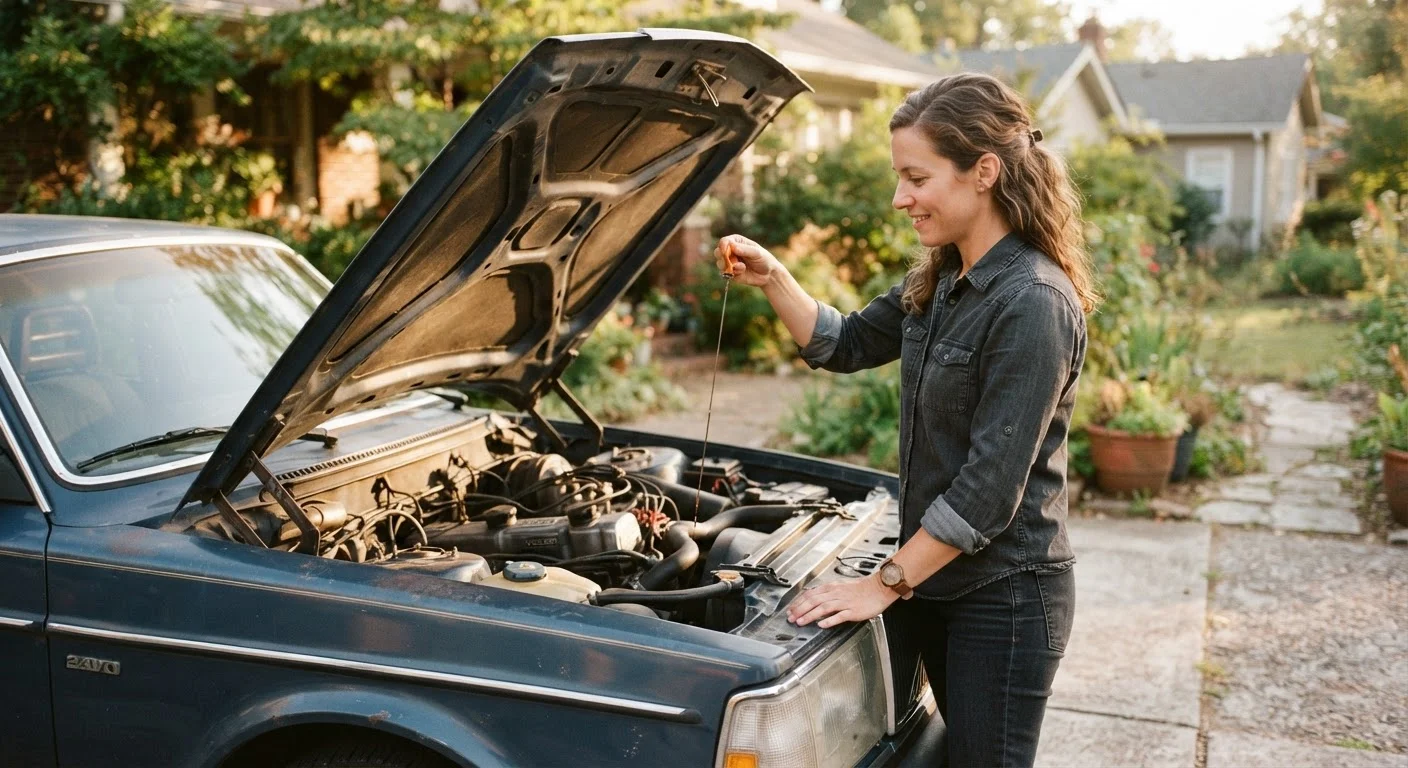
- Fluid level checks: Engine oil, coolant, brake fluid, and windshield washer fluid can all be inspected visually. Knowing how to read each reservoir correctly takes minutes to learn and gives you an early warning system for developing problems.
- Engine air filter replacement: On most vehicles, the air filter sits in an accessible housing secured by clips or a few screws. Replacement takes under 10 minutes and no specialty tools.
- Windshield wiper blades: Most wiper arms use a simple tab-release mechanism. New blades typically come with straightforward instructions printed on the packaging.
- Cabin air filter: Usually located behind the glove box or under the dashboard, this filter can be swapped out by most drivers in about 15 minutes.
- Battery terminal cleaning: Corrosion on battery terminals is common and can cause starting issues. Cleaning with a wire brush and a baking-soda solution is safe when the vehicle is off and you take care not to short the terminals.
For a broader overview of routine tasks and why they matter, see our complete owner's maintenance primer.
Start With Your Owner's Manual
Before attempting any maintenance task, consult your vehicle's owner's manual for the manufacturer's specifications on fluid types, torque values, and service intervals. Generic guidance found online may not apply to your specific engine or model year. The manual is free, already in your glove box, and more reliable than most third-party sources.
Where DIY Becomes Genuinely Risky
Some maintenance tasks look deceptively simple but involve systems where an error can compromise your safety or the safety of others on the road. These are jobs to approach with caution-or hand off entirely.
| Task | DIY | Professional Mechanic | |
|---|---|---|---|
| Engine air filter | DIY - simple, no special tools | Unnecessary for most drivers | |
| Oil change | DIY - feasible with basic tools | Convenient; includes multi-point check | |
| Brake pad replacement | High risk without experience | Recommended for most drivers | |
| Fluid level checks | DIY - quick, essential habit | Not needed just for checks | |
| Timing belt service | Not advisable without expertise | Always use a qualified mechanic | |
| Wiper blade replacement | DIY - minutes, no tools needed | Unnecessary cost for most | |
| Suspension components | Risk of handling failure | Qualified mechanic required |
- Brake system work: Replacing brake pads and rotors is technically possible for experienced DIYers with proper equipment, but mistakes-like improper torque on caliper bolts or contaminated rotors-can cause brake failure. If you're not confident in your experience level, this is a job for a qualified mechanic.
- Suspension and steering components: Worn ball joints, tie rods, or control arm bushings affect how your car handles and responds in an emergency. Incorrect installation can cause loss of vehicle control.
- Fuel system repairs: Working around fuel lines and injectors involves flammable materials and pressurized systems. Leaks created during improper repairs create fire risk.
- Timing belt or chain service: An incorrectly installed timing belt can cause catastrophic engine damage within seconds of starting the vehicle, and the procedure requires precise alignment that varies significantly by engine design.
- Airbag system work: Any maintenance touching the supplemental restraint system (SRS) should be done exclusively by a certified technician. Accidental deployment can cause serious injury.
This mirrors a broader pattern in skilled trades: the logic of knowing when to call a professional applies just as much in your driveway as it does in your home.
The Real Cost Calculation
Cost savings are one of the most common reasons drivers consider DIY maintenance, and the math can be genuinely favorable-for the right tasks. Replacing an engine air filter yourself, for example, typically costs only the price of the part. Having a shop do it adds labor charges that may exceed the part cost several times over.
However, the savings equation reverses when errors occur on complex jobs. A stripped oil drain plug, a cracked plastic housing on a sensor connector, or an over-torqued wheel bolt can each result in repair costs that far exceed what professional labor would have cost originally. Deferred or improperly performed maintenance rarely stays inexpensive for long.
Tool investment is another factor. Some jobs-like an oil change-require a drain pan, oil filter wrench, and a floor jack if your vehicle sits low. If you'll only use those tools occasionally, the break-even point may be further out than it first appears.
~35%
Share of vehicle repairs attempted as DIY
Industry surveys suggest roughly a third of vehicle owners have attempted at least one repair or maintenance task at home, with simpler jobs accounting for the majority.
2-4x
Labor cost multiplier over parts alone
For straightforward tasks like filter replacements, shop labor charges can run two to four times the cost of the part itself, illustrating where DIY savings are most significant.
It's also worth questioning inherited assumptions about service intervals. Several common car care beliefs turn out to be outdated or oversimplified, and following them can mean paying for maintenance you don't yet need.
Making the Decision for Your Situation
There's no universal right answer on where to draw the line-it depends on a combination of your mechanical experience, the tools you have access to, and whether the task directly affects a safety system.
A useful three-question framework:
- Is this task safety-critical? If the system affects steering, braking, or structural integrity, default to a professional unless you have clear, verified expertise.
- Do I have the right tools and a reliable information source? Your vehicle's owner's manual and manufacturer service documentation are the authoritative references-not generic online tutorials that may not match your specific engine or trim level.
- What does a mistake cost? For low-stakes tasks with inexpensive, reversible consequences, DIY is a reasonable experiment. For tasks where an error means a tow truck or a safety incident, the calculus shifts sharply toward professional service.
Modern vehicles with advanced driver-assistance systems (ADAS) add another layer: some repairs or part replacements-even seemingly minor ones like windshield replacement-can require sensor recalibration that must be performed by a shop with the right diagnostic equipment. Consult your owner's manual or a trusted mechanic before assuming a repair is straightforward. For more on how vehicle technology affects maintenance decisions, see our car safety and technology hub.