

Key Takeaways
- Small, inexpensive repairs left unaddressed routinely evolve into costly structural problems.
- Water intrusion is the most common driver of compounding damage in neglected homes.
- Deferred maintenance can reduce a home's market value and complicate insurance claims.
- Most maintenance failures follow a predictable progression that early action can interrupt.
- A seasonal maintenance schedule is one of the most effective tools for preventing deferral.
Deferred Maintenance
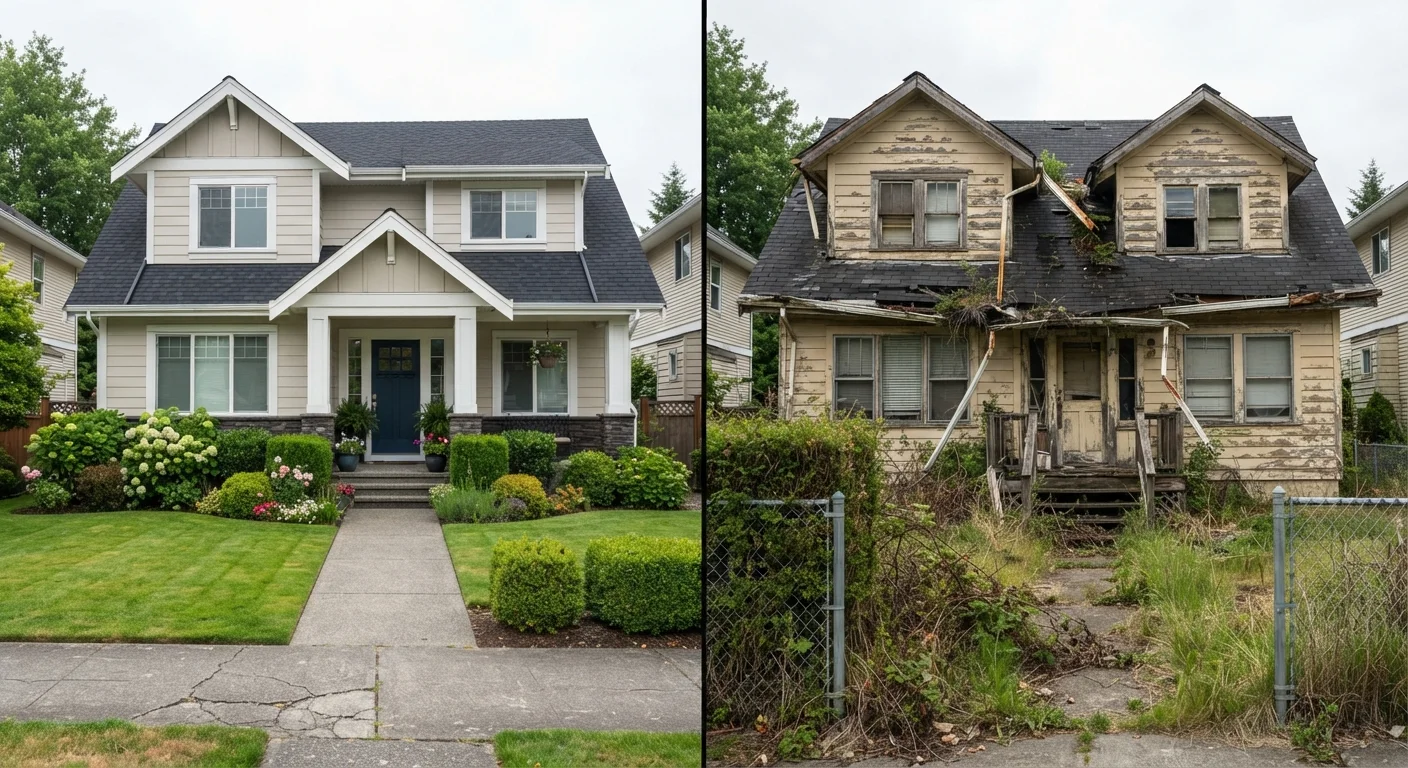
Deferred maintenance refers to repairs or upkeep tasks that have been postponed beyond the point when they were first needed. Rather than addressing problems when they're small and manageable, homeowners delay action - sometimes due to cost, time, or simply not noticing the issue. Over time, these postponed tasks accumulate and often grow significantly more expensive and damaging.
In real estate and property management, deferred maintenance is formally assessed during inspections and can materially affect a property's appraised value and insurability.
Why "I'll Get to It Later" Rarely Stays That Way
Every homeowner has made the mental note: the caulk around that window is cracking - I'll fix it this weekend. Weeks pass. Then months. By the time the weekend arrives, what was a $10 tube of caulk has become a moisture problem behind the wall. This is deferred maintenance in action - not dramatic negligence, but the entirely human tendency to postpone what doesn't feel urgent.
The core problem is that homes are systems, not static structures. One failing component puts stress on adjacent ones. A clogged gutter doesn't just overflow - it can push water against the fascia board, saturate the soffit, and eventually introduce moisture into the attic. The original task takes 20 minutes. The resulting repair can take days and cost thousands.
When to Call a Professional
Not all deferred maintenance can be safely addressed with DIY effort. Anything involving the electrical panel, gas lines, structural framing, roofing at height, or mold covering more than a small area should be evaluated by a licensed contractor in the relevant trade. Many of these repairs also require permits - check your local building department's requirements before starting work.
Understanding the pattern helps homeowners interrupt it early. The seasonal home maintenance calendar is a practical framework for catching issues before they compound.
How Damage Compounds: The Cascade Effect
Deferred maintenance rarely produces isolated failures. More often, it triggers a cascade - one problem feeding the next. Water intrusion is the clearest example. A missing shingle allows moisture in. That moisture softens the roof decking. Softened decking can't hold fasteners. The structural integrity of the roof section begins to weaken. Mold takes hold in the attic. Insulation becomes saturated and loses R-value. Energy bills rise. Interior ceiling stains appear.
Each stage of this cascade is a missed intervention point. Had the shingle been replaced early, the chain breaks immediately. The further along the cascade progresses, the more trades are needed - roofer, mold remediation specialist, insulation contractor, drywall repair - and the higher the total cost.
1-4×
Cost multiplier when repairs are deferred
Property management professionals commonly observe that deferred maintenance costs several times more to address than the same issue caught early, though exact multipliers vary by repair type and delay duration.
~10%
Potential home value reduction from visible neglect
Real estate appraisers note that visible deferred maintenance - peeling paint, damaged roofing, failing systems - can measurably reduce a property's appraised value at sale.
1-2%
Of home value recommended as annual maintenance budget
This is a general industry guideline for annual maintenance reserves; older homes and those in severe climates may warrant a higher figure.
Foundation issues follow a similar logic. Small cracks in a foundation wall allow water infiltration during rain events. Freeze-thaw cycles in colder climates expand those cracks over successive winters. What begins as a hairline crack can widen to a structural concern requiring professional evaluation and potentially significant remediation - work that typically requires permits and licensed contractors.
Financial and Safety Consequences
The financial math of deferred maintenance is straightforward and discouraging. Tasks that cost a few hundred dollars when addressed promptly can escalate into repairs measured in thousands - or tens of thousands - when ignored. Roof repairs, foundation stabilization, mold remediation, and HVAC system replacements all carry price tags that dwarf the preventive maintenance they replace.
Beyond cost, there are genuine safety implications. Faulty electrical components left uninspected, corroded gas line fittings, structural weaknesses from water damage, and deteriorated stair railings all represent real hazards. These are areas where DIY assessment has clear limits - a licensed electrician or structural engineer should evaluate any concerns in their respective domains.
There's also the insurance dimension. Coverage is generally designed for sudden, accidental damage - not the predictable results of long-term neglect. Homeowners who file claims for damage that can be traced to years of deferred upkeep may find those claims disputed or denied. Building a realistic maintenance reserve is part of responsible homeownership; the home maintenance planning and budgeting guide offers practical frameworks for doing exactly that.
Breaking the Cycle Before It Starts
The antidote to deferred maintenance is systematic attention, not perfection. Homeowners don't need to address every minor cosmetic issue immediately - but learning to distinguish cosmetic from functional problems is a critical skill. Chipped paint on trim is cosmetic. Peeling paint that exposes bare wood to moisture is functional and time-sensitive.
A regular walkthrough - exterior and interior - conducted at least twice a year catches most issues at their earliest, most treatable stage. The annual home maintenance checklist provides a structured way to conduct this kind of audit without relying on memory alone.
It's also worth examining assumptions. Some homeowners believe newer homes don't need active upkeep, or that certain materials are truly maintenance-free. The home maintenance myths that cost money article addresses several of these beliefs directly. The underlying principle is consistent: no home is self-maintaining, and the cost of attention is almost always lower than the cost of recovery.
This article is intended for general informational purposes. For concerns involving structural integrity, electrical systems, gas lines, or hazardous materials, always consult a licensed professional. Verify local permit and code requirements before undertaking any regulated work.