

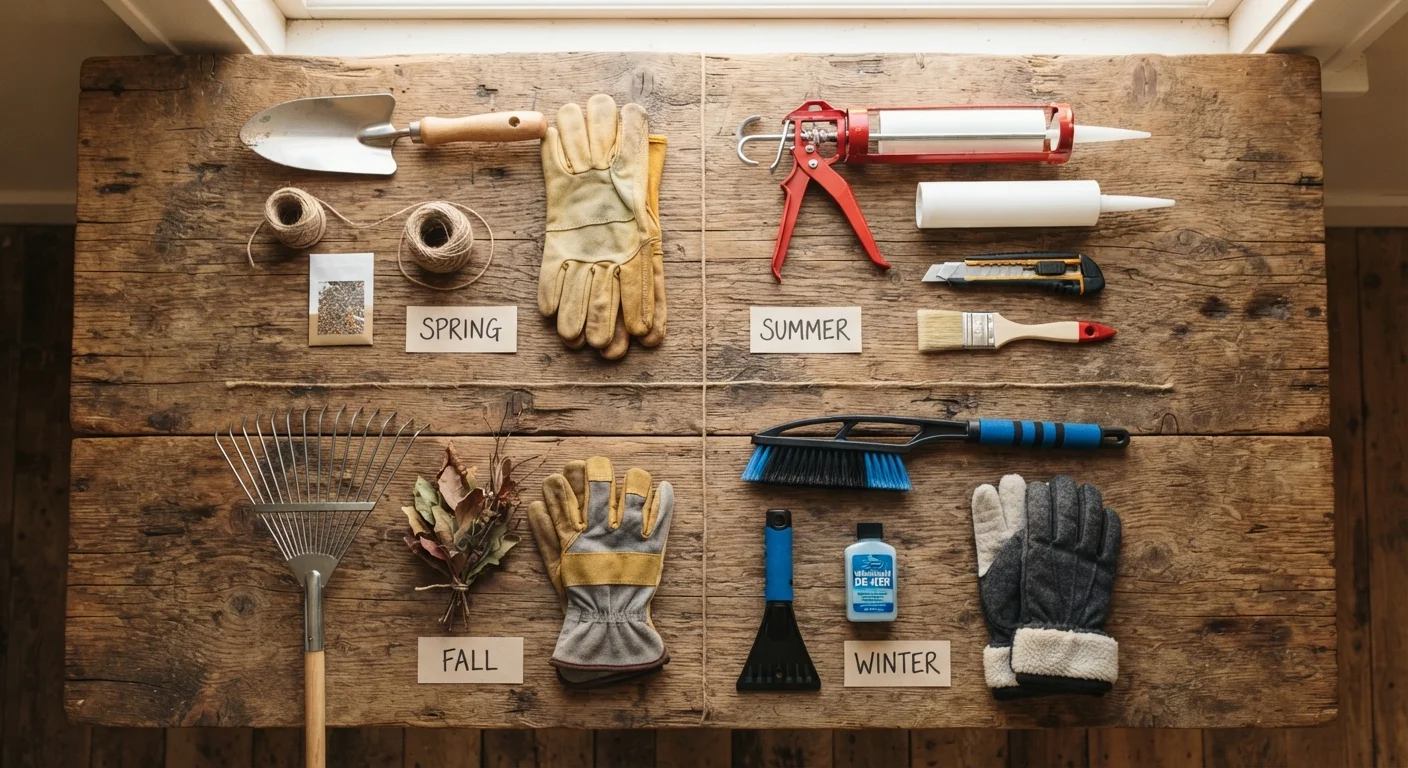
Why a Seasonal Schedule Makes Sense
Reactive repairs almost always cost more - in money, stress, and disruption - than preventive maintenance. A seasonal calendar turns vague intentions into a concrete, time-anchored routine that matches your home's actual needs to the weather driving them. Rather than remembering a static annual checklist, you address the right tasks at the right time: sealing gaps before cold sets in, checking drainage before spring rains arrive, and inspecting your roof before summer heat bakes small cracks into bigger ones.
For a deeper look at overall planning and budgeting, see the Complete Guide to Home Maintenance Planning and Budgeting. The calendar below provides a practical season-by-season reference you can return to each quarter.
Spring: Repair, Inspect, and Open Up
Spring is the most critical maintenance window of the year. Winter stress - freeze-thaw cycles, ice, and wind - can silently damage roofing, siding, gutters, and foundations. Walk your property's exterior early in the season and document anything that needs attention before warmer months allow moss, moisture, or pests to take hold.
- Roof and gutters: Look for lifted or missing shingles, damaged flashing around chimneys and vents, and clogged downspouts. Clear gutters of winter debris and confirm water flows away from the foundation.
- Foundation and grading: Check for new cracks and confirm that soil grades away from the house. Pooling water near the foundation is a red flag.
- HVAC: Replace air filters, clean registers, and schedule a professional tune-up of your central air system before peak cooling season.
- Plumbing: Inspect exposed pipes and outdoor hose bibs for freeze damage. For a full rundown of what's safe to handle yourself, refer to our guide on home plumbing maintenance.
- Deck and outdoor structures: Check for rot, loose fasteners, and splintered boards. Seal or stain wood surfaces as needed.
Summer: Monitor, Prevent, and Maintain
Summer shifts the focus from repair to monitoring and prevention. Heat and humidity stress roofing materials, drive up cooling costs, and invite pests looking for water. A few targeted checks mid-season can prevent small problems from compounding.
- Window and door seals: Check caulking and weatherstripping around windows and doors. Gaps let conditioned air escape and raise energy bills.
- Attic ventilation: Poor attic airflow traps heat and accelerates shingle degradation. Verify that soffit and ridge vents are unobstructed.
- Pest inspection: Look for signs of termites, carpenter ants, or rodents - particularly in crawl spaces, attics, and around wood framing near soil.
- Exterior paint and siding: Inspect for peeling, cracking, or bubbling paint, and address bare wood promptly to prevent moisture intrusion.
If your home's climate presents particular challenges - high humidity or extreme dryness - the maintenance priorities shift meaningfully. See Maintaining a Home in a Humid Climate vs. an Arid One for region-specific guidance.
Ice dam
A ridge of ice that forms at a roof's edge when heat escaping from the attic melts snow, which then refreezes at the colder eave. Ice dams can force water under shingles and cause interior leaks.
Flashing
Thin strips of metal (usually aluminum or galvanized steel) installed at roof joints, around chimneys, and along valleys to redirect water away from seams and prevent leaks.
Hose bib
An outdoor spigot or faucet connected to your home's water supply, typically mounted on an exterior wall. These must be winterized to prevent pipes from freezing.
Weatherstripping
Flexible sealing material applied around doors and windows to block drafts, moisture, and pests. It degrades over time and should be inspected seasonally.
Soffit
The underside of a roof overhang, often containing ventilation holes or screens that allow air to circulate through the attic. Blocked soffits can cause moisture and heat buildup.
Fall and Winter: Winterize, Protect, and Audit
Fall is your prep window before freezing temperatures arrive. Completing winterization tasks early - ideally before the first frost - protects pipes, heating systems, and the building envelope when you can least afford a failure.
- Heating system: Schedule a furnace or boiler inspection and replace filters. Bleed radiators in hot-water heating systems and test thermostats.
- Fireplace and chimney: Have a certified sweep inspect and clean the flue annually before first use. Check the damper for proper sealing when the fireplace isn't in use.
- Pipe insulation: Insulate pipes in unheated spaces - garages, crawl spaces, and exterior walls - to prevent freezing. Know the location of your main shutoff valve.
- Gutters (again): Clean gutters after deciduous trees finish dropping leaves to prevent ice dam formation at eaves.
- Exterior faucets: Disconnect garden hoses, shut off exterior water supply lines, and drain hose bibs before the first freeze.
During winter itself, maintenance shifts indoors. Test smoke and carbon monoxide detectors, replace batteries, and audit your home's insulation and air sealing. Use slower months to review your annual home maintenance checklist and schedule spring contractors before their calendars fill.
This article provides general home maintenance education and is not a substitute for professional inspection or advice. Local building codes, climate conditions, and property specifics vary - consult qualified professionals for tasks involving electrical, gas, structural, or plumbing systems.