

Key Takeaways
- The 50/30/20 rule divides after-tax income into needs, wants, and savings using broad percentage targets.
- Envelope budgeting allocates fixed cash amounts to specific spending categories before the month begins.
- The 50/30/20 rule offers flexibility; envelope budgeting offers granular control.
- Neither method is universally superior - the right fit depends on your income stability and spending habits.
- Both frameworks are starting points; most people adapt them over time as their finances evolve.
- Consult a licensed financial adviser before making major changes to your financial planning strategy.
Option A
The 50/30/20 Rule
The flexible, percentage-based framework for big-picture thinkers.
Best for: People who want a simple structure without tracking every purchase category in detail.
Option B
Envelope Budgeting
The hands-on, category-specific system for disciplined spenders.
Best for: People who overspend in specific categories and want a firm, tactile spending cap.
If you want a low-maintenance budget that doesn't require tracking every transaction
The 50/30/20 Rule
Its three broad buckets require minimal day-to-day monitoring, making it sustainable for busy households with relatively stable income.
If you consistently overspend in specific areas like dining out or entertainment
Envelope Budgeting
Hard spending limits per category create a physical or digital boundary that stops overspending before it starts.
If your income is irregular or project-based
Envelope Budgeting
Allocating actual dollars received - rather than percentages of an estimated income - gives you precise control during lower-income months.
If you are new to budgeting and want to build a habit quickly
The 50/30/20 Rule
The simplicity of three categories lowers the barrier to entry and makes it easy to review progress at a glance.
If you want to aggressively pay down debt or build an emergency fund faster
Envelope Budgeting
Strict per-category limits prevent money from silently drifting into discretionary spending, freeing more dollars for priority financial goals.
How Each Framework Works
The 50/30/20 rule - popularized in personal finance literature over the past two decades - divides your monthly after-tax income into three broad buckets: 50% toward needs (rent, utilities, groceries, insurance), 30% toward wants (dining out, subscriptions, hobbies), and 20% toward savings and debt repayment. You monitor your overall spending in each category but are not required to pre-assign amounts to individual line items.
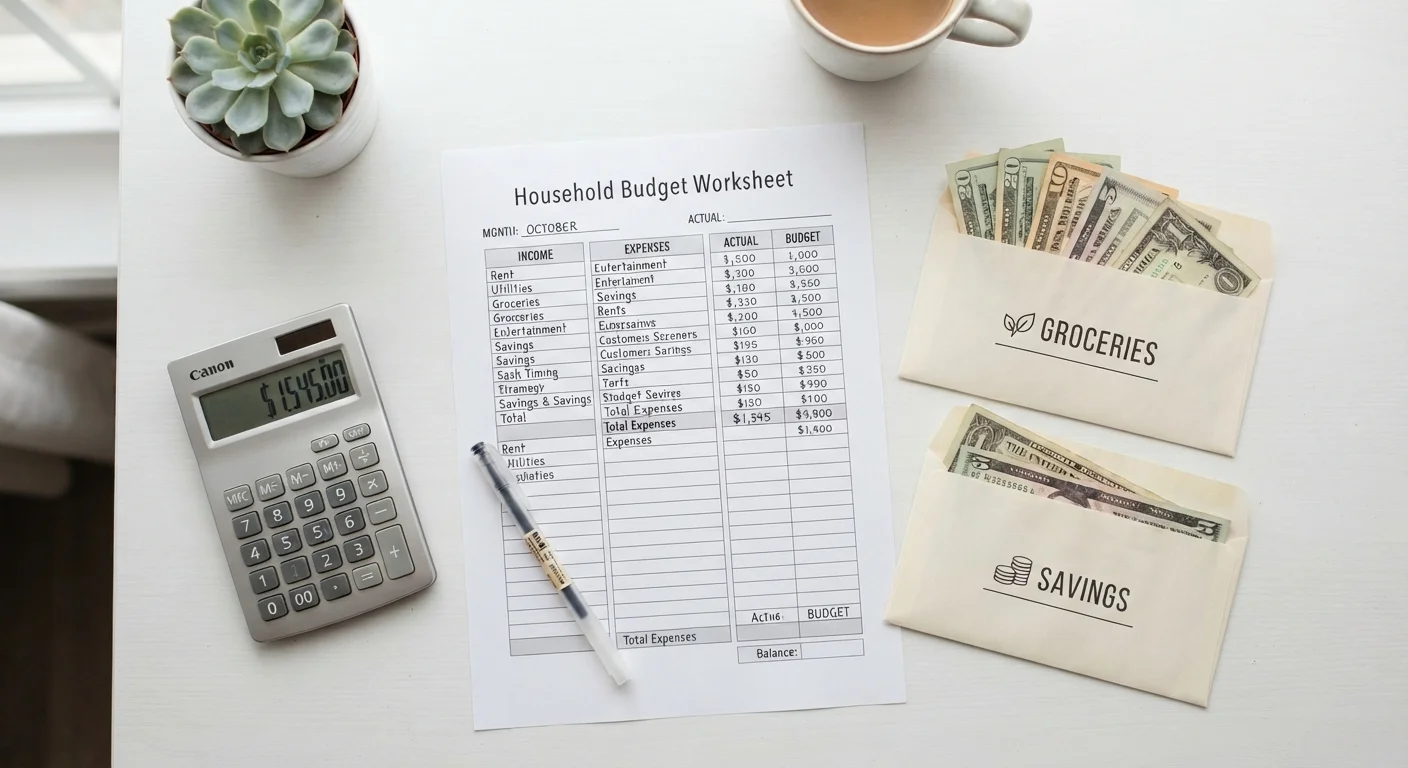
Envelope budgeting takes a different approach. Before the month begins, you assign a specific dollar amount to each spending category - groceries, gas, clothing, dining - and either place physical cash in labeled envelopes or use a digital equivalent. When the envelope is empty, spending in that category stops. This method traces its roots to cash-based household management practices and has been adapted into several popular digital budgeting apps.
Both methods share a common goal: ensuring your spending aligns with your priorities. But they differ substantially in how much structure and attention they require. For a broader look at budgeting methodology, see our complete personal budgeting resource.
| Criterion | 50/30/20 Rule | Envelope Budgeting |
|---|---|---|
| Structure level | 3 broad percentage buckets | Many specific dollar-amount categories |
| Time commitment | Low - monthly review sufficient | Moderate - weekly reconciliation typical |
| Best income type | Stable, salaried income | Variable or irregular income |
| Spending visibility | Broad category trends only | Line-item precision per category |
| Flexibility | High - few hard limits | Low - spending stops when envelope empties |
| Ease of starting | Very easy - three rules to remember | Moderate - requires upfront category planning |
| Overspending prevention | Relies on self-monitoring | Built-in hard stop per category |
| Adapts to life changes | Easy - adjust percentages | Requires re-allocating envelopes each month |
Strengths and Limitations of Each Approach
The 50/30/20 rule's greatest strength is its accessibility. There is no need to create a detailed category list or reconcile dozens of line items each week. For households with predictable income and moderate spending discipline, it provides enough structure to hit savings targets without becoming a second job. Its primary limitation is that the broad buckets can mask problem areas. If you spend 35% on wants without realizing it, the framework won't alert you - it requires honest self-reporting.
Envelope budgeting, by contrast, forces explicit allocation decisions upfront. Because every dollar is assigned before you spend it, there is little room for vague overspending to accumulate. Research from behavioral economics consistently shows that people spend less when they use concrete, limited pools of money rather than drawing from a general account. The downside is the maintenance burden: envelope budgeting requires regular reconciliation and can feel restrictive when unexpected expenses arise mid-month.
~40%
Americans without a written monthly budget
According to a National Foundation for Credit Counseling survey, a significant share of U.S. adults do not track spending with any formal budget structure.
20%
Income targeted for savings under 50/30/20
The 50/30/20 framework designates one-fifth of after-tax income to savings and debt repayment, aligning with general guidance from consumer finance educators.
For readers who want even finer control, strict category-based budgeting explores when granular tracking helps versus when it creates more friction than value.
Choosing the Right Fit for Your Situation
The most effective budget is one you will actually maintain. Consider these factors when deciding between the two frameworks:
- Income type: Salaried earners benefit from the percentage simplicity of 50/30/20. Freelancers or gig workers often find envelope budgeting more reliable because it works with real dollars received, not projected earnings.
- Spending patterns: If you have a general sense that you spend too much but can't identify where, envelope budgeting's category visibility is a powerful diagnostic tool.
- Time available: The 50/30/20 rule can be reviewed in minutes each month. Envelope budgeting typically requires weekly check-ins to stay accurate.
- Financial goals: If building an emergency fund or eliminating high-interest debt is the priority, the stricter category control of envelope budgeting can accelerate progress.
Hybrid Approaches Are Common
Many households combine elements of both methods - using the 50/30/20 rule as a high-level guide while applying envelope-style limits to one or two problem spending categories like dining or entertainment. Starting with one framework doesn't lock you in permanently. As your income, expenses, and financial goals shift, your budgeting method should evolve too. A monthly review habit makes those adjustments easier to catch early.
These are general frameworks, not prescriptions. If you're working toward a specific financial goal - eliminating debt, saving for a home, or planning for retirement - consider consulting a licensed financial adviser who can tailor a strategy to your full financial picture.
You may also find it useful to explore zero-based budgeting, a method that shares envelope budgeting's dollar-by-dollar discipline but applies it at the income level rather than through physical cash categories.
Once you've chosen a framework, use a monthly budget audit checklist to review your progress, catch spending drift, and adjust for irregular costs before they become a problem.
This article is for general informational and educational purposes only and does not constitute personalized financial advice. Consult a qualified, licensed financial professional before making decisions based on your individual circumstances.