

Key Takeaways
- Debt settlement reduces what you owe but can severely damage your credit score and carries tax implications.
- Debt management plans (DMPs) require full repayment but typically preserve credit health better over time.
- Settlement involves stopping payments temporarily; DMPs require consistent monthly payments to a credit counseling agency.
- Neither option is universally better - your income, debt load, and financial goals should guide the decision.
- Consult a nonprofit credit counselor or licensed financial professional before committing to either approach.
Our Verdict
Debt settlement and debt management plans target the same problem - unmanageable debt - but through very different mechanisms with very different consequences. Settlement may reduce the principal owed but comes with serious credit damage and potential tax liability. A DMP costs more in total repayment but is far less disruptive to your credit profile and financial standing. Most people will find a DMP the more predictable and lower-risk route.
| Best for | Recommended |
|---|---|
| Those facing severe financial hardship with no realistic path to full repayment | Debt Settlement |
| Those with steady income who want structured, credit-conscious debt relief | Debt Management Plan |
| Those who want to avoid tax complications and third-party fees | Debt Management Plan |
| Those with multiple unsecured debts and creditors unwilling to negotiate directly | Debt Management Plan |
How Each Approach Works
If you're carrying more unsecured debt than you can realistically manage - credit cards, medical bills, personal loans - two structured relief options often come up: debt settlement and debt management plans (DMPs). They sound similar, but they operate very differently.
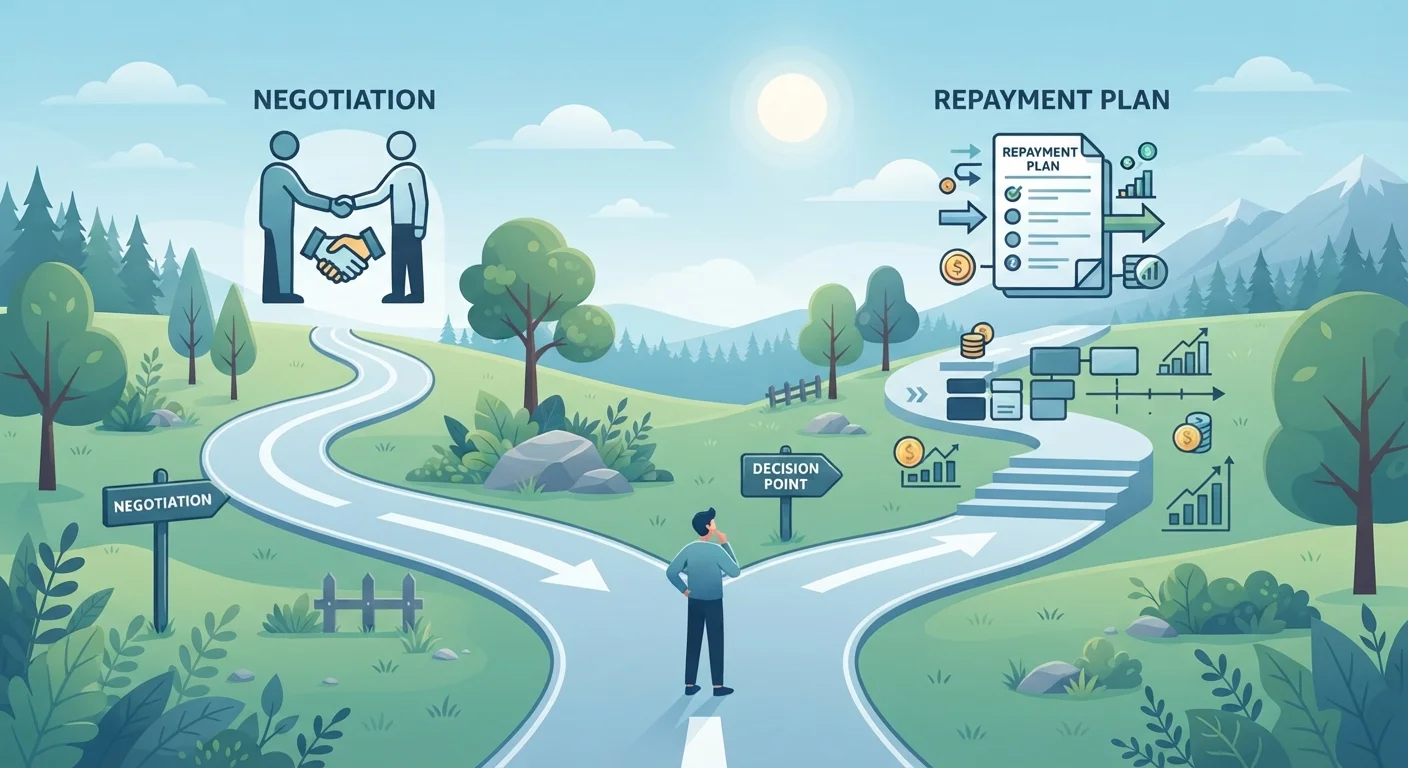
Debt settlement is a negotiation process in which you (or a settlement company) attempt to convince creditors to accept a lump-sum payment that is less than the full amount owed. To build the funds for that lump sum, you typically stop making regular payments and deposit money into a dedicated account instead. Settlement companies then negotiate once enough has accumulated - a process that can take two to four years.
Debt management plans are offered through nonprofit credit counseling agencies. Rather than reducing your principal, a DMP consolidates your monthly payments into one, and the agency negotiates with creditors on your behalf for reduced interest rates or waived fees. You make a single monthly payment to the agency, which distributes it to creditors. Most DMPs run three to five years.
For a broader primer on how debt and credit interact, see our starter guide to debt and credit.
| Debt Settlement | Debt Management Plan | |
|---|---|---|
| Principal reduced? | Yes - creditor accepts less | No - full balance repaid |
| Credit score impact | Severe - delinquencies and settled status | Mild - accounts stay current |
| Typical duration | 2-4 years | 3-5 years |
| Fees | 15%-25% of enrolled debt | ~$25-$35/month administrative fee |
| Tax implications | Forgiven debt may be taxable income | None - no debt forgiven |
| Who administers it | For-profit settlement companies | Nonprofit credit counseling agencies |
| Creditor participation | Not guaranteed | Generally pre-arranged by agency |
| Best suited for | Severe hardship, behind on payments | Steady income, high interest burden |
Credit Score and Financial Consequences
This is where the two approaches diverge most sharply. With debt settlement, the process of stopping payments causes delinquencies to accumulate on your credit report - each missed payment is a separate negative mark. Even after a settlement is reached, the account is typically reported as "settled for less than the full amount," which itself signals default to future lenders. These marks can remain on your credit report for up to seven years.
DMPs generally have a milder credit impact. While some creditors may close accounts or note enrollment in a DMP on your report, you remain current on your debts throughout the plan. On-time payments are recorded positively, and many people see credit scores stabilize or improve over the life of the plan.
Watch Out for For-Profit Settlement Firms
The debt settlement industry includes some companies with a history of misleading fee structures and unfulfilled promises. The Consumer Financial Protection Bureau (CFPB) warns consumers to be cautious of companies that charge upfront fees before settling any debt - this practice is prohibited under federal rules for telemarketing sales. If you pursue settlement, verify the company's credentials and complaints history before signing anything.
There's also a tax dimension to settlement: the IRS generally considers forgiven debt as taxable income. If a creditor forgives $5,000 of debt, you may owe income tax on that amount. DMPs involve no debt forgiveness, so this issue doesn't arise. Always consult a qualified tax professional about your specific situation.
Costs, Fees, and What You Actually Pay
Neither option is free, but the fee structures differ significantly. For-profit debt settlement companies typically charge 15%-25% of the enrolled debt amount - sometimes calculated on the original balance, sometimes on the settled amount. Given that settlement can also trigger late fees and penalty interest during the non-payment period, your total cost can be higher than it first appears.
Nonprofit credit counseling agencies offering DMPs charge much more modest fees - often a monthly administrative fee averaging around $25-$35, according to the National Foundation for Credit Counseling. Some agencies reduce or waive fees for consumers who qualify based on financial need.
In terms of total debt repaid, DMPs cost more because you're paying the full principal. But settlement's hidden costs - fees, accrued interest during non-payment, and potential taxes on forgiven amounts - can narrow that gap considerably. If you're weighing a different approach altogether, our article on how debt consolidation works covers another path worth understanding.
Which Situation Suits Each Option
Debt settlement is generally considered a last resort - most appropriate for people who are already significantly behind on payments, facing potential legal action from creditors, and have no realistic ability to repay the full amounts owed. It carries substantial risk: creditors are not required to settle, and some may sue rather than negotiate.
A DMP is more appropriate for people who have a steady income but are struggling with high interest rates and multiple payment deadlines. It works best with unsecured debts like credit cards. If your core problem is organization and interest burden rather than an inability to pay, a DMP is a more structured and lower-risk tool.
Neither approach addresses secured debts like mortgages or auto loans. And both are distinct from self-managed strategies like the debt snowball or avalanche methods - see our comparison of snowball and avalanche repayment strategies if you're exploring DIY options. If you're also trying to maintain savings while repaying debt, balancing saving and debt payoff may offer useful perspective.
This article is for general informational and educational purposes only and does not constitute personalized financial, legal, or tax advice. Consult a qualified financial advisor, credit counselor, or tax professional regarding your individual situation.