

Key Takeaways
- The debt snowball targets your smallest balance first, regardless of interest rate, to build psychological momentum.
- The debt avalanche targets your highest interest rate first, reducing the total interest you pay over time.
- Neither method requires extra income - both rely on redirecting the same monthly payment as each debt is eliminated.
- Research suggests the snowball can improve follow-through for some people, but the avalanche typically costs less in the long run.
- Your ideal method depends on your personal motivation style and the specific mix of debts you carry.
- Both strategies work best when paired with a clear monthly budget and a commitment to avoiding new debt.
Option A
Debt Snowball
The momentum-building, motivation-first approach.
Best for: People who need early wins to stay committed to a long debt payoff journey.
Option B
Debt Avalanche
The mathematically optimal, interest-minimizing strategy.
Best for: People who are comfortable deferring early wins in exchange for paying less interest overall.
If you struggle to stay motivated during a long payoff process
Debt Snowball
Clearing smaller balances quickly produces visible progress, which research links to stronger follow-through and reduced debt abandonment.
If you want to minimize the total interest paid across all debts
Debt Avalanche
Attacking the highest-rate debt first stops the most expensive interest from compounding, saving more money over the life of your repayment plan.
If your debts are similar in both balance and interest rate
Debt Snowball
When the mathematical difference between strategies is small, the motivational advantage of the snowball can tip the scales in its favor.
If you carry one or two very high-interest debts (such as credit cards above 20% APR)
Debt Avalanche
At high interest rates, delaying repayment compounds costs significantly - the avalanche prevents that expense from growing further.
If you are new to structured debt repayment and want a straightforward starting point
Debt Snowball
Its simplicity and early momentum make it an accessible entry point for anyone just beginning to take control of multiple debts.
How Each Strategy Works
Both the debt snowball and debt avalanche are structured repayment methods built on the same core mechanic: you make minimum payments on all your debts, then direct any extra money toward one target debt at a time. When that debt is eliminated, you roll its former payment into the next target - creating a larger and larger payment over time. The difference lies entirely in how you order your targets.
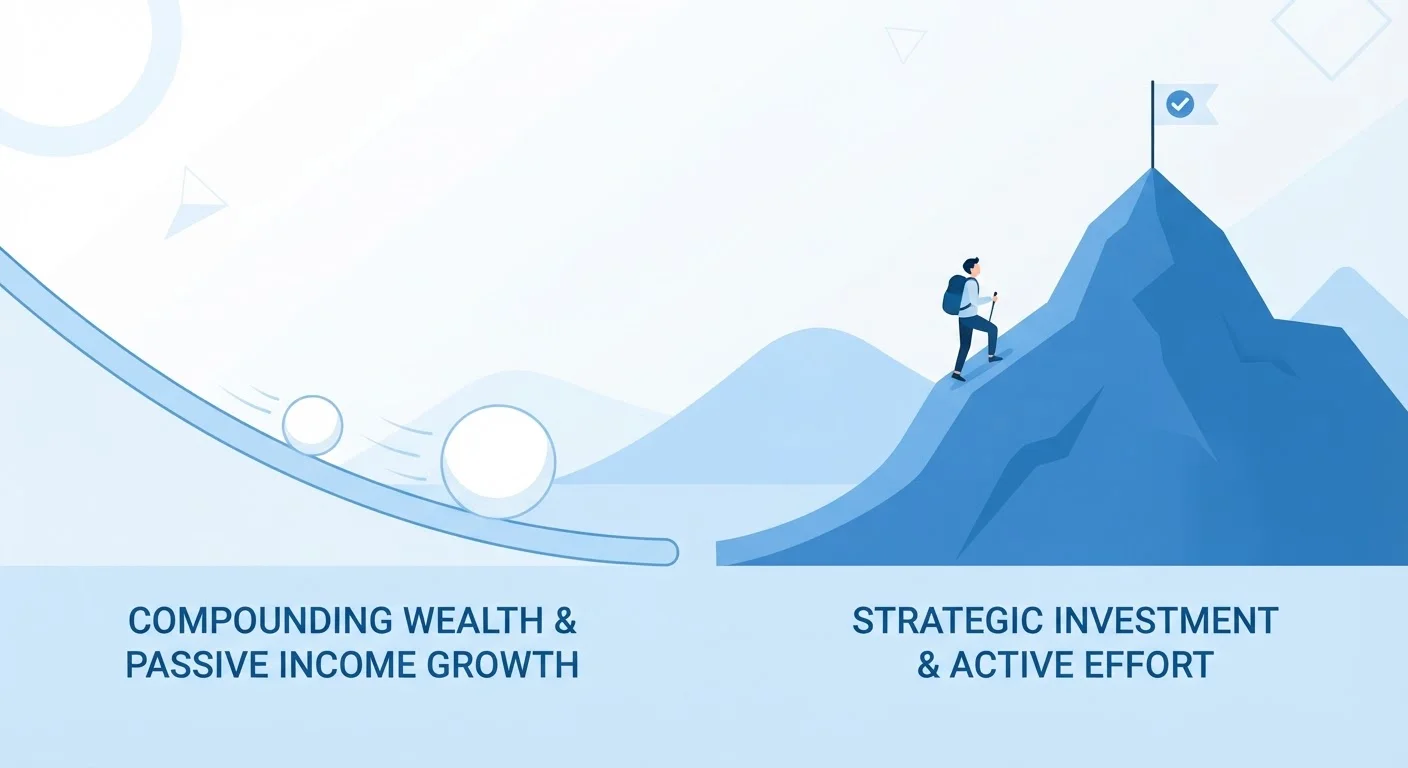
Debt Snowball: You rank your debts from smallest balance to largest, ignoring interest rates. You attack the smallest first. Once it's gone, you move to the next smallest, and so on. The name reflects how the freed-up payment grows, like a snowball rolling downhill.
Debt Avalanche: You rank your debts from highest interest rate to lowest, ignoring balance size. You pay down the most expensive debt first. Once it's cleared, you redirect that payment to the next highest-rate debt. The avalanche analogy captures how eliminating the steepest interest charge triggers a cascading reduction in your overall cost.
If you're just getting oriented on debt terminology, see our starter guide to debt and credit before diving deeper.
| Criterion | Debt Snowball | Debt Avalanche |
|---|---|---|
| Payoff order | Smallest balance first | Highest interest rate first |
| Primary advantage | Motivational momentum | Lower total interest paid |
| First "win" timeline | Faster (smallest debt cleared first) | Slower if high-rate debt is large |
| Mathematical efficiency | Lower (may pay more interest) | Higher (minimizes interest cost) |
| Behavioral support | Strong - frequent milestones | Relies on discipline over time |
| Best debt mix | Many small, varied balances | Debts with large rate differences |
| Complexity | Simple to set up and follow | Slightly more calculation upfront |
The Real-World Trade-Offs
The avalanche is the mathematically superior method in almost every scenario involving debts with meaningfully different interest rates. By neutralizing your most expensive debt first, you reduce the total interest accruing across your entire debt load from day one. The higher the rate spread between your debts, the larger that advantage becomes.
The snowball's strength is behavioral, not mathematical. A study published in the Journal of Consumer Research found that reducing the number of outstanding debts - rather than the total balance - was more motivating for many borrowers, and correlated with better repayment consistency. For some people, the sense of accomplishment from paying off an account completely is worth the marginally higher interest cost.
~$1,000+
Potential interest saved with avalanche on typical multi-debt scenarios
Consumer finance analyses commonly illustrate that households carrying credit card and personal loan debt at varied rates can save hundreds to over a thousand dollars by prioritizing the highest-rate account first.
77%
Americans carrying some form of debt
According to Federal Reserve data, a large majority of U.S. households hold at least one form of debt, underscoring how broadly applicable structured payoff strategies are.
It's also worth noting that neither method is a silver bullet. If you have a high-interest debt with a large balance, it could take years before the avalanche delivers its first "win." That extended wait tests commitment. Conversely, if your smallest debt also happens to carry your highest rate, the two methods are identical - a useful reminder that you should always map your debts on paper before choosing.
For a broader look at how debt classification shapes your repayment priorities, our article on good debt vs. bad debt provides useful context.
Choosing Your Method - and Making It Stick
Before selecting a strategy, list every debt you carry: the outstanding balance, minimum payment, and interest rate for each. This map is the foundation of either approach. From there, the choice comes down to an honest assessment of your own behavior under pressure.
Ask yourself: Have you started debt payoff plans before and stalled out? If yes, the psychological scaffolding of the snowball may serve you better. Are you detail-oriented, motivated by data, and confident you'll stay the course? The avalanche is likely the more financially efficient fit.
Some people split the difference - using the snowball initially to clear one or two small debts quickly, then switching to avalanche ordering for the remaining balances. This hybrid isn't textbook, but if it keeps you engaged, the practical benefit outweighs the theoretical inefficiency.
Whichever method you choose, it works best inside a disciplined monthly budget. The budgeting basics hub offers foundational frameworks for identifying the extra money you'll need to make either strategy effective. You may also want to explore balancing debt payoff with saving, since building even a small emergency fund alongside repayment can prevent a single unexpected expense from derailing your plan entirely.
If your debt load feels unmanageable regardless of ordering strategy, it may be worth reviewing alternatives such as debt consolidation or understanding the differences between debt settlement and debt management plans before committing to a DIY payoff path.
This article is for general informational and educational purposes only and does not constitute personalized financial advice. Consider speaking with a licensed financial counselor or advisor about your specific situation.