

Key Takeaways
- Good debt typically finances assets or opportunities that can grow in value or boost income over time.
- Bad debt usually funds depreciating purchases at high interest rates, costing more than the item is worth.
- Interest rate and purpose together determine whether a debt helps or hurts your financial position.
- Even "good" debt can become problematic if the terms are unfavorable or the amount is unmanageable.
- Understanding this distinction helps you make more deliberate borrowing decisions rather than avoiding debt entirely.
Good Debt vs. Bad Debt
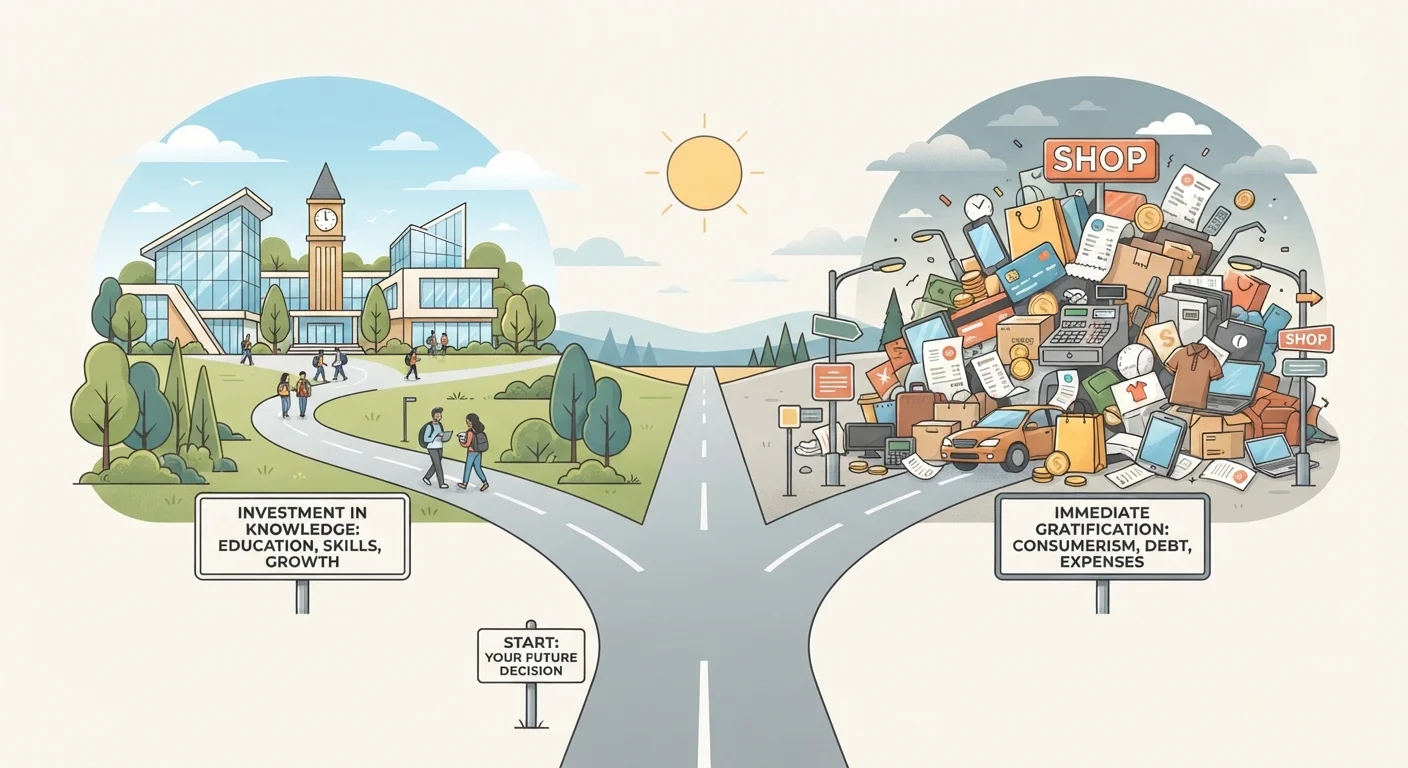
"Good debt" refers to borrowing that finances something likely to grow in value or increase your earning power over time - such as education or a home. "Bad debt" describes borrowing used to buy things that lose value quickly or carry high costs relative to any benefit, like high-interest credit card balances on discretionary purchases. The distinction is a framework for evaluating whether a debt is working for you or against you.
Financial professionals sometimes debate the "good" label, noting that any debt carries risk and that individual circumstances vary widely. The classification is a heuristic, not an absolute rule.
Why the Label Matters
Debt is one of the most emotionally charged words in personal finance. For many people, all debt feels like a problem to eliminate. But treating every borrowed dollar the same way leads to poor decisions - paying off a low-interest mortgage aggressively while ignoring a 24% APR credit card balance, for example, is a costly mistake.
The good debt/bad debt framework gives you a practical lens for evaluating borrowing. It shifts the question from "do I have debt?" to "is this debt creating or destroying financial value?" That reframe leads to clearer priorities and more intentional money management.
This is general financial education, not personalized advice. For decisions specific to your situation, consulting a licensed financial professional is always a sound step.
What Makes Debt "Good"
Good debt is broadly defined as borrowing that finances something with lasting value - either an asset that may appreciate or an investment in your future earning capacity. A few common examples:
- Mortgages: Real estate can appreciate over time, and homeownership builds equity. Mortgage interest rates are typically lower than other loan types.
- Student loans: When used to fund education that meaningfully raises lifetime earnings, student loans can pay for themselves - though this varies considerably by field, institution, and loan terms.
- Small business loans: Borrowing to start or grow a business that generates income can create a positive return on that debt.
Two features tend to define good debt: a relatively low interest rate and a clear connection to future value. Neither feature alone is sufficient. A low-rate loan used for something that earns nothing still costs money over time.
20%+
Average U.S. credit card interest rate
Federal Reserve data has shown average credit card rates consistently exceeding 20% APR in recent periods, illustrating the high cost of carried balances.
$1.7T+
Total U.S. student loan debt outstanding
According to Federal Reserve figures, student loan debt is one of the largest categories of consumer debt in the United States, underscoring the importance of evaluating borrowing terms carefully.
~6-7%
Typical 30-year fixed mortgage rate range
Mortgage rates - while they fluctuate - are generally lower than credit cards or payday loans, reflecting the secured nature of home loans and their classification as lower-cost debt.
What Makes Debt "Bad"
Bad debt generally has two characteristics: it funds things that lose value immediately, and it comes with high interest rates that compound the cost. High-interest credit card balances carried month to month are the most cited example - the average credit card interest rate in the U.S. has regularly exceeded 20% APR in recent years, according to Federal Reserve data.
When you borrow at 22% to buy something that's worth half its purchase price the moment you use it - a restaurant meal, a vacation, everyday clothing - you're paying a significant premium over time with no financial return. Payday loans and certain personal loans used for non-essential spending follow the same pattern at even steeper rates.
A Simple Rule for Evaluating Any Debt
Before borrowing, ask whether the thing you're financing will grow in value or increase your income. If the honest answer is no - and the interest rate is high - that's a signal to pause. Even when borrowing is necessary, shopping for the lowest available rate reduces the overall cost meaningfully.
Understanding how different debts interact with your credit profile is also important. See our guide on debt and your credit score for a stage-by-stage breakdown.
The Gray Areas You Should Know
The good/bad framework is a useful starting point, not a rigid rule. Several common debts fall into genuinely ambiguous territory:
- Auto loans
- Cars depreciate immediately and consistently, which leans toward "bad." Yet many people need a reliable vehicle to earn income. At a reasonable interest rate for a practical vehicle, an auto loan may be a necessary and manageable cost.
- Personal loans
- The classification depends entirely on what the money funds. A personal loan used to consolidate high-interest credit card debt at a lower rate may reduce total costs. The same loan used for an impulse purchase adds financial weight without benefit. You can learn more in our overview of how debt consolidation works and when it helps.
Even "good" debt can turn problematic if the loan amount is disproportionate to the benefit or the repayment terms are unmanageable. A mortgage you cannot sustain is not good debt for your household, regardless of how real estate performs on average.
Context Changes Everything
The good/bad classification is a general framework, not a universal verdict. A debt that's manageable for one household may be overwhelming for another at the same dollar amount. Income, existing obligations, job stability, and emergency savings all affect whether a given debt is sound. Use the framework as a starting point, not the final word.
Applying the Framework to Your Own Borrowing
Before taking on any debt, it helps to ask three questions: What is the interest rate? What am I financing - does it hold or grow in value? And can I realistically repay this on the agreed timeline?
If you're already managing multiple debts, the framework can also guide payoff strategy. High-rate debt with no offsetting value - bad debt - typically deserves your most aggressive repayment effort. Lower-rate debt tied to appreciating assets may be manageable to carry while you direct extra dollars elsewhere, such as an emergency fund or retirement contributions.
For households juggling several balances at once, our article on saving and paying off debt at the same time explores how people navigate both goals simultaneously. And if you're weighing structured relief options, see our comparison of debt settlement vs. debt management plans for an honest look at the trade-offs.
The goal isn't to eliminate debt from your financial life - it's to ensure that when you do borrow, you're doing so with a clear-eyed understanding of what that debt is costing you and what, if anything, it's building in return.
This article is for informational and educational purposes only and does not constitute personalized financial advice. Consult a qualified financial professional for guidance specific to your circumstances.