

Key Takeaways
- Ingredients are listed by weight before cooking, so order alone doesn't tell the whole story.
- Named protein sources (like 'chicken' or 'salmon') are generally more transparent than vague terms like 'meat meal'.
- Ingredient splitting can make a less desirable ingredient appear lower on the list than it really is.
- Preservatives, vitamins, and minerals near the bottom of the list are normal and often necessary.
- No single ingredient makes or breaks a diet - overall nutritional balance matters most.
What you will need
Why Ingredient Lists Feel So Confusing
Pet food labels are densely packed with chemical names, marketing language, and regulatory jargon - sometimes all on the same panel. It's easy to fixate on the first ingredient or get distracted by a single unfamiliar term, only to miss the bigger picture of whether a food is nutritionally sound.
The ingredient list is a valuable tool, but it works best when you understand its rules and limits. As our companion article explains, reading a pet food label without getting lost in the jargon requires looking at multiple panels together - not just one section in isolation.
The steps below walk you through the list systematically, from the first ingredient to the last additive, so you can focus on what actually matters for your pet's health.
This Is Education, Not Medical Advice
This article provides general information about how to interpret pet food ingredient lists. It is not a substitute for guidance from a licensed veterinarian or veterinary nutritionist. If your pet has a health condition, allergy, or specific dietary need, always consult a qualified professional before changing their diet.
What you will need
What the Steps Will Cover
You'll work through six structured steps: finding and orienting to the list, identifying protein sources, spotting ingredient splitting, understanding carbohydrate sources, interpreting preservatives and additives, and cross-checking the AAFCO statement. Together, they give you a repeatable process you can use on any pet food package.
Pet food package or label
The physical or digital label you'll be reading through step by step.
AAFCO nutrient profiles (publicly available)
Reference document published by the Association of American Feed Control Officials listing minimum nutrient requirements for dogs and cats.
Notebook or notes app
Useful for jotting down unfamiliar ingredient names to research further.
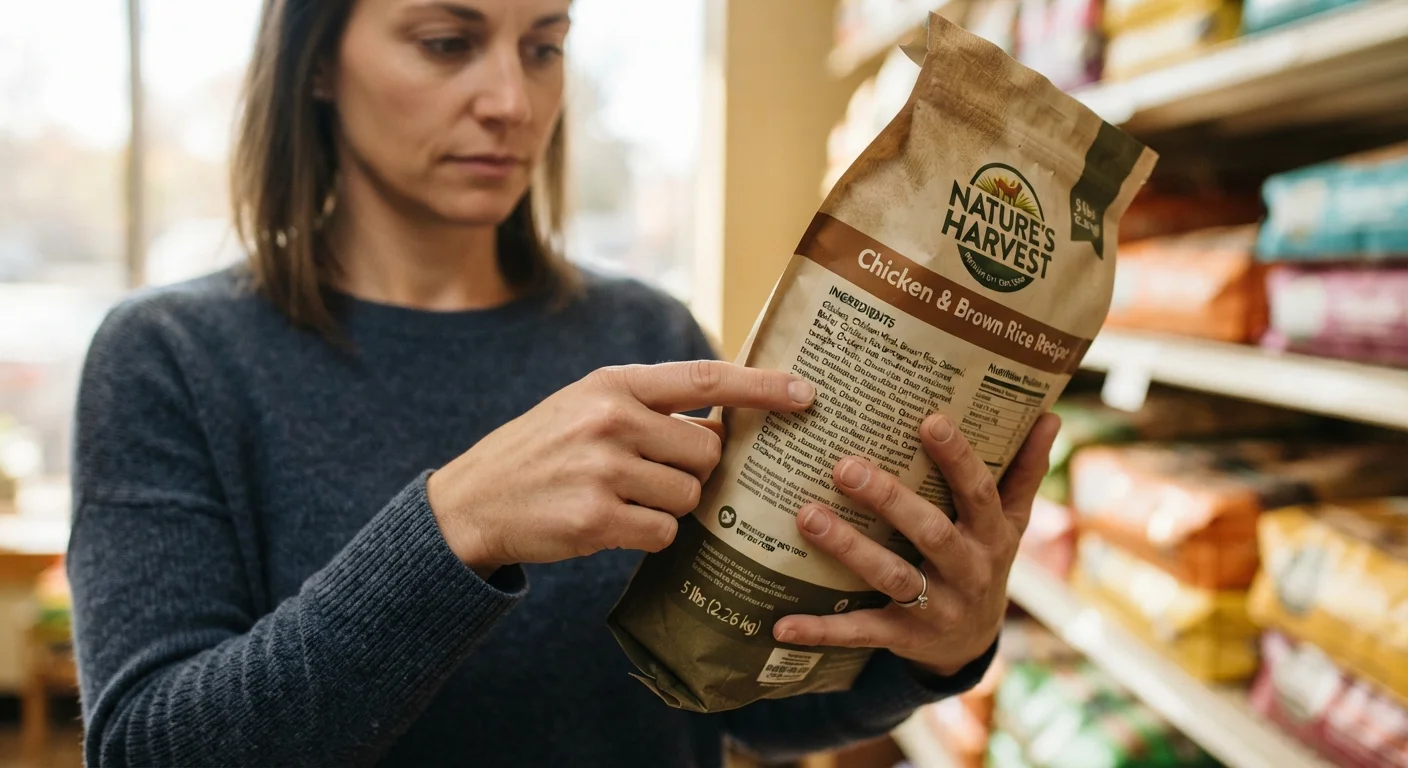
Find and orient yourself to the ingredient list
The ingredient list is a legally required section on every commercially sold pet food in the United States, governed by standards set by the AAFCO and individual state feed control officials. It typically appears on the back or side panel, often near the guaranteed analysis.
Ingredients are listed in descending order by pre-cooking weight. This means the first ingredient is present in the greatest quantity by weight - but that weight includes moisture. A raw chicken breast, for example, is about 70% water, so its placement at the top doesn't necessarily mean chicken dominates the dry matter of the finished food.
Identify the primary protein source
Scan the first few ingredients for protein sources. These may be whole meats (e.g., chicken, beef, salmon), meat meals (e.g., chicken meal), or plant-based proteins (e.g., pea protein, soy).
- Whole meats: Named, recognizable, and relatively transparent - though high in moisture weight.
- Meat meals: Already dried and concentrated, so chicken meal may actually deliver more protein per gram than whole chicken in the finished product.
- By-products: Organ meats and other non-muscle parts. Not inherently bad - organs are nutrient-dense - but named by-products (e.g., chicken by-products) are more transparent than generic ones (e.g., poultry by-products).
Watch for ingredient splitting
Ingredient splitting is a labeling practice where a single ingredient is broken into multiple forms to push it lower on the list. For example, a food might list chicken first, followed by ground corn, corn gluten meal, and corn bran separately. Combined, those corn derivatives might outweigh the chicken - but each appears lower individually.
This isn't inherently deceptive or illegal, but it's worth recognizing. If you see several variations of the same base ingredient (rice flour, brown rice, rice bran), consider their combined contribution.
Understand carbohydrate and fiber sources
Grains, legumes, and vegetables serve as carbohydrate and fiber sources. Common ones include brown rice, oatmeal, barley, sweet potato, peas, and lentils. These ingredients aren't automatically bad - many provide digestible energy and useful fiber.
The debate over grain-free diets has grown in recent years. Regulatory bodies including the FDA have investigated a potential association between certain grain-free, legume-heavy diets and a form of heart disease called dilated cardiomyopathy (DCM) in dogs. Research is ongoing and no definitive causal link has been established, but it's worth discussing with your veterinarian - particularly for breeds with elevated cardiac risk.
Read preservatives and additives without alarm
Near the bottom of most ingredient lists you'll find preservatives, vitamins, and minerals. These are normal and often essential. Without preservation, dry kibble would spoil quickly.
- Natural preservatives: Tocopherols (vitamin E), rosemary extract, and ascorbic acid (vitamin C) are commonly used.
- Synthetic preservatives: BHA, BHT, and ethoxyquin are effective but have drawn scrutiny. They are currently permitted at regulated levels; if you prefer to avoid them, check labels carefully.
- Added vitamins and minerals: Entries like zinc sulfate, niacin supplement, or vitamin D3 supplement are added to meet AAFCO nutrient minimums. Their presence is a sign the formula has been nutritionally balanced, not that the food is over-processed.
Cross-check the AAFCO nutritional adequacy statement
Once you've read the ingredient list, check whether the label carries an AAFCO nutritional adequacy statement. This statement - usually found near the ingredient panel - indicates whether the food is formulated to meet minimum nutrient profiles for a specific life stage (e.g., growth, adult maintenance, all life stages) or whether it was tested through feeding trials.
A food that meets AAFCO standards has cleared a meaningful baseline. The ingredient list tells you what is in the food; the AAFCO statement gives a measure of confidence that those ingredients together deliver adequate nutrition. For a broader view of label reading, see our guide on what pet food labels are actually telling you.
Don't Rely on Ingredient Order Alone
A protein appearing first on the list doesn't guarantee the food is protein-rich overall. Moisture content dramatically affects ingredient weight before processing. Look at the guaranteed analysis panel alongside the ingredient list for a more complete picture.
When In Doubt, Ask a Vet
If you're uncertain whether a food suits your pet's life stage or health status, a veterinary nutritionist can help you evaluate options based on your pet's individual needs. Many veterinary schools also offer nutrition consultations at reduced cost.
After completing these steps, you may want to apply what you've learned using a structured evaluation process. Our practical pet food evaluation checklist walks through additional criteria including life-stage suitability and labeling standards.
This article is for general informational and educational purposes only. It is not veterinary advice. Always consult a licensed veterinarian or veterinary nutritionist for guidance specific to your pet's health, age, breed, and dietary needs.