
Caribbean Islands Compared: Climate, Culture, and What to Realistically Expect

Key Takeaways
- Caribbean islands vary significantly in language, terrain, cost, and cultural influence - they are not interchangeable destinations.
- Hurricane season runs roughly June through November, but risk and intensity vary by island location and year.
- Some islands are US territories with no passport required for American citizens; others require full documentation.
- All-inclusive resorts are concentrated on certain islands; independent travel infrastructure varies widely.
- Budget expectations should be set per destination - costs in Barbados differ considerably from costs in the Dominican Republic.
Our Verdict
No single Caribbean island suits every traveler. The right choice depends on what you prioritize: cost, ease of access, cultural immersion, terrain, or crowd level. Matching those priorities to island characteristics - rather than booking based on name recognition alone - leads to more satisfying trips.
| Best for | Recommended |
|---|---|
| Travelers seeking US-friendly logistics and no passport requirement | Puerto Rico or US Virgin Islands |
| Those wanting lush rainforest and dramatic volcanic terrain alongside beaches | Dominica or St. Lucia |
| Budget-conscious travelers prioritizing value and large resort options | Dominican Republic or Jamaica |
| Travelers seeking calm waters, flat terrain, and reliable dry weather | Aruba or Bonaire |
Why 'The Caribbean' Isn't One Destination
The Caribbean basin contains more than 700 islands spanning roughly 1,750 miles. They share warm water and tropical latitude, but that's often where the similarity ends. A traveler expecting one island to mirror another is likely to be surprised - sometimes pleasantly, sometimes not.
Language alone illustrates the range: Spanish is spoken in Cuba, Puerto Rico, and the Dominican Republic; French in Martinique and Guadeloupe; Dutch in Aruba and Curaçao; English in Jamaica, Barbados, and the Cayman Islands. Cultural identities were shaped by different colonial histories, Indigenous heritage, and African diaspora influences that remain deeply present today.
Before comparing islands on price or weather, it helps to understand what kind of trip you're actually planning. The framework experienced travelers use - weighing climate fit, entry friction, cost of living abroad, and pace - applies directly to Caribbean destination selection.
Climate Differences That Actually Matter
The Caribbean has a broadly tropical climate, but meaningful differences exist. Islands in the southern Caribbean - Aruba, Bonaire, and Curaçao - sit outside the main hurricane belt and receive far less rainfall than islands further north. They're also drier year-round, with consistent trade winds. If predictable sunshine is your priority, the southern islands are statistically more reliable.
Hurricane season nominally runs June through November, with peak activity in August and September. However, islands like Barbados and Trinidad are rarely struck directly due to their easterly position, while islands such as the Bahamas and Puerto Rico have higher historical exposure. Travelers booking during shoulder season should verify insurance terms rather than assume safety by geography.
Rainfall patterns also differ within islands. Mountainous islands like Dominica, St. Lucia, and Puerto Rico have rain-shadow effects - one coast may be dramatically wetter than another. A resort on the leeward (west) coast of St. Lucia may experience significantly less rain than the interior or windward coast during the same week.
| Puerto Rico | Dominican Republic | Aruba | St. Lucia | Barbados | Jamaica | |
|---|---|---|---|---|---|---|
| US Passport Required | No (US territory) | Yes | Yes | Yes | Yes | Yes |
| Primary Language | Spanish / English | Spanish | Dutch / Papiamento | English / French Creole | English | English |
| Hurricane Risk (June-Nov) | Moderate-High | Moderate | Very Low | Low-Moderate | Low | Moderate |
| Terrain Type | Mountainous & coastal | Varied - mountains & plains | Flat, arid | Volcanic, lush | Flat to rolling | Mountainous & coastal |
| General Cost Level | Mid-range | Budget-Mid | High | Mid-High | Mid-High | Budget-High (varies) |
| All-Inclusive Options | Limited | Extensive | Moderate | Moderate | Some | Extensive |
| Direct US Flights | Abundant | Abundant | Moderate | Limited | Limited | Abundant |
Entry Requirements and Practical Logistics
For US citizens, Puerto Rico and the US Virgin Islands require no passport - a valid government-issued ID suffices. This meaningfully lowers the barrier for spontaneous travel. Most other Caribbean nations require a valid US passport; some add tourist cards with a small fee. Requirements can change, so always verify current entry rules through official government sources before booking.
Flight access varies considerably. Islands with major international airports - Cancún (just outside the Caribbean proper), Montego Bay, San Juan, Nassau - tend to have more competitive airfare due to higher route volume. Smaller islands like St. Barths or Anguilla typically require a connecting flight on a small regional carrier, adding time and cost.
Health-related entry requirements have fluctuated in recent years. Travelers should consult the US Department of State's country information pages and the destination country's official tourism authority for current vaccination or documentation requirements. Do not rely on third-party travel blogs for official entry rules.
Build a Documentation Checklist Early
Even if your destination doesn't require a passport, carrying one is strongly advisable for any international Caribbean trip - it simplifies emergency re-entry and is accepted everywhere. Check both the US State Department site and the destination country's official tourism authority for current entry and health documentation requirements. Rules change more frequently than most travel guides are updated.
Cost Expectations by Island Type
Cost variation across the Caribbean is substantial. Broadly, islands fall into three tiers. High-cost destinations - St. Barths, Turks and Caicos, Cayman Islands - cater to luxury travelers; mid-range accommodations are limited and basic services are expensive. Mid-tier islands - Barbados, Antigua, St. Lucia - offer a range of lodging and dining but remain pricier than mainland alternatives. Budget-accessible destinations - Dominican Republic, Jamaica (outside premium resorts), Puerto Rico - offer more flexibility for cost-conscious travelers.
All-inclusive resorts concentrate heavily in Jamaica and the Dominican Republic, where the model is well-established. It's worth understanding what all-inclusive packages actually include before assuming they eliminate all vacation spending - many exclude premium restaurants, excursions, and spa services.
Currency matters too. Islands using the Eastern Caribbean Dollar (a fixed-rate currency pegged to the US dollar) provide predictable exchange math. Others use local currencies that fluctuate. US dollars are widely accepted in tourist areas across most islands, but exchange rates at hotels are typically less favorable than at local banks or ATMs.
700+
Islands, cays, and islets in the Caribbean
The Caribbean Sea basin contains over 700 landmasses, spanning 13 independent nations and numerous territories.
~$150-$600+
Per-night hotel range across the region
Nightly accommodation costs vary enormously by island and season; budget properties exist mainly in the Dominican Republic, Puerto Rico, and Jamaica.
June-Nov
Atlantic hurricane season window
The National Hurricane Center designates this six-month period as hurricane season, with peak activity typically occurring in August and September.
Terrain, Activities, and What Each Type of Island Delivers
Flat, coral-based islands - Aruba, Grand Cayman, Anguilla - offer calm, clear water ideal for snorkeling and diving, but limited hiking or interior exploration. If your trip centers on the water and beach, these deliver reliably. If you want varied terrain, they don't.
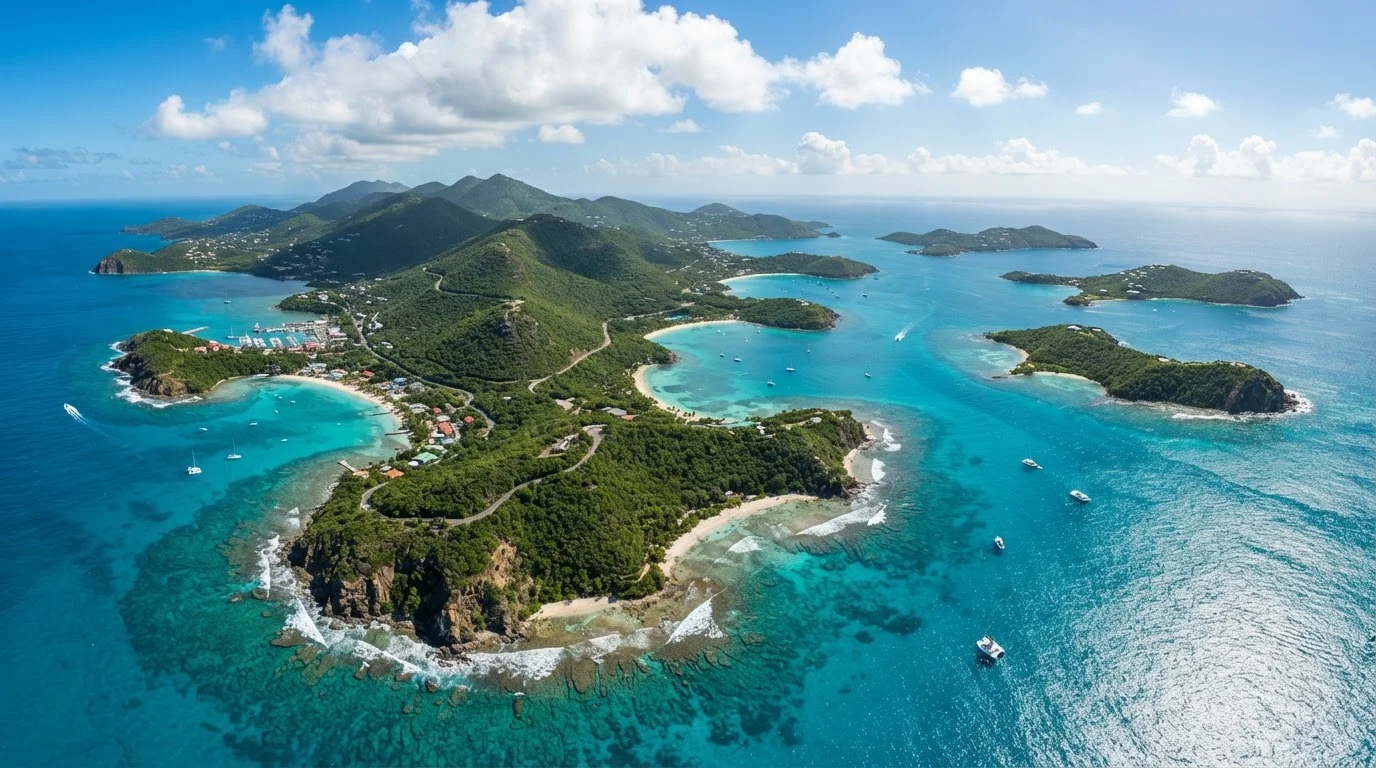
Volcanic islands - St. Lucia, Dominica, St. Kitts - offer dramatic highlands, rainforest hikes, and geothermal features alongside beaches. Dominica in particular is known as the "Nature Island" for its dense biodiversity and hiking trails, though its beaches are less postcard-perfect than those on flatter islands. St. Lucia's Piton mountains are among the most photographed landmarks in the entire Caribbean.
If you're trying to decide whether rugged natural scenery or coastal relaxation better fits your personality, that same question applies when comparing mountain towns versus beach towns as a general travel framework. The same logic holds within the Caribbean: terrain shapes the activity menu significantly.
Cultural and urban experiences also vary. San Juan, Puerto Rico offers a walkable historic district (Old San Juan), galleries, and a local food scene that goes well beyond resort dining. By contrast, some smaller islands have very limited urban infrastructure - the appeal is natural, not metropolitan. Setting honest expectations about what each destination type delivers prevents disappointment on arrival.