
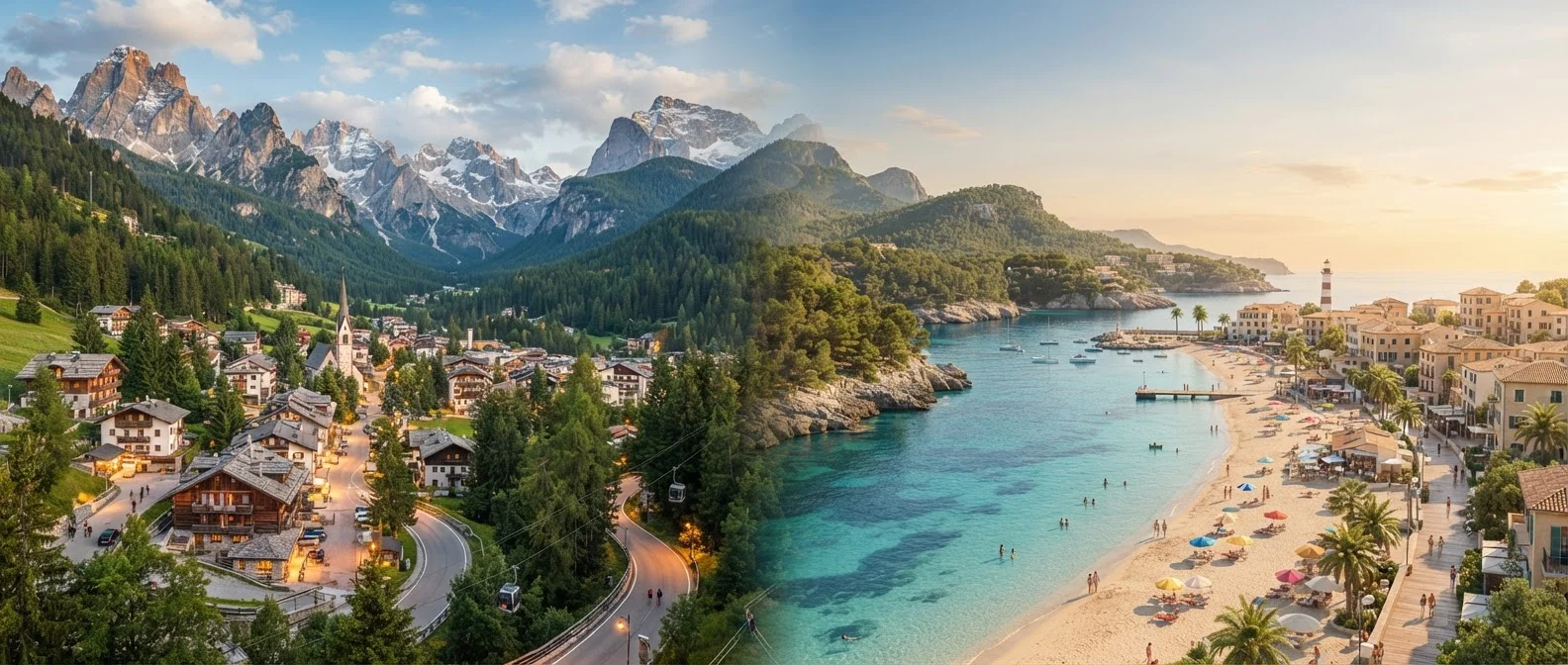
Mountain Towns vs. Beach Towns: Matching Your Travel Style to the Right Setting

Key Takeaways
- Mountain towns typically offer four-season flexibility, while beach towns peak sharply in summer with higher crowd levels.
- Accommodation costs in beach towns often spike significantly during summer; mountain towns can be more affordable outside ski season.
- Activity spending differs widely: gear rentals and guided hikes dominate mountain budgets, while water sports and excursions lead beach costs.
- Mountain settings generally suit travelers who prefer active itineraries and cooler climates over relaxation-focused stays.
- Beach towns offer more dining and nightlife variety but can feel crowded and expensive during peak season.
- Your travel pace-active exploration versus deliberate rest-is the clearest signal for which setting fits you best.
Option A
Mountain Towns
The active, all-season escape with dramatic scenery.
Best for: Travelers who want hiking, cooler temperatures, wildlife, and a quieter, less crowded basecamp.
Option B
Beach Towns
The laid-back, sun-driven destination built around water.
Best for: Travelers seeking warm weather, water activities, and a relaxed, social atmosphere by the coast.
If you want a physically active itinerary with hiking, cycling, or wildlife spotting
Mountain Towns
Mountain destinations are built around trail access and outdoor exploration, giving active travelers more options per day without relying on weather windows.
If your priority is warm weather, swimming, and a relaxed daily rhythm
Beach Towns
Beach settings naturally support slower-paced trips centered on sun and water, with minimal planning required to fill the days.
If you're traveling in summer on a tighter budget
Mountain Towns
Beach towns see their sharpest price increases in summer; mountain towns outside ski resort areas can offer more moderate pricing during the same period.
If you're planning a winter or shoulder-season trip
Beach Towns
Many beach destinations are most affordable and least crowded in winter, while mountain towns can become expensive during ski season.
If you want diverse dining, nightlife, and social atmosphere
Beach Towns
Coastal towns typically support a wider hospitality ecosystem, with beachfront dining, bars, and events concentrated in walkable areas.
Pace and Atmosphere: What Each Setting Actually Feels Like
The single biggest difference between mountain and beach towns isn't the scenery - it's the pace they impose on your trip. Mountain towns tend to be task-oriented: you wake up early, hit the trail or slopes, and structure your day around conditions and daylight. The atmosphere is often quieter, more self-contained, and less driven by nightlife or social scenes.
Beach towns, by contrast, encourage drift. Days expand naturally around tides, temperatures, and meals. Social activity is more visible - shared spaces like boardwalks, beach bars, and outdoor restaurants create an easy, communal feel. This isn't inherently better or worse; it depends entirely on what you need from the trip.
If you've been weighing the broader question of what kind of environment genuinely recharges you, the city break vs. nature retreat framework offers a useful set of signals to read before you book.
| Criterion | Mountain Towns | Beach Towns |
|---|---|---|
| Typical pace | Active, structured around daylight | Relaxed, fluid daily rhythm |
| Peak season | Winter (ski) & summer (hiking) | Summer (June-August) |
| Shoulder-season value | Spring & fall - often excellent | May-June & September-October |
| Primary activity costs | Gear, permits, guide fees | Water sports, excursions, dining |
| Crowd levels at peak | Moderate outside resort hubs | High at popular coastlines |
| Climate comfort | Cooler temps, variable weather | Warm, sunny, humidity varies |
| Dining & nightlife variety | Limited in smaller towns | Broader range, beachfront options |
| Best traveler fit | Active, nature-focused travelers | Rest-seeking, social travelers |
Costs, Crowds, and Seasonality
Timing has an outsized effect on both types of destination. Beach towns hit peak pricing and peak crowds in summer, particularly along popular US coastlines. A beachfront rental that runs $150/night in October may exceed $400/night in July - and availability tightens weeks or months in advance. Mountain towns face a similar dynamic in ski season (roughly December through March), with resort areas commanding premium rates for lodging, lift tickets, and dining.
The practical implication: shoulder season often represents the best value at both settings. For beach towns, that's May-June or September-October. For mountain towns, late spring and fall - after snow melts but before leaf-peeping crowds - can offer genuinely affordable windows with good weather.
For a deeper look at how seasonality reshapes your total spending beyond just lodging, see how seasonality shapes what you'll spend on a trip.
2-3×
Beach lodging price increase in peak summer
Coastal rental markets in popular US destinations commonly see nightly rates double or triple between off-peak and peak summer weeks, based on widely reported rental market patterns.
~40%
Traveler cost savings in shoulder season
Travel industry analyses consistently suggest shoulder-season travelers can save roughly a third to half on accommodation and flights compared to peak-week equivalents.
Top 3
Activities driving mountain trip spending
Equipment rental, guided tours, and national or state park fees are among the leading discretionary costs for mountain destination visitors, according to general outdoor travel spending patterns.
Activities, Gear, and What You'll Actually Spend On
Activity costs break differently across the two settings. Mountain trips frequently involve gear - whether rented or owned - plus guide fees, park passes, or trail permits. Day hikes can be low-cost, but multi-day backcountry trips, ski rentals, or guided excursions add up quickly. Budget travelers can keep mountain costs down by sticking to free trails and self-catering in cabin rentals.
Beach towns front-load costs through accommodation and water activities. Jet skis, surfing lessons, snorkeling tours, and sailing excursions are optional but commonly purchased. Food costs at beachfront restaurants trend higher than inland alternatives. However, simply swimming, reading on the sand, and walking the shoreline costs nothing - making beach towns workable on a range of budgets if accommodation is managed carefully.
For a structured comparison of how outdoor versus urban destination types reshape your total trip budget, the city trips vs. nature trips budget breakdown provides a useful reference frame.
Matching the Setting to Your Travel Personality
The most honest question to ask before choosing is: do you want a trip that energizes you physically, or one that genuinely lets you disengage? Mountain towns reward curiosity and physical effort. You'll get the most out of them if you enjoy variable conditions, early starts, and the satisfaction of completing a route. Beach towns reward presence - the ability to slow down without feeling unproductive.
Families with young children often find beach towns more manageable: the logistics are simpler, the activity range is wide, and downtime feels natural. Solo travelers and couples who prioritize exercise and solitude frequently lean toward mountain settings, particularly smaller towns away from major resort infrastructure.
If budget and limited time are shaping your decision as much as preference, choosing a destination on a tight budget and schedule walks through a practical narrowing framework that applies equally to both setting types.
Travel costs and conditions vary significantly by specific destination, season, and traveler profile. Verify current entry requirements, pricing, and safety conditions with official sources before booking.