
City Break vs. Nature Retreat: Reading What Your Next Trip Actually Needs to Be

Key Takeaways
- City breaks deliver stimulation, culture, and convenience but rarely provide genuine rest or disconnection.
- Nature retreats tend to lower stress markers faster but require more logistical planning upfront.
- Your current fatigue type - mental overload vs. physical restlessness - is the most reliable signal of which to choose.
- Budget structures differ significantly: cities front-load costs on accommodation, nature trips on gear and transport.
- Neither option is universally better; the right answer depends on your trip goals, not the destination's reputation.
Our Verdict
City breaks suit travelers who want stimulation, cultural discovery, and a structured itinerary within a compact footprint. Nature retreats are better matched to those needing genuine decompression, physical engagement, and distance from screens and crowds. The clearest deciding factor is what you're recovering from - or building toward - rather than which option sounds more appealing in the abstract.
| Best for | Recommended |
|---|---|
| Those craving cultural immersion and varied dining, museums, or nightlife | City Break |
| Those experiencing mental fatigue, burnout, or screen overload | Nature Retreat |
| Travelers with limited time who want a fully packed itinerary | City Break |
| Travelers seeking physical activity, open space, and genuine disconnection | Nature Retreat |
What Each Option Actually Delivers
City breaks and nature retreats are often framed as interchangeable escape options, but they produce measurably different experiences. Understanding the distinction before you book matters more than most travelers realize.
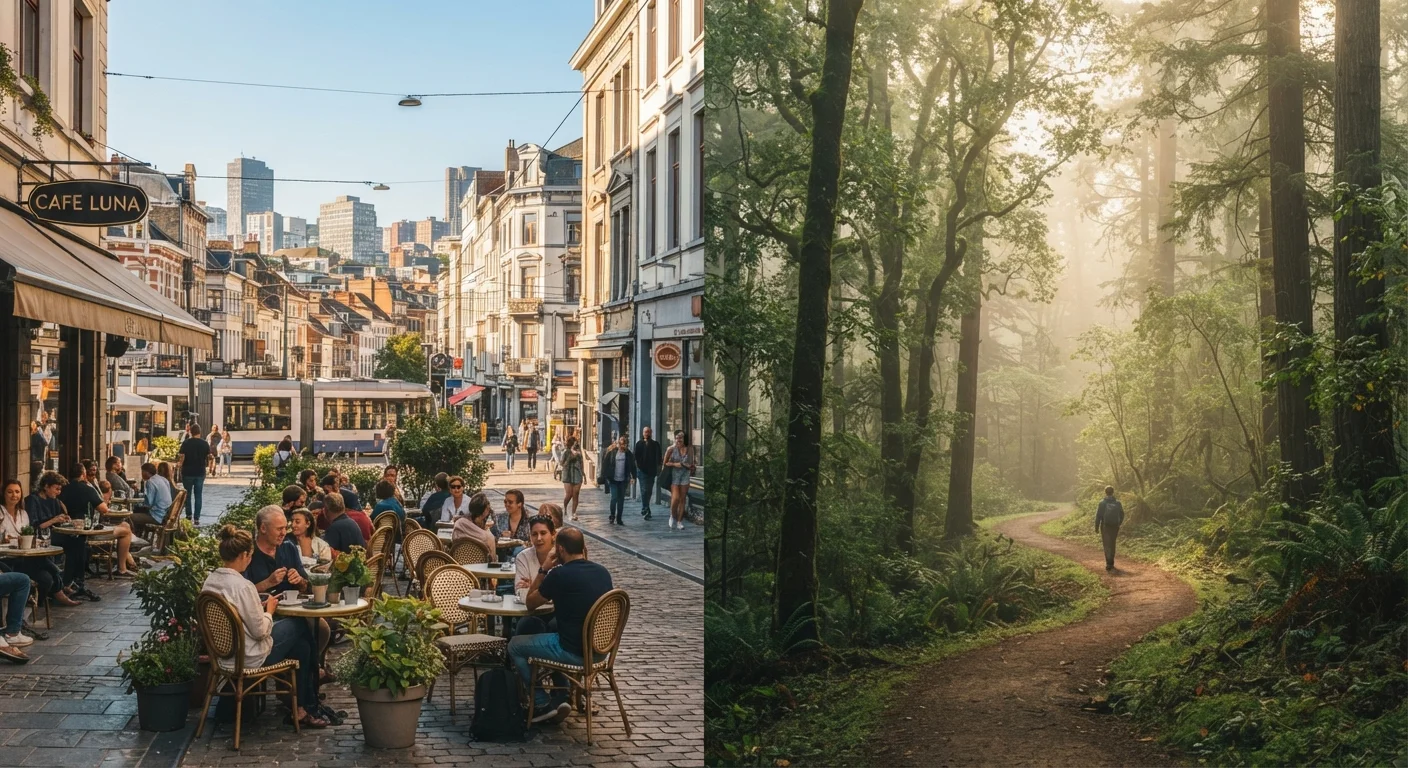
A city break is high-input travel. You're moving between neighborhoods, making constant decisions about food, timing, and activities. It rewards curiosity and energy. The pay-off is a sense of discovery - new restaurants, architecture, art, street life - compressed into a short window. What it rarely delivers is rest. Noise, stimulation, and schedule-density make genuine downtime hard to find.
A nature retreat operates on the opposite logic. Whether it's a national park, a mountain cabin, or a coastal trail, the defining feature is reduced external demand. Fewer decisions, slower pace, longer stretches without screens or crowds. Research consistently suggests that time in natural environments can reduce cortisol levels and lower perceived stress, though individual results vary. The trade-off is logistical: getting there often requires more planning, and amenities are less guaranteed.
For a fuller picture of how destination type changes your spending, see how urban and outdoor trips compare on cost.
| City Break | Nature Retreat | |
|---|---|---|
| Primary appeal | Culture, food, discovery, stimulation | Rest, physical activity, disconnection |
| Ideal trip length | 2-4 days | 4-7+ days |
| Biggest cost driver | Accommodation and dining | Transport and gear |
| Logistical complexity | Lower - transit-heavy, walkable | Higher - car or shuttle often needed |
| Restorative value | Moderate - stimulating, not restful | High - slower pace, reduced sensory input |
| Best suited for | Curiosity-driven, social travelers | Stressed, fatigued, or physically active travelers |
Reading the Signals: Which Type Do You Actually Need?
The most useful question isn't "where do I want to go?" - it's "what is my current state, and what does it need?"
Choose a city break if:
- You've been isolated, routine-bound, or under-stimulated recently
- You're traveling with someone whose primary interest is food, culture, or architecture
- Your trip window is under four days and you want density of experience
- You're comfortable navigating public transit and urban logistics independently
Choose a nature retreat if:
- You're coming off a period of high cognitive load - back-to-back deadlines, major decisions, or prolonged stress
- Physical activity (hiking, cycling, swimming in open water) sounds appealing rather than obligatory
- You genuinely want time away from screens, notifications, and crowds
- You have at least four to five days to justify the travel logistics
If you're uncertain about the destination itself, this framework for evaluating destinations can help you build a more structured decision process.
Test Your Instinct With One Question
Ask yourself: "When I picture arriving at this destination, does my body relax or does it feel energized?" Relaxation points toward a nature retreat; energy and anticipation point toward a city. Neither response is wrong - but they're telling you something real about what you need from the trip. Trust that signal over what sounds impressive or Instagrammable.
Budget Realities: Where the Money Actually Goes
City breaks and nature retreats have very different cost structures - and misreading them is one of the most common planning mistakes.
In a city, accommodation is typically the largest expense, particularly if you're staying centrally. Food costs accumulate quickly when dining out multiple times a day. Entry fees for museums and attractions add up, though many cities offer free or low-cost cultural access. Transport within the city is often manageable via transit passes. For a broader look at accommodation options and their cost trade-offs, see accommodation types and what they realistically cost.
Nature retreats shift the cost profile. Accommodation may be lower per night if you're camping or using simpler lodging, but you may need to rent a car, purchase gear, or cover park entrance fees. Meal costs can drop significantly if you're self-catering. The upfront investment in planning and equipment tends to be higher, even if daily spend is lower.
Before locking in either plan, it's worth building out a realistic spending framework. Trip budgeting from the ground up walks through how to structure travel costs before you commit.
A Note on Hybrid Options and Managing Expectations
Many travelers attempt to split a trip - a couple of city days followed by a nature segment, or vice versa. This can work well, but it introduces logistical complexity: different accommodation types, additional transport legs, and the mental load of managing two distinct trip modes.
If you want both, consider sequencing deliberately. Starting in a city and ending in nature tends to produce a better decompression arc than the reverse. Ending on a city segment often negates some of the restorative value of the nature portion.
For travelers specifically weighing outdoor settings, comparing mountain and beach destinations and understanding national vs. state parks are useful next steps. If a domestic city is on the table, underrated US cities worth considering offers a practical starting point beyond the obvious choices.
The most honest advice here: pick one primary mode and commit to it. Trying to fully experience both in a short window often means doing neither particularly well.