

Key Takeaways
- Buying builds equity over time; leasing does not - but leasing typically offers lower monthly payments.
- Mileage limits and wear-and-tear clauses in leases can create unexpected costs at contract end.
- Buyers who keep vehicles long-term generally pay less per mile than drivers who lease repeatedly.
- Leasing suits drivers who want newer features regularly and can stay within annual mileage caps.
- Your credit profile, driving habits, and financial priorities should drive this decision - not dealer incentives.
Our Verdict
Neither buying nor leasing is universally better - the right choice depends on how long you plan to keep the vehicle, how many miles you drive annually, and whether ownership equity matters to your broader financial picture. Buyers who hold vehicles for six or more years tend to come out ahead on total cost, while lessees who prioritize flexibility and lower short-term payments may find leasing fits their lifestyle better.
| Best for | Recommended |
|---|---|
| Drivers who keep vehicles long-term and want to build equity | Buying |
| Those who drive within predictable, lower annual mileage limits | Leasing |
| Drivers wanting lower monthly out-of-pocket costs in the short term | Leasing |
| Anyone who wants full flexibility to modify, sell, or trade at any time | Buying |
How Each Approach Works
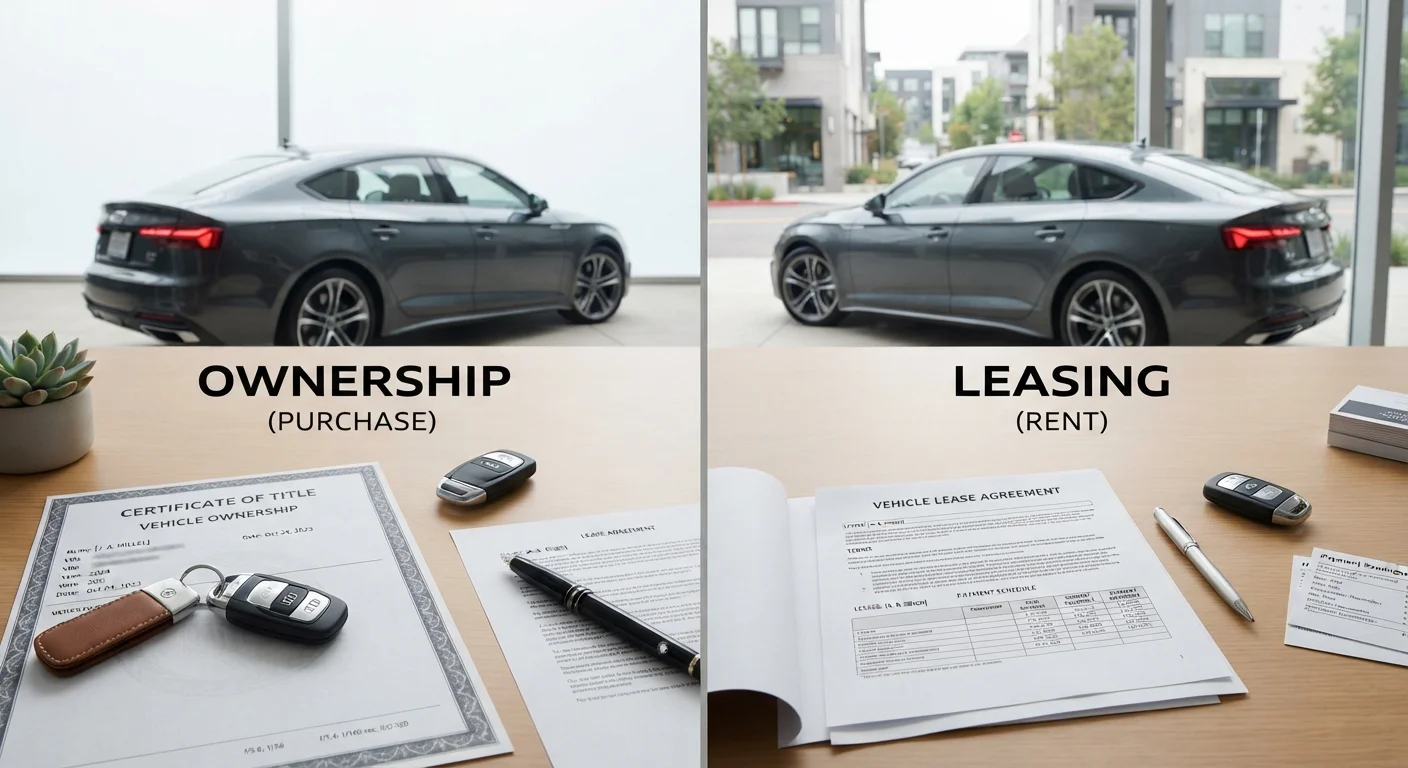
When you buy a vehicle - whether with cash or a loan - you own it outright or are working toward full ownership. Once the loan is paid off, you have an asset with resale or trade-in value. Every payment builds equity.
When you lease, you're essentially renting the vehicle from the financing company for a set term, typically two to four years. You pay for the portion of the vehicle's value you use - measured by projected depreciation - plus fees and interest (called the money factor). At the end of the term, you return the vehicle or, in some contracts, have the option to purchase it at a predetermined residual value.
Understanding this structural difference is foundational. A lease is not a path to ownership by default - it's a contracted use agreement with specific conditions attached. For a closer look at what those conditions include, see our guide on lease terms and hidden clauses before you sign anything.
Total Cost Over Time
Monthly lease payments are almost always lower than loan payments on the same vehicle - sometimes significantly so. That's because you're only financing the depreciation portion rather than the full purchase price. However, lower monthly payments don't mean leasing is cheaper overall.
A buyer who finances a vehicle and keeps it for eight to ten years spreads the purchase cost across many more miles than a lessee cycling through new vehicles every three years. Once a loan is paid off, the buyer's only ongoing costs are maintenance and insurance. A serial lessee, by contrast, is always making payments.
~$700+
Average monthly new-vehicle loan payment (US)
According to Experian's State of the Automotive Finance Market reports, average monthly loan payments on new vehicles have risen steadily and now regularly exceed $700 for many buyers.
12,000-15,000
Miles per year typical lease cap
Most standard lease contracts in the US include annual mileage allowances in this range, with excess-mileage fees commonly charged at $0.15-$0.30 per mile over the limit.
There are also acquisition fees, disposition fees (charged when you return a leased vehicle), and potential overage charges for excess mileage or wear. These costs add up across multiple lease cycles. For a broader view of managing vehicle expenses over years of ownership, see strategies for controlling long-term vehicle costs.
Flexibility and Lifestyle Fit
Leasing appeals to drivers whose needs change frequently - those who want the latest safety technology, prefer warranty coverage throughout ownership, or can't predict what vehicle they'll need in three years. It also avoids the negotiation and logistics of selling or trading a used car.
Buying, on the other hand, offers unrestricted flexibility: no mileage caps, no restrictions on modifications, and no penalties for wear that falls outside a lessor's definition of "normal." If your annual mileage exceeds 12,000-15,000 miles - the typical cap range in most lease contracts - excess-mileage charges can erode any monthly payment advantage quickly.
Calculate Your Annual Mileage First
Before comparing monthly payment figures, tally your actual annual driving distance using the past 12 months of odometer readings. If you consistently drive more than 15,000 miles per year, overage fees can significantly increase the true cost of leasing. This one number often clarifies the decision more quickly than any payment comparison.
Life changes like relocation, a growing family, or a job change may make it difficult to exit a lease early without significant penalties. Buyers can sell or trade at any point, though they should factor in depreciation - especially in the first few years. The new vs. used car decision guide covers depreciation timing in more detail.
Key Criteria Side by Side
The table below distills the practical differences across the criteria that matter most to everyday drivers:
| Criterion | Buying | Leasing | |
|---|---|---|---|
| Monthly payments | Higher - financing full vehicle cost | Lower - financing depreciation only | |
| Ownership at end | Yes - full asset ownership | No - vehicle returned or purchased | |
| Mileage limits | None | Typically 10,000-15,000 miles/year | |
| Early exit flexibility | Sell or trade any time | Penalties often apply for early termination | |
| Long-term total cost | Lower if vehicle kept 6+ years | Higher if leasing repeatedly over same period | |
| Modification freedom | Unrestricted | Generally prohibited or reversible only | |
| Warranty coverage | Expires; repair costs become owner's responsibility | Typically covered throughout lease term |
When you're working through the financing side of a purchase, it's also worth understanding how your loan source affects your options. Our article on dealer vs. bank financing walks through that comparison clearly.
Making a Decision That Fits Your Situation
Start with honest answers to three questions: How many miles do you drive per year? How long do you typically keep a vehicle? Does having an asset with resale value matter to your financial planning?
If you drive heavily, plan to keep the vehicle beyond five years, or value the freedom to sell whenever you choose, buying typically aligns better with those goals. If you prefer predictable payments, warranty coverage throughout, and a change every few years - and you stay within mileage limits - leasing can be a rational choice.
Neither path is inherently superior. Both involve trade-offs that only make sense in the context of your driving habits, budget, and priorities. This decision also connects to how you manage broader financial commitments - resources on building a workable budget and managing debt and credit can help frame the financial picture before you walk into a dealership.
This article is for general informational and educational purposes only and does not constitute financial or legal advice. Consult a qualified financial professional for guidance tailored to your personal circumstances.