

Key Takeaways
- New cars depreciate fastest in the first two to three years, costing owners thousands before the first repair.
- Used cars typically carry higher interest rates on financing, which can offset some of the sticker price savings.
- Certified Pre-Owned programs offer a middle-ground option with limited warranties and inspection standards.
- Modern safety tech is often standard on new vehicles but may require careful searching on older used models.
- Your intended ownership length significantly affects which option delivers better long-term value.
- A vehicle history report and independent inspection are essential steps before committing to any used car.
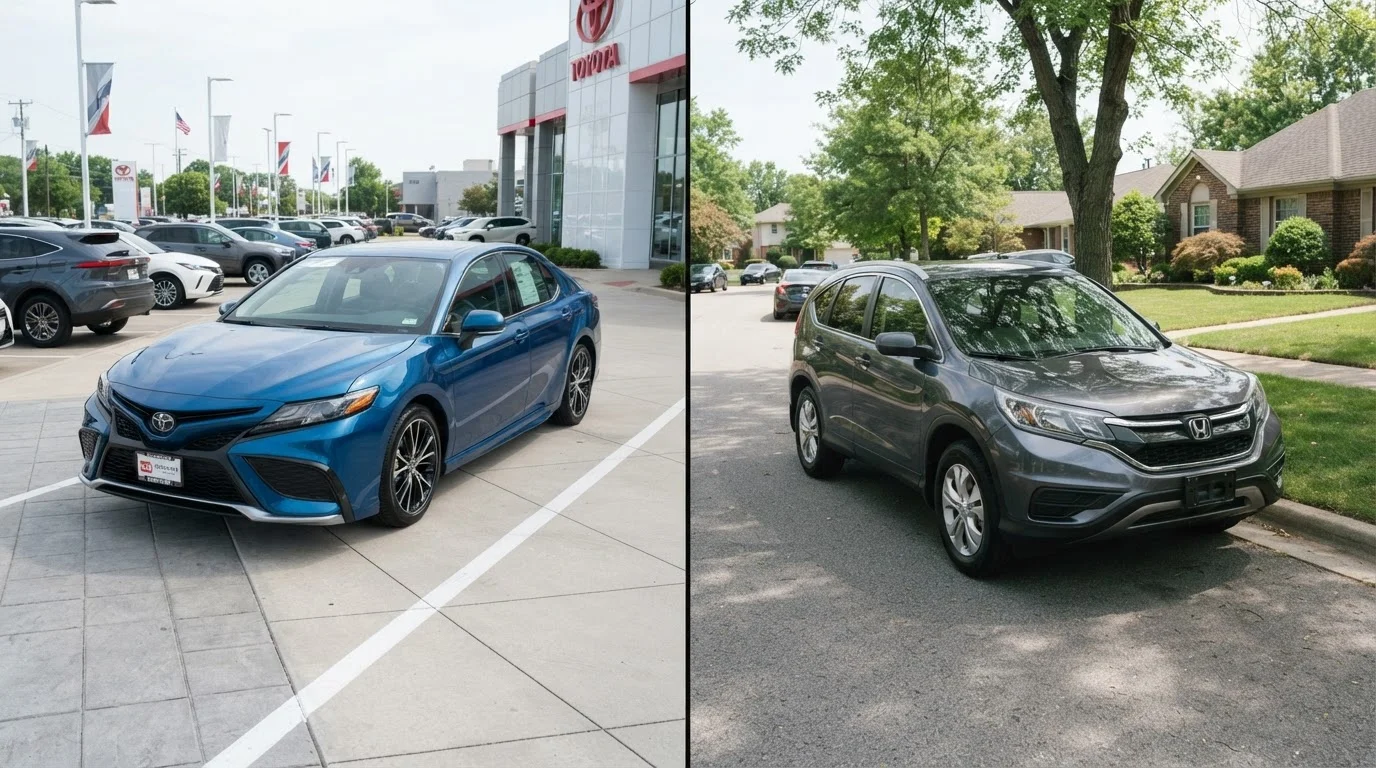
Option A
New Car
The full-warranty, zero-history, latest-technology option.
Best for: Buyers who prioritize reliability guarantees, the latest safety features, and the lowest financing rates available.
Option B
Used Car
The depreciation-smart, lower-entry-cost alternative.
Best for: Budget-conscious buyers willing to do some research in exchange for a significantly lower purchase price.
If you plan to keep the vehicle for seven or more years
New Car
Spreading depreciation over a long ownership period reduces its per-year impact, and full factory warranty coverage protects early years when costs could otherwise spike.
If you want the lowest possible monthly payment or total cost
Used Car
Even accounting for slightly higher loan rates, a used vehicle's lower purchase price typically keeps total financing costs well below a comparable new model.
If you want modern active-safety features without extensive research
New Car
Features like automatic emergency braking and lane-keeping assist are broadly standard on new vehicles, whereas availability on used cars varies significantly by year and trim.
If you want low depreciation risk and a known-condition vehicle
Used Car
A vehicle that is two to four years old has already absorbed the steepest depreciation curve, and a Certified Pre-Owned option adds inspection accountability.
If your credit profile limits financing options
New Car
Manufacturers frequently offer promotional financing rates that can be more accessible than rates available on used-car loans for buyers with moderate credit.
The Depreciation Factor: Where Most of the Money Goes
Depreciation - the rate at which a vehicle loses market value - is the single largest cost most car owners never see as a line item. A new vehicle can lose a substantial portion of its value within the first few years of ownership, with the steepest drop occurring the moment it leaves the lot. For buyers who trade or sell within three to five years, that loss is realized in full.
A used vehicle, by contrast, has already absorbed that initial drop. Buying a vehicle that is two to four years old means someone else absorbed the worst of the curve. Understanding how depreciation works can help you choose a model and timing that limits this hidden expense, regardless of whether you go new or used.
| Criterion | New Car | Used Car |
|---|---|---|
| Purchase price | Higher sticker price | Lower entry cost |
| Depreciation exposure | Steepest in years 1-3 | Initial drop already absorbed |
| Financing rates | Often promotional/lower | Typically higher APR |
| Warranty coverage | Full factory warranty | Variable; may be none |
| Safety tech availability | Latest features standard | Depends on year and trim |
| Vehicle history | None; clean slate | Must verify independently |
| Insurance cost | Generally higher premium | Often lower premium |
| Customization options | Full trim and package choice | Limited to available inventory |
Financing, Interest Rates, and Total Cost
New vehicles often come with promotional financing rates - sometimes as low as zero percent for qualified buyers - offered directly through manufacturer lending programs. These rates can materially reduce total interest paid over the loan term. Used-car loans, by comparison, generally carry higher interest rates from banks and credit unions, which can erode some of the savings from the lower sticker price.
However, the math still usually favors used cars for budget-focused buyers. A lower loan principal means smaller monthly payments even at a modestly higher rate. The critical variable is your loan term: stretching payments over six or seven years on either vehicle adds substantial interest cost regardless of the rate. Managing debt and understanding your credit score before you shop puts you in a stronger negotiating position for any financing option.
~20%
Average first-year depreciation on new vehicles
Industry estimates consistently place new vehicle depreciation in the 15-25% range during the first year, with variance by segment and model popularity.
1-3%
Typical rate advantage for new-car financing
New-car loan rates have historically averaged lower than used-car rates; the gap varies with market conditions and lender type.
~40%
Share of US car buyers choosing used vehicles
Used vehicle sales consistently represent a large share of the total US market, reflecting the broad appeal of lower entry costs.
Warranty and Reliability: What Coverage Actually Means
New cars arrive with a factory warranty - typically a bumper-to-bumper coverage period plus a longer powertrain warranty - that provides a defined safety net during the early ownership years. This predictability has real financial value: unexpected repairs in year two or three are largely covered.
Used vehicles may have no remaining factory coverage, particularly if they are more than five years old or have high mileage. Certified Pre-Owned (CPO) programs occupy a useful middle ground: vehicles are inspected against manufacturer standards and carry a limited extended warranty. If a used vehicle you are considering is outside any warranty window, review what extended warranties cover and what they exclude before deciding whether to purchase one.
Safety Technology and Features
Federal safety regulations and consumer demand have pushed manufacturers to standardize active-safety features on new vehicles faster than many buyers realize. Automatic emergency braking, blind-spot monitoring, and rear cross-traffic alert are now broadly standard across new model lines, not premium add-ons. For buyers who prioritize these systems, a new car removes the guesswork.
On used vehicles, availability of these features depends heavily on the model year and trim level. A used vehicle from as recently as four or five years ago may lack systems now considered baseline. Exploring modern vehicle safety features can help you identify which technologies to look for - and which years they became reliably available on specific models.
Due Diligence: What to Do Before You Commit
Regardless of which direction you lean, informed purchasing requires preparation. For used vehicles specifically, a vehicle history report (available from services that pull title, accident, and odometer records) is a non-negotiable first step. Pair that with a pre-purchase inspection from an independent, qualified mechanic - not the selling dealer's service department. See the pre-purchase checklist for used cars for a structured walkthrough of what to verify before signing.
For new car buyers, the key homework involves understanding the total cost of ownership - not just the monthly payment. Insurance premiums, registration fees, and sales tax on a higher sticker price all contribute. If you are also weighing whether to buy at all versus lease, comparing buying and leasing side by side provides additional structure for that decision.
Finally, if you have a current vehicle to sell, deciding between a trade-in and a private sale affects how much capital you can apply to your next purchase - and that figure shifts the new-versus-used math meaningfully.