

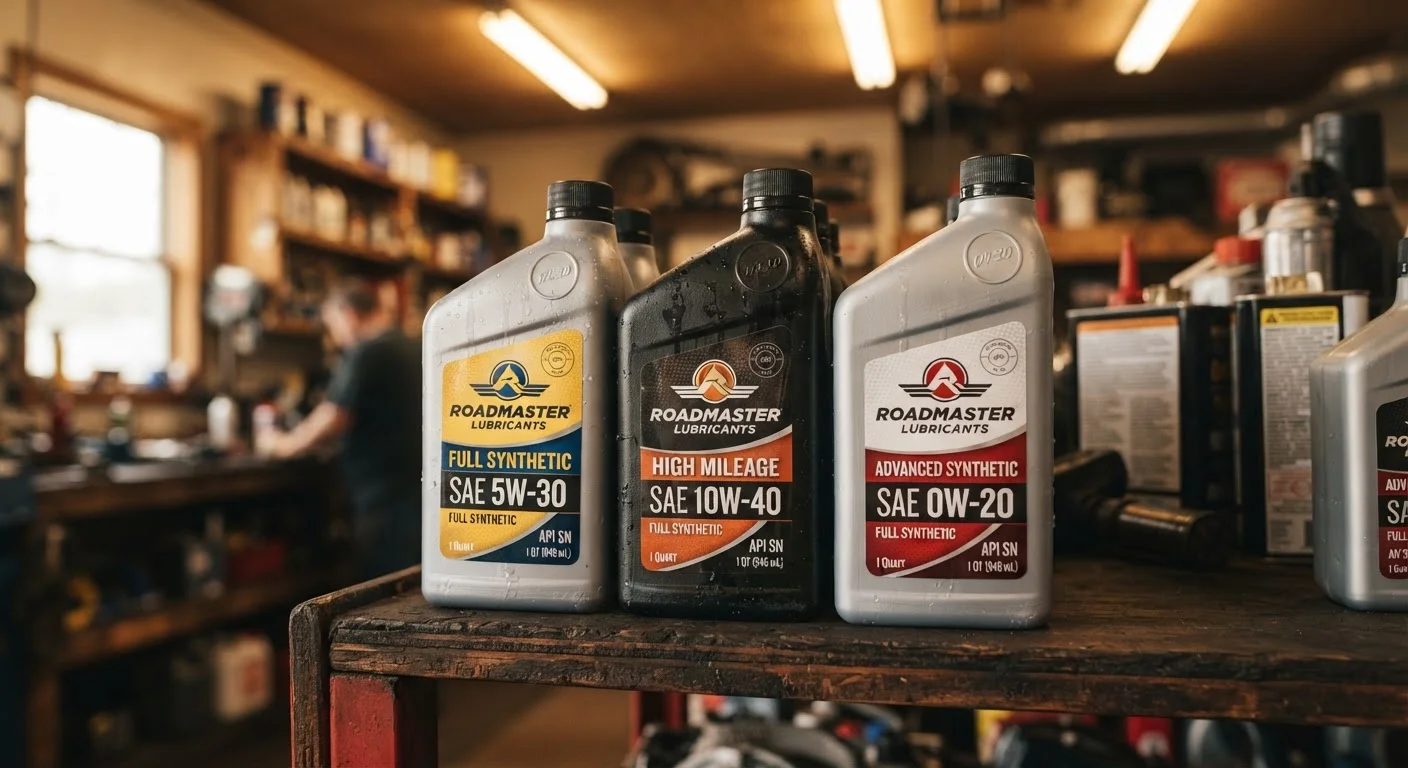
What the Numbers on an Oil Label Actually Mean
Pick up any bottle of motor oil and you'll see a code like 5W-30 or 10W-40. These are viscosity ratings set by the Society of Automotive Engineers (SAE), and they describe how the oil flows at different temperatures.
The number before the W (which stands for Winter, not weight) measures how the oil behaves in cold conditions. A lower number means the oil flows more freely when your engine is cold - important for start-up protection when most engine wear occurs. The number after the W describes the oil's viscosity at normal operating temperature, roughly 212°F (100°C). A higher number means the oil is thicker at operating temperature, providing a more robust film between moving parts.
So a 5W-30 oil flows easily in cold weather and maintains moderate thickness when the engine is hot, while a 10W-40 For most drivers, the single most important rule is simple: use the viscosity grade listed in your owner's manual. That spec was determined through engineering tests specific to your engine's tolerances and operating range. Beyond the numbers, oil is categorized by how it's made. Each type has different performance characteristics, and the right choice depends on your vehicle, driving habits, and climate. Viscosity A measure of how resistant a fluid is to flowing. In motor oil, higher viscosity means thicker oil that flows more slowly; lower viscosity means thinner oil that flows more freely. SAE Viscosity Grade A standardized rating system from the Society of Automotive Engineers that classifies motor oil by its flow characteristics at both cold and operating temperatures. API Service Category A certification from the American Petroleum Institute indicating the oil meets specific performance and protection standards for a given engine type and model year range. Multi-grade Oil Oil formulated to perform within a specified viscosity range across a wide temperature span, denoted by the dual-number SAE codes like 5W-30. Most modern motor oils are multi-grade. Base Oil The primary ingredient in motor oil, either refined from crude petroleum (conventional) or chemically synthesized. Additives are blended into the base oil to enhance performance. Cold-Start Wear Engine wear that occurs in the seconds immediately after ignition before oil fully circulates and pressure builds. A low cold-weight viscosity number reduces this risk by allowing faster oil flow. Viscosity grades are designed with real-world temperature ranges in mind. If you live in a region with harsh winters, a lower cold-weight number (like 0W or 5W) helps ensure the oil reaches critical engine parts quickly on cold starts. In consistently hot climates or for vehicles that tow or haul regularly, a higher hot-weight number (like 40 or 50) provides a stronger protective film under sustained heat and load. ~75,000 Miles at which high-mileage oil is typically recommended Most oil manufacturers and automotive organizations cite this threshold as the point where seal-conditioning additives become beneficial. 5-30 seconds Window of highest engine wear at cold start Automotive engineering literature consistently identifies the period before full oil pressure is established as when the most metal-on-metal contact occurs. Drivers who regularly make short trips - under five miles - should pay particular attention to oil quality. Short-trip driving doesn't allow the engine to fully warm up, which means moisture and combustion byproducts accumulate in the oil faster, degrading it more quickly than the mileage alone would suggest. It's also worth knowing that oil quality has a second dimension beyond viscosity: the API service category. Look for the API donut symbol on the label - the current recommended category for gasoline engines is SP (as of the most recent API update). Using an oil that meets or exceeds your vehicle's required API category ensures the additive package is appropriate for your engine's design. You can cross-reference both the viscosity and API rating requirements in your car's maintenance schedule to keep everything aligned. For a hands-on check of where your oil level stands today, reading fluid levels safely walks through the full process step by step.The Main Oil Types: Conventional, Synthetic, and Blended
Matching Oil to Climate and Driving Conditions