

Why Fluid Checks Matter for Every Driver
Modern vehicles rely on five key fluids to keep their systems running safely: engine oil, coolant, brake fluid, power steering fluid, and windshield washer fluid. Letting any of these fall outside their normal range can accelerate wear, trigger dashboard warnings, or in the case of brake fluid, create a genuine safety hazard.
The good news is that checking most of these takes under ten minutes and requires no special tools. This reference walks you through each fluid-what it does, where to find it, and how to read it correctly. For a broader look at routine tasks worth handling yourself versus leaving to a professional, see our guide to DIY vs. mechanic work.
The Five Fluids and How to Check Each One
Engine Oil
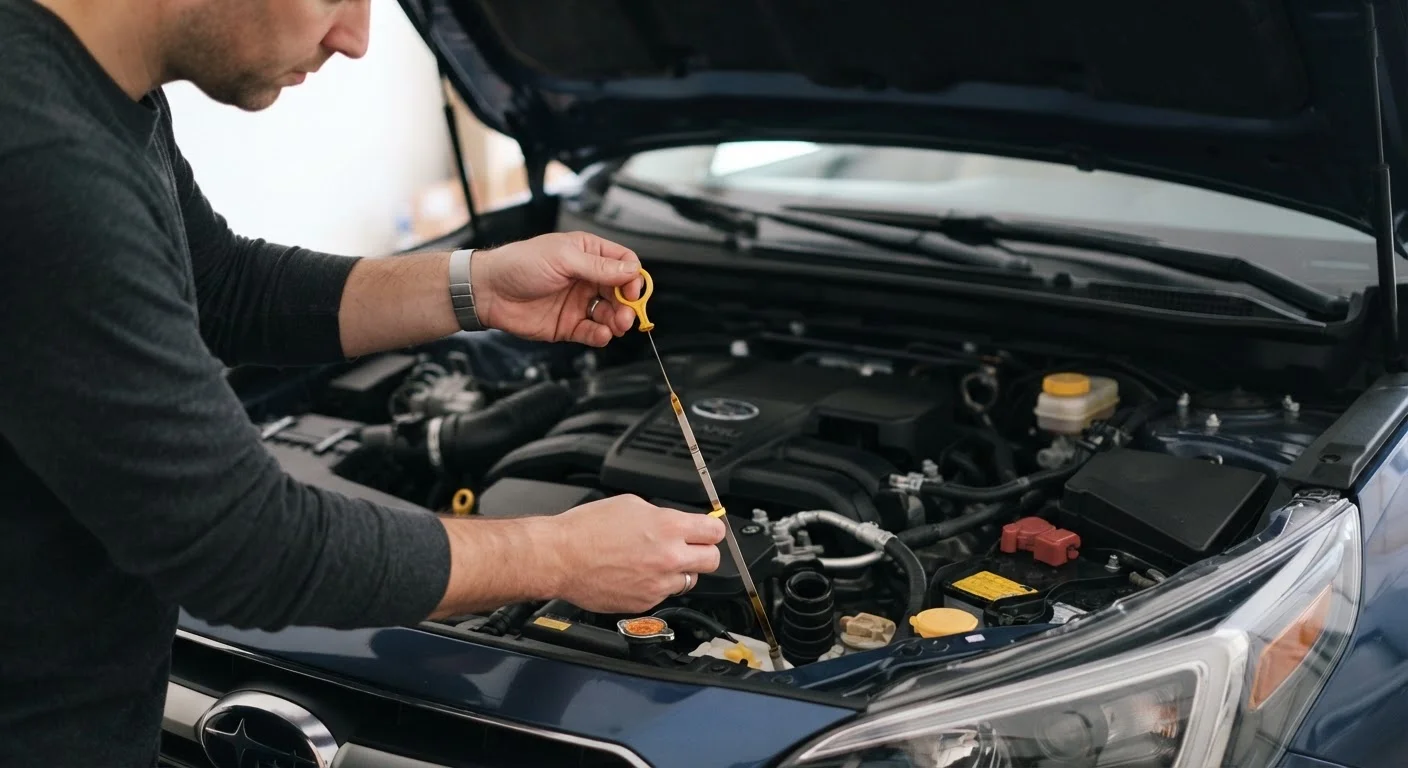
Engine oil lubricates moving metal parts and prevents destructive friction. Park on level ground, wait five minutes after turning off the engine, then pull the dipstick, wipe it clean, reinsert it fully, and pull it out again. The oil film should sit between the two notches marked MIN and MAX. Healthy oil is amber to light brown; black, gritty, or milky oil warrants a mechanic's attention. Check your owner's manual for the correct viscosity grade before topping off.
Coolant (Antifreeze)
Coolant regulates engine temperature and prevents both freezing and overheating. The coolant reservoir is a translucent plastic tank near the radiator-never open the radiator cap when the engine is warm, as pressurized coolant can cause serious burns. Simply read the MIN/MAX markings on the side of the reservoir while the engine is cold. Most modern vehicles use a pre-mixed 50/50 coolant; check your manual before adding any.
Brake Fluid
Brake fluid transmits hydraulic pressure from the pedal to the brakes. The reservoir sits on top of the master cylinder under the hood and is typically semi-translucent. The level should fall between MIN and MAX lines. Brake fluid absorbs moisture over time, turning darker; if the level is consistently low or the fluid is very dark, have a technician inspect the system. Do not ignore a low reading-brake performance depends on it. If a warning light has already appeared on your dash, the dashboard warning lights guide explains what to do next.
Power Steering Fluid
Power steering fluid keeps steering responsive and smooth. Many newer vehicles use electric power steering and have no hydraulic fluid to check; consult your owner's manual to confirm. If your car does have a reservoir, it usually carries MIN/MAX or COLD/HOT fill lines. Check it cold for the most accurate reading. A whining noise when turning can indicate low levels.
Windshield Washer Fluid
The only fluid here with no mechanical consequence if it runs out-but compromised visibility is a real safety issue. The reservoir is clearly marked with a washer-symbol cap. Top it off with rated washer fluid; plain water can freeze in cold climates and leave mineral deposits.
Building a Simple Fluid-Check Habit
A practical approach: check engine oil monthly, and inspect the remaining fluids every three months or before any long drive. Our pre-long-trip vehicle checklist includes fluids alongside tyres, lights, and belts in one structured walk-around. Pairing fluid checks with tyre pressure inspections-see how to check tyre pressure correctly-keeps both habits together and easy to remember.
Keep a small notepad or phone note logging the date, mileage, and what you topped off. Patterns matter: a fluid that repeatedly drops between checks may signal a leak or internal issue worth investigating with a qualified mechanic. Staying observant is the most reliable maintenance habit a driver can build.
For a complete foundation in vehicle ownership, the complete owner's maintenance primer covers every routine task in one place.