
Getting the Most from Your Car's Safety Systems Without Over-Relying on Them

Key Takeaways
- Advanced driver assistance systems are designed to assist, not replace, an attentive human driver.
- Each ADAS feature has documented operating limits that every driver should understand before relying on it.
- Regular calibration and sensor maintenance are essential for keeping safety systems performing as intended.
- Automation complacency - reduced attention because a system is active - is a documented and measurable safety risk.
- Reading your vehicle's owner's manual is the single most reliable source of accurate information about your specific systems.
Why Modern Safety Tech Isn't a Set-and-Forget Solution
Advanced driver assistance systems (ADAS) - including automatic emergency braking (AEB), lane-keeping assist (LKA), and adaptive cruise control - have meaningfully improved road safety outcomes. Yet research consistently shows that drivers who misunderstand what these systems can do are more likely to be caught off guard when they fail or disengage unexpectedly.
The core issue isn't the technology itself; it's the gap between what drivers expect and what the systems actually deliver. Features like blind-spot monitoring and lane-centering work within tightly defined parameters. Heavy rain, sun glare, worn lane markings, and unusual road geometry can all cause them to behave differently than drivers anticipate. Understanding this gap is the first step toward using your car's safety systems to their full, intended benefit.
For a clear-eyed look at which features have the strongest real-world safety evidence, see which safety features genuinely matter.
Best Practices for Getting ADAS to Work for You
These practices apply across most modern vehicles with driver assistance technology. Always confirm specifics against your owner's manual, since system behavior varies meaningfully between makes, models, and model years.
Read the relevant sections of your owner's manual before using any ADAS feature for the first time.
Every system has manufacturer-defined operating conditions, speed thresholds, and known limitations. Without this baseline, drivers frequently form inaccurate assumptions about what the system will and won't do.
Treat ADAS alerts as prompts to act, not as warnings to acknowledge and dismiss.
Audible and visual alerts are designed to prompt immediate driver engagement. Habitually dismissing them trains inattention and can delay response in situations where the system cannot intervene further.
Recalibrate cameras and sensors after any windshield replacement or front-end repair.
Forward-facing cameras are mounted to or near the windshield. Recalibration is required for the system to accurately interpret distance and object position. Without it, AEB and lane-keeping systems may trigger incorrectly or fail to trigger at all.
Know the weather and environmental conditions that reduce or eliminate your system's effectiveness.
Radar and cameras have documented performance limitations in heavy snow, mud obscuring sensors, direct sun glare, and dense fog. Expecting full system performance in these conditions is unsafe.
Maintain your lane-keeping and lane-centering features only as a supplement to active steering inputs, not a substitute.
Lane-keeping systems are calibrated to correct drift, not to steer the vehicle continuously. Most will disengage if hands are absent from the wheel for a defined period, and road marking quality heavily affects performance.
Keeping Your Safety Systems in Working Order
Even well-understood systems can fail silently if the underlying hardware isn't maintained. Cameras, radar units, and ultrasonic sensors need clean sightlines and accurate calibration to function correctly.
Tire pressure is another easily overlooked factor. A TPMS alert doesn't just signal a flat - it can affect stability control and traction systems too. Learn what different warnings mean with our guide on what your TPMS warning light is actually telling you.
Aftermarket Modifications and ADAS Compatibility
Installing aftermarket accessories - including certain windshield tints, sensor covers, or grille modifications - can interfere with radar and camera-based systems. Before modifying any area near a sensor or camera, check your owner's manual and consult a qualified technician. Some modifications may void warranty coverage for affected systems.
Staying Alert When Automation Is Active
Automation complacency is a recognized phenomenon in traffic safety research: when a system handles a task, attention naturally drifts. This is a normal human response, not a character flaw - but it creates real risk when the system reaches its limits and hands control back unexpectedly.
“The challenge with automation is not whether the machine can handle routine conditions - it's whether the human can reliably detect when the machine is no longer capable and respond appropriately.”
— David Strayer, Cognitive scientist and distracted driving researcher, University of Utah
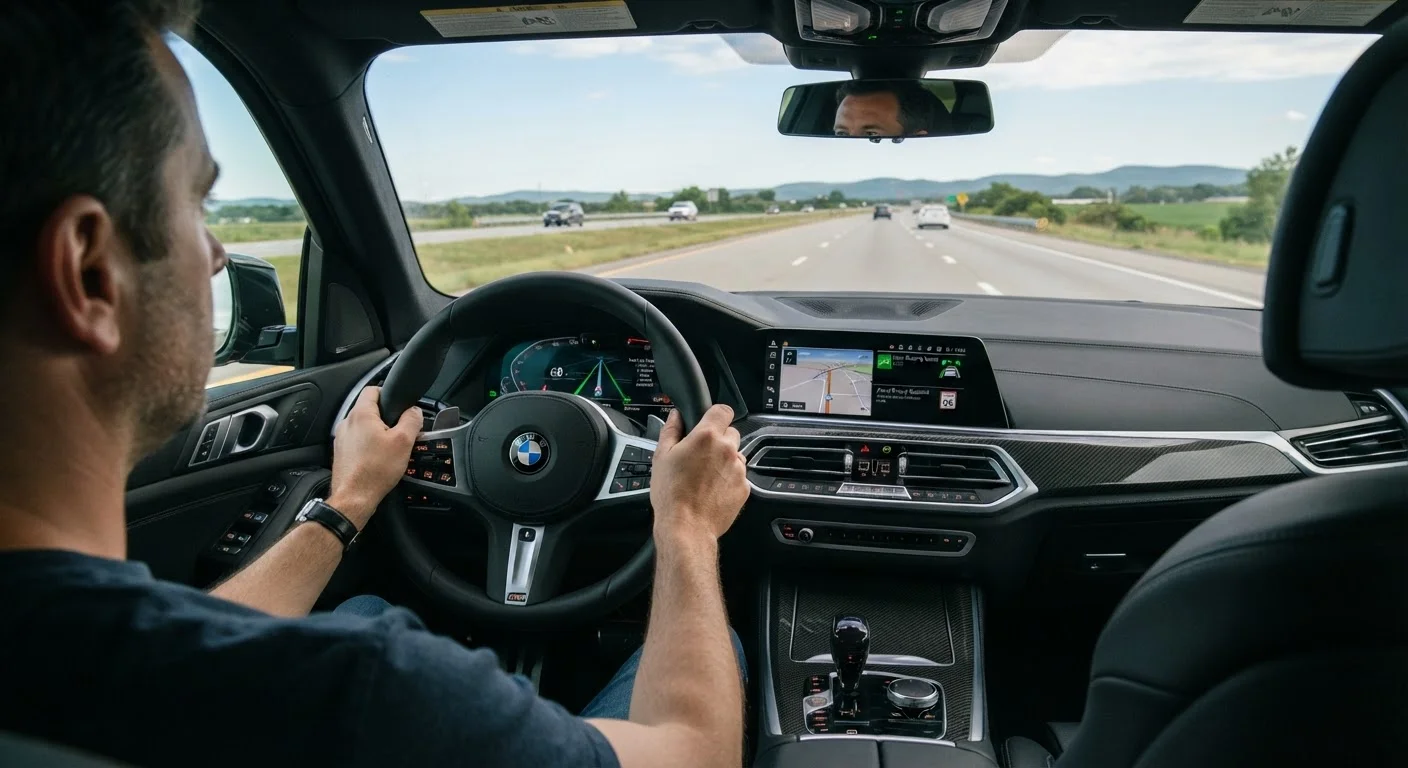
Practical habits that help include keeping both hands on the wheel during highway driving even when adaptive cruise is engaged, glancing at mirrors at regular intervals rather than relying solely on audible alerts, and treating system alerts as immediate prompts to reassess - not background noise. Drivers who are curious about the specific limitations of blind-spot monitoring will find useful detail in our article on blind-spot monitoring myths and real-world gaps.
This article is for general informational purposes only. Always consult your vehicle's owner's manual and, where appropriate, a qualified automotive professional regarding the specific capabilities and maintenance requirements of your vehicle's safety systems.