
Tyre Pressure Monitoring Systems: What the Warning Light Is Actually Telling You

Key Takeaways
- TPMS alerts activate when tyre pressure drops 25% or more below the vehicle's recommended level.
- A solid warning light and a flashing warning light mean two different things and require different responses.
- Cold weather can trigger a false-alarm TPMS alert due to air contracting in lower temperatures.
- TPMS does not replace manual tyre pressure checks - it's a safety net, not a substitute.
- After inflating your tyres, the warning light may take several miles of driving to reset automatically.
- A flashing TPMS light typically indicates a sensor malfunction, not a pressure problem.
Tyre Pressure Monitoring System (TPMS)
A Tyre Pressure Monitoring System (TPMS) is an electronic system built into your vehicle that continuously monitors the air pressure inside each tyre. When pressure in one or more tyres drops significantly below the recommended level, the system triggers a warning light on your dashboard. In the US, federal law has required TPMS on all new passenger vehicles since 2008.
Most US vehicles use direct TPMS, which relies on pressure sensors mounted inside each wheel. Some older vehicles use indirect TPMS, which infers pressure changes by comparing wheel rotation speeds via the ABS system rather than measuring pressure directly.
What the Warning Light Is Actually Telling You
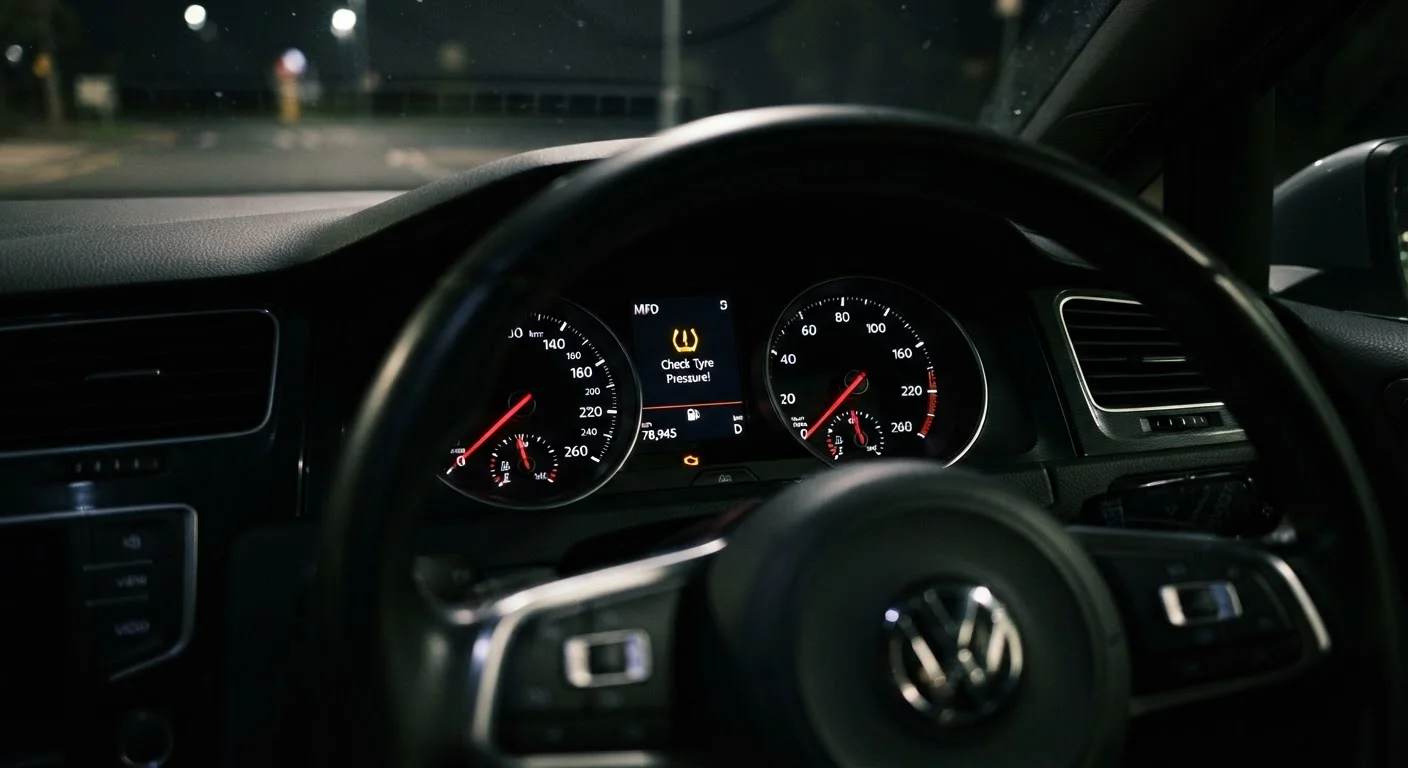
The TPMS warning light - a horseshoe shape with an exclamation point - can appear in two distinct ways, and each tells a different story. Understanding the difference helps you respond appropriately rather than guessing.
Solid light: One or more tyres has dropped 25% or more below your vehicle's recommended pressure. For a tyre specified at 32 PSI, that's a drop to around 24 PSI or lower. This is a pressure alert, and it calls for checking and inflating your tyres promptly. See how to check tyre pressure accurately for guidance on doing this correctly.
Flashing light (then solid): If the light blinks rapidly for about 60-90 seconds before holding steady, the system is telling you about a malfunction - a sensor with a dead battery, a damaged sensor, or a communication error within the system. The pressure itself may be fine. This requires a professional diagnosis, not just an air pump.
Knowing which signal you're dealing with is the first step to acting correctly - and to not being caught off guard by what seems like a random alert. For a broader look at dashboard warnings, reading your dashboard warning lights without guessing covers the full picture.
Direct vs. Indirect TPMS: Why It Matters Practically
The type of TPMS your vehicle uses affects what information it can and cannot give you.
Direct TPMS uses a physical pressure sensor inside each wheel, often integrated with the valve stem. These sensors transmit real-time pressure readings to your vehicle's computer. Many vehicles with direct TPMS will display the actual PSI for each individual tyre on the dashboard - a significant advantage when you want to know exactly which tyre is low and by how much.
Indirect TPMS doesn't measure pressure at all. Instead, it uses your car's anti-lock braking system (ABS) sensors to detect when one wheel is rotating faster than the others - a sign that its diameter has shrunk due to deflation. This approach is less precise: it can miss slow, simultaneous pressure loss across multiple tyres, and it needs to be recalibrated after tyre rotations or inflation adjustments.
25%
Pressure drop required to trigger a TPMS alert
US federal regulations (FMVSS No. 138) specify that TPMS must warn drivers when any tyre reaches 25% below the vehicle's recommended cold inflation pressure.
2008
Year TPMS became mandatory on US passenger vehicles
The TREAD Act mandated direct or indirect TPMS on all new light passenger vehicles sold in the United States from model year 2008 onward.
1 PSI
Pressure lost per 10°F temperature drop
This widely cited rule of thumb reflects the behavior of air according to basic gas laws, making seasonal pressure checks especially important in regions with significant temperature swings.
Check your owner's manual to determine which system your vehicle uses. If your car shows individual tyre pressures on the dashboard, you have direct TPMS.
When TPMS Alerts Can Be Misleading
The TPMS threshold is set at 25% below recommended pressure - a meaningful safety margin, but not a hair trigger. This means your tyres could be noticeably underinflated without triggering an alert. A tyre specified at 35 PSI could drop to 27 PSI before the system activates, and that pressure deficit is already enough to affect fuel economy, handling, and tyre wear.
Always Check Pressure with a Gauge First
When the TPMS light appears, resist the urge to assume it's just a cold-weather false alarm. Use a quality tyre pressure gauge to verify the actual PSI in all four tyres before deciding on next steps. Your vehicle's recommended pressure is found on the sticker inside the driver's door jamb - not on the tyre sidewall, which lists maximum pressure instead.
Cold weather is the most common source of confusing alerts. Air contracts in low temperatures, so a tyre that was at 32 PSI on a 70°F afternoon might read 29 PSI on a 30°F morning - triggering the light despite no leak or damage. Inflate to specification and the light typically clears after a short drive.
Conversely, the light should not be ignored simply because you suspect a temperature effect. Always verify with a gauge. This is why checking tyre pressure manually remains an essential habit regardless of what your TPMS shows.
TPMS and Tyre Maintenance: What the System Won't Catch
TPMS is a safety net, not a complete maintenance solution. There are several things it cannot detect:
- Uneven wear: A tyre losing tread unevenly - due to alignment or inflation history - won't trigger a TPMS alert until pressure actually drops. Regular tyre rotation helps prevent the uneven wear patterns that shorten tyre life silently.
- Slow simultaneous leaks: Indirect TPMS in particular can miss gradual pressure loss that affects all four tyres equally, since there's no relative speed difference to detect.
- Overinflation: TPMS does not warn you if your tyres are overinflated, which reduces contact patch size, stiffens ride quality, and increases the risk of impact damage.
For a broader perspective on how to use vehicle safety technologies wisely without over-relying on them, see getting the most from your car's safety systems.
Monthly manual pressure checks - before long trips and with the seasons - remain the most reliable way to stay ahead of issues TPMS won't catch until they've already developed.
This article is for general informational purposes only. For specific concerns about your vehicle's tyre system or safety equipment, consult a qualified mechanic or tyre professional.