

Key Takeaways
- Organic mulches improve soil health as they break down; inorganic mulches offer longer-lasting weed and moisture control.
- Wood chips and shredded bark are ideal for shrub beds and trees; straw suits vegetable gardens.
- Inorganic mulches like gravel work well in low-water landscapes but do not add nutrients to the soil.
- Mulch depth matters: 2-4 inches is typically recommended, keeping material away from plant stems.
- Matching mulch type to your specific plants, climate, and goals produces the best results.
Mulch
Mulch is any material spread over the surface of soil to protect it and support plant growth. It reduces water evaporation, suppresses weeds, moderates soil temperature, and - depending on the type - can improve soil structure over time. Mulches fall into two broad categories: organic (derived from once-living materials) and inorganic (mineral or synthetic materials that do not decompose).
The term 'mulch' comes from the German 'molsch,' meaning soft or beginning to decay - reflecting the original association with decomposing plant matter.
What Mulch Actually Does for Your Garden
Before choosing a mulch, it helps to understand what you're asking it to do. A well-applied mulch layer works on several fronts simultaneously: it slows evaporation from the soil surface, buffers root zones from temperature swings, and creates a physical barrier that prevents weed seeds from germinating in sunlight.
Good soil biology thrives when soil isn't constantly exposed to drying sun and compacting rain - and mulch creates that protected environment. If you're working to improve the ground beneath your plants, pairing mulch with the right soil practices makes a significant difference. Our guide on soil health for backyard gardeners explains what's happening below the surface.
25-50%
Reduction in soil moisture loss with mulch
University extension research consistently finds that a 2-4 inch mulch layer can reduce evaporation from the soil surface by roughly a quarter to half, depending on material and climate.
10°F
Soil temperature moderation from mulch layer
Studies from the University of Illinois Extension indicate mulch can buffer soil temperatures by up to 10°F, protecting roots during heat spikes and late cold snaps.
2-4 inches
Recommended mulch depth for most gardens
This range, widely cited by cooperative extension services across the US, balances weed suppression, moisture retention, and air circulation to roots.
Organic Mulches: Types, Traits, and Best Uses
Organic mulches decompose over time, feeding the soil ecosystem as they break down. This is their defining advantage - and also why they need periodic replenishment.
Shredded Bark and Wood Chips
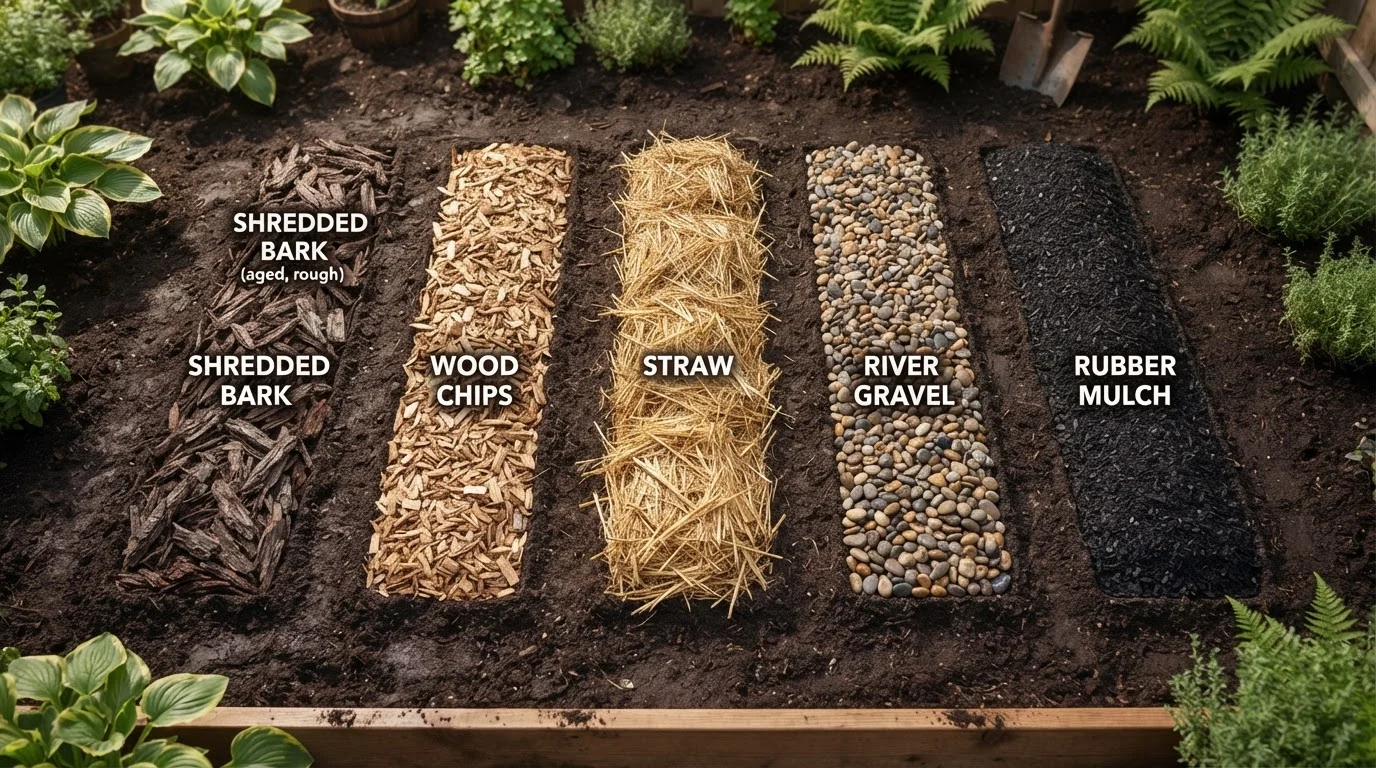
Among the most widely available options, shredded bark and wood chips work well around trees, shrubs, and perennial borders. They're slow to compact and provide excellent weed suppression. Wood chips in particular are a good fit for pathways. One consideration: freshly chipped wood can temporarily tie up nitrogen near the soil surface as it decomposes. Applying these mulches a few inches away from plant stems avoids moisture-related rot.
Straw
Straw - not hay, which contains seeds - is a go-to for vegetable gardens. It's lightweight, easy to apply, breaks down within a single season, and keeps soil splash (which spreads some plant diseases) off foliage. It also insulates well during cooler months.
Shredded Leaves
A free resource for most homeowners each fall, shredded leaves break down quickly and add valuable organic matter. Run dry leaves through a mower or leaf shredder before applying; whole leaves can mat together and repel water. This is also an excellent complement to a home composting setup - see our guide on composting kitchen and garden waste for how the two practices work together.
Grass Clippings
Untreated grass clippings work as a thin mulch layer (1-2 inches) in vegetable beds. Apply thick layers cautiously - they can mat and create an anaerobic barrier that repels water and develops odor.
Refresh Organic Mulch Every Season
Organic mulches break down - which is exactly what makes them valuable - but it also means their weed-suppressing depth decreases over time. Check beds each spring and fall, and top up to maintain a 2-4 inch layer. Adding fresh mulch on top of the decomposing layer is fine; the lower portion continues to feed the soil.
Inorganic Mulches: Durability Over Decomposition
Inorganic mulches don't feed your soil, but they offer long-term durability and require less frequent replacement. They're especially useful where low maintenance and moisture retention matter most.
Gravel and River Rock
Gravel is ideal for xeriscape gardens, rock gardens, and around drought-tolerant plants. It allows excellent drainage, doesn't decompose, and resists displacement in windy areas. The tradeoff: it absorbs and radiates heat, which can stress some plants during summer in warmer regions.
Landscape Fabric
Often used beneath gravel or wood chips, landscape fabric suppresses weeds while allowing water through. Over time, debris accumulates on top and weeds root into the fabric - making it harder to remove. It's most effective as a short- to medium-term solution in ornamental beds, not vegetable gardens.
Rubber Mulch
Made from recycled materials, rubber mulch is very long-lasting and commonly used in playground areas for its cushioning properties. In landscape settings, it provides weed suppression but contributes nothing to soil health. Research on its effects on soil chemistry over time is still developing, so many gardeners prefer to use it only in non-edible ornamental areas.
Choosing the Right Mulch for Your Situation
The best mulch for your garden depends on what you're growing, your climate, your maintenance appetite, and your soil goals.
- Vegetable and food gardens: Straw, shredded leaves, or untreated grass clippings - all organic, all safe around edibles.
- Trees and shrubs: Wood chips or shredded bark at 3-4 inches depth, pulled back from trunks.
- Perennial flower beds: Shredded bark or compost-based mulch that improves soil as it breaks down.
- Pathways and non-planted areas: Gravel, river rock, or wood chip paths work well and are low maintenance.
- Low-water or xeriscape gardens: Gravel or decomposed granite support drainage and reduce irrigation needs.
- Raised beds: Organic mulches suit raised beds well since you control the soil environment - our guide on raised beds vs. in-ground planting covers what works best in each setup.
Regardless of type, apply mulch to moist soil, maintain 2-4 inches of depth, and keep it clear of direct contact with stems, crowns, and tree bark. These simple habits maximize mulch's benefits across every garden type.
“Mulch is one of the most beneficial things a homeowner can do for a landscape. A properly mulched tree or shrub bed means less watering, less weeding, and healthier soil biology - all for very little ongoing effort.”
— Linda Chalker-Scott, Extension Urban Horticulturist, Washington State University