

Key Takeaways
- Healthy soil is a living system - not just a growing medium that holds fertiliser.
- Soil structure, pH, and biology work together; fixing one without the others yields limited results.
- A simple home pH test can reveal why plants struggle even in well-fed beds.
- Organic matter is the single most reliable way to improve almost any soil type over time.
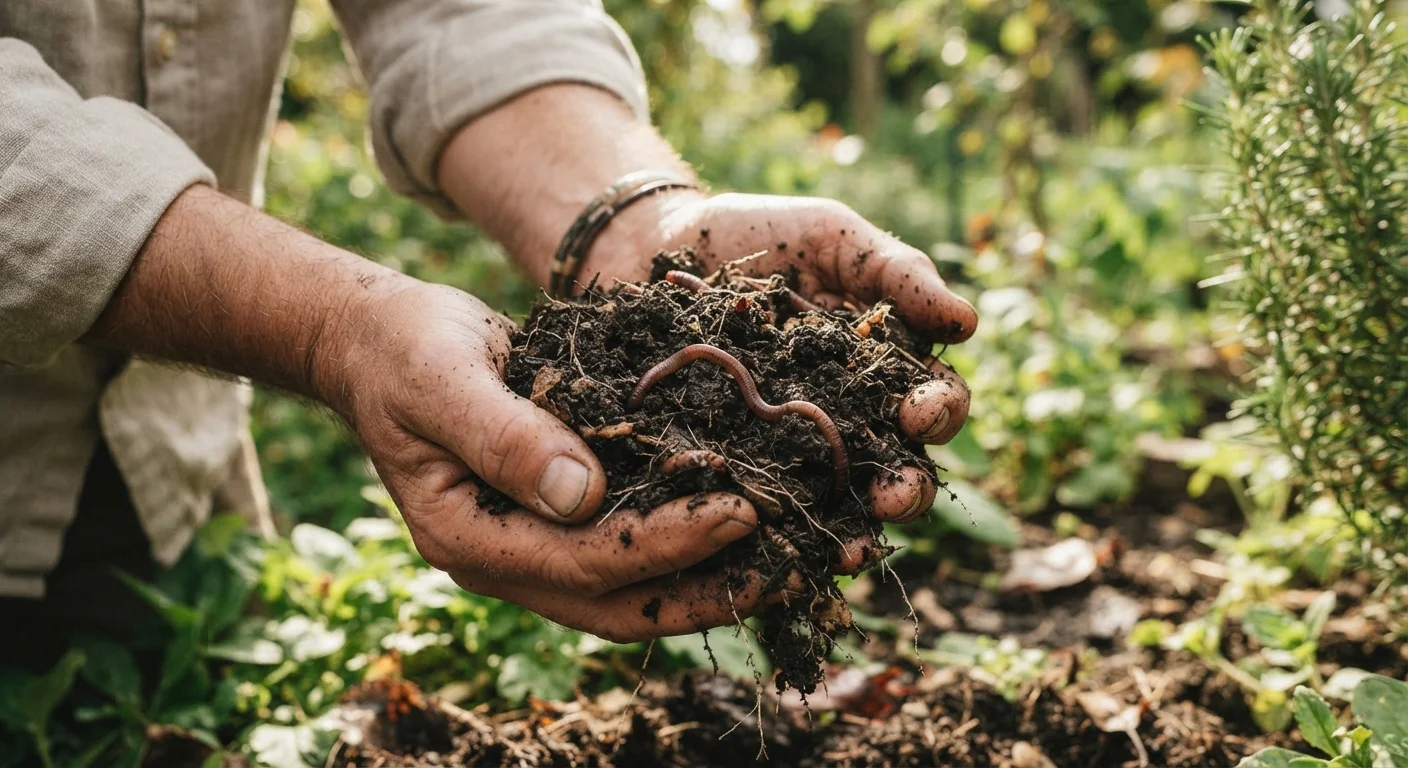
- Visible earthworms and crumbly texture are reliable indicators of good soil health.
- Avoid compacting soil by minimising foot traffic and tilling only when truly necessary.
Start here
Why Soil Health Matters More Than Fertiliser
Next
Soil Structure: The Foundation Everything Grows In
Dig deeper
Understanding Soil pH and Why It Controls Nutrient Access
Then explore
The Living Biology Beneath Your Feet
Apply it
Reading Your Soil's Signals
Take action
Building Better Soil Over Time
Why Soil Health Matters More Than Fertiliser
Most gardeners reach for fertiliser when plants look unhappy - it's an understandable instinct. But fertiliser addresses only one piece of a much larger puzzle. Soil is a living system that needs the right physical structure, the right chemistry, and a thriving community of organisms to support plant growth. Adding nutrients to soil that's compacted, pH-imbalanced, or biologically depleted is a bit like eating vitamin supplements while skipping meals: it helps, but it doesn't fix the underlying problem.
Understanding soil health means thinking beyond what you add to the ground and starting to consider what's already happening beneath the surface. This guide walks you through the core pillars every backyard gardener needs to grasp.
Soil pH
A measure of how acidic or alkaline your soil is, rated on a scale from 0 to 14. It controls whether nutrients already in the soil are accessible to plant roots.
Organic matter
Decomposed plant and animal material mixed into the soil. It improves structure, feeds soil organisms, and gradually releases nutrients to plants.
Soil structure
The way soil particles clump together and the amount of air and water space between them. Good structure allows roots, water, and oxygen to move freely.
Mycorrhizal fungi
Beneficial fungi that form a partnership with plant roots, extending their ability to absorb water and nutrients far beyond what roots could reach alone.
Compaction
What happens when soil particles are pressed tightly together, leaving little room for air or water. It limits root growth and damages soil biology.
Cover crops
Plants grown specifically to protect and enrich the soil rather than for harvest. Common examples include clover, rye, and buckwheat.
Soil Structure: The Foundation Everything Grows In
Soil structure describes how individual particles - sand, silt, and clay - clump together into aggregates, and how much pore space exists between them. Pore space matters enormously: it's where oxygen, water, and roots travel. A well-structured soil feels loose and crumbly, almost like a moist chocolate cake, and holds its shape lightly when squeezed.
- Sandy soil drains quickly but struggles to retain nutrients and moisture.
- Clay soil holds water and nutrients well but compacts easily and drains poorly.
- Loam - a roughly balanced mix of sand, silt, and clay - is widely considered ideal for most gardens.
Compaction is one of the most common structural problems in home gardens. Foot traffic, heavy machinery, and repeated tilling all compress soil particles together, reducing the pore space roots need. Wherever possible, establish dedicated paths and avoid walking directly on planting beds. If you're weighing your options for a new garden setup, raised beds versus in-ground planting is worth understanding early - structure challenges differ significantly between the two approaches.
Understanding Soil pH and Why It Controls Nutrient Access
Soil pH measures how acidic or alkaline your soil is on a scale from 0 to 14, with 7 being neutral. Most garden plants thrive in a slightly acidic to neutral range of about 6.0 to 7.0. Within this window, essential nutrients like nitrogen, phosphorus, potassium, and iron remain chemically accessible to plant roots. Outside it, those same nutrients can become locked in the soil - present but unavailable.
This is why a plant can look nutrient-deficient even in well-fertilised beds. The problem isn't always a lack of nutrients - it's a pH that prevents uptake.
Test Before You Amend
Before adding lime, sulfur, or any pH-adjusting product, test your soil first. Over-correcting pH can create new problems - it's just as possible to overshoot your target as to under-treat. Many local cooperative extension offices offer low-cost soil testing with actionable recommendations tailored to your region.
Home pH test kits and digital meters are widely available and straightforward to use. Take samples from several spots in your garden, since pH can vary across a yard. If your soil is too acidic, agricultural lime is commonly used to raise pH. If it's too alkaline, elemental sulfur can gradually lower it - though changes happen over months, not days. Always follow product guidelines and consider a formal soil test through your local cooperative extension service if you're unsure.
The Living Biology Beneath Your Feet
A single teaspoon of healthy garden soil can contain billions of bacteria, millions of fungi, and thousands of other microorganisms. These aren't just incidental passengers - they're active participants in making your garden work. Bacteria break down organic matter into forms plants can absorb. Mycorrhizal fungi form networks around plant roots that dramatically extend their reach for water and nutrients. Earthworms physically improve structure by burrowing and casting.
Chemical-heavy gardening practices can suppress this biology. Excessive synthetic fertiliser, broad-spectrum pesticides, and repeated soil disturbance all reduce microbial diversity over time. Feeding your soil's biology - primarily through organic matter - is one of the most effective long-term investments you can make as a gardener.
Reading Your Soil's Signals
Your garden communicates its soil condition constantly - if you know what to look for. Here are the most telling signals:
- Earthworm presence
- A reliable indicator of biological activity and organic matter. Sparse or absent earthworms suggest compaction or low organic content.
- Water pooling
- Standing water after rain points to poor drainage - often from clay-heavy or compacted soil. Improving structure and organic matter content generally helps. On sloped properties, managing erosion and drainage on slopes requires additional strategies.
- Yellowing leaves
- Can signal nitrogen deficiency, pH imbalance, or waterlogged roots - context matters. Test before treating.
- Slow plant growth
- Often reflects compaction limiting root expansion, or biology too depleted to cycle nutrients efficiently.
- Crusty surface after rain
- A sign of low organic matter and potential structural breakdown. Mulching helps significantly.
Watering habits also affect soil health in ways many gardeners underestimate - overwatering and underwatering both stress the biological and structural systems below ground.
Building Better Soil Over Time
There's no instant fix for poor soil, but consistent practices compound meaningfully over seasons. The most impactful steps most homeowners can take are:
- Add compost regularly. Compost improves structure in both sandy and clay soils, feeds soil biology, and buffers pH. Making your own compost at home is more straightforward than many expect and reduces what you send to the landfill.
- Mulch your beds. A 2-3 inch layer of organic mulch moderates soil temperature, retains moisture, and slowly feeds biology as it breaks down. Different mulch types behave differently - matching the right type to your beds matters.
- Minimize tillage. Digging disrupts fungal networks and brings weed seeds to the surface. Reserve it for initial bed preparation, not routine maintenance.
- Test before you treat. A soil test takes the guesswork out of amendments and prevents over-application, which can cause its own problems.
- Plant cover crops in off-season beds. Legumes fix nitrogen; grasses add organic matter and protect against erosion.
Keeping these practices on a consistent seasonal schedule makes them manageable. A month-by-month garden task checklist can help you time soil-care activities alongside your planting and pruning work.
Don't Rely on Fertiliser to Fix Structural Problems
Applying more fertiliser to compacted or waterlogged soil rarely solves the visible problem and can worsen it - excess nutrients may leach into groundwater or accumulate to toxic levels for plants. Always address structure and drainage first, then reassess nutrient needs. If you're unsure whether poor drainage has a deeper cause, a landscaping professional can assess conditions before you invest in amendments.