

Key Takeaways
- Composting requires a balance of carbon-rich 'browns' and nitrogen-rich 'greens' to break down efficiently.
- Meat, dairy, and diseased plants should never go into a home compost pile.
- Turning your pile regularly and maintaining moisture speeds up decomposition significantly.
- Finished compost improves soil structure, drainage, and long-term fertility.
- Most households can produce usable compost within two to six months with proper management.
Why Composting Matters for Home Gardens
Composting is one of the highest-impact habits a homeowner can adopt. Rather than sending food scraps and yard trimmings to the landfill, you redirect that organic material into a process that produces humus - a dark, crumbly soil amendment that feeds plants, improves drainage, and supports the microbial life your garden depends on.
Healthy soil is the foundation of any productive garden. Whether you're growing vegetables, maintaining a lawn, or building an inviting outdoor space, the quality of your soil determines how well plants establish and thrive. Compost builds that quality over time, reducing the need for synthetic fertilizers and increasing your garden's resilience to drought and disease.
Beyond the garden, composting meaningfully reduces household waste. The US EPA estimates that food and yard waste together make up a substantial share of what goes to landfills, where it decomposes anaerobically and generates methane. Keeping that material in your backyard cycle instead is a practical environmental choice with visible results.
Choosing the Right Composting Method
There's no single composting system that suits every household. Your available space, volume of waste, and desired involvement level should guide your choice.
- Open pile or heap: The simplest approach - just stack organic material in a corner of your yard. Best for larger properties with plenty of garden waste. Takes longer without active management.
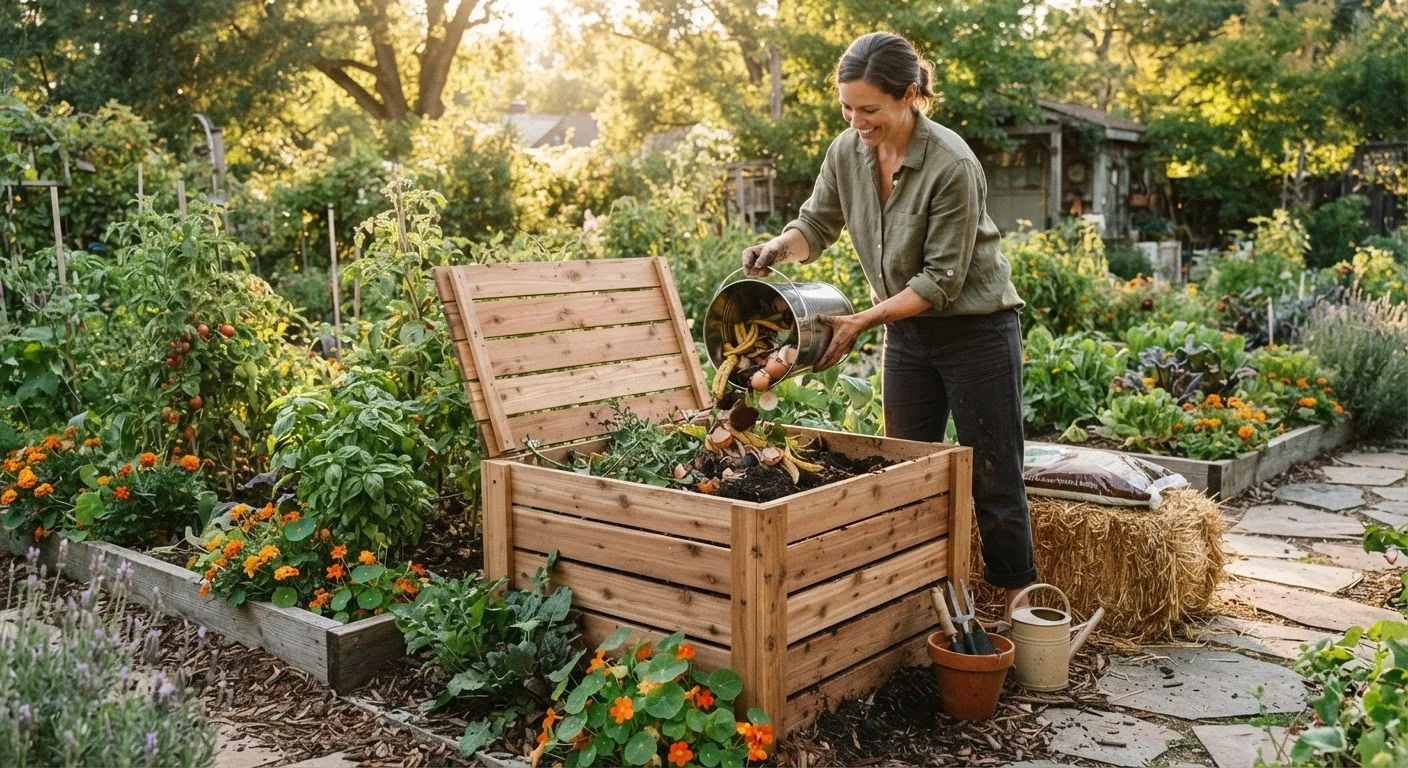
- Bin composting: A contained bin (plastic, wood, or wire) keeps the pile tidy, retains heat, and deters pests. Good for most suburban backyards. Many municipalities offer subsidized bins - check with your local waste authority.
- Tumbler composting: A sealed rotating drum speeds up decomposition and keeps pests out completely. Requires less manual turning but works best in smaller batches.
- Vermicomposting (worm bins): Uses red wiggler worms to process food scraps indoors or in a garage. Ideal for apartments or households with limited outdoor space. Produces worm castings, an exceptionally nutrient-dense amendment.
For most homeowners, a simple enclosed bin in a partially shaded spot - close enough to the kitchen to use conveniently, far enough from the house to allow airflow - is the practical starting point.
Place your compost bin directly on bare soil rather than concrete or paving. This allows worms and beneficial soil organisms to migrate up into the pile, accelerating breakdown naturally.
Earthworms and soil microbes are key contributors to decomposition. Positioning your bin on soil gives them direct access and dramatically improves biological activity.
Keep a small lidded container on your kitchen counter for daily food scraps - emptying it into the outdoor bin every two or three days makes the habit stick without creating odor issues indoors.
Convenience is the most common barrier to consistent composting. A dedicated countertop collector removes the friction of daily trips to the outdoor pile and encourages participation from all household members.
What to Add: Greens, Browns, and the Right Balance
Successful composting depends on layering two categories of material in the right proportion.
Greens (Nitrogen-Rich)
- Fruit and vegetable scraps
- Coffee grounds and paper filters
- Tea bags (remove staples)
- Fresh grass clippings
- Plant trimmings and spent annual flowers
- Eggshells (not technically nitrogen-rich, but a beneficial additive)
Browns (Carbon-Rich)
- Dry fallen leaves
- Cardboard torn into small pieces (remove tape)
- Newspaper (black ink only)
- Straw or hay
- Untreated wood chips or sawdust
- Paper bags and paper towels
Aim for a roughly 3:1 ratio of browns to greens by volume. Too many greens and your pile will become wet, compacted, and odorous. Too many browns and decomposition slows almost to a halt. If your pile smells like ammonia, add more browns. If it seems dry and inert, add more greens and a splash of water.
Composting pairs well with broader seasonal garden maintenance - see our month-by-month garden task checklist to know when to collect leaves, prunings, and other compostable material throughout the year.
What to Keep Out of Your Compost
Knowing what to exclude is just as important as knowing what to add. Certain materials slow decomposition, attract pests, create odors, or introduce pathogens that a home compost pile cannot reliably eliminate.
Never Compost These Materials
Meat, fish, dairy, and cooked foods with fats or oils should always be kept out of a standard home compost pile. They attract rodents and other pests, generate foul odors, and can create sanitation concerns. Stick to raw plant-based kitchen scraps and untreated yard waste for a trouble-free system.
- Meat, fish, and bones: Decompose slowly, produce strong odors, and attract rodents and wildlife.
- Dairy products and fats: Same pest and odor concerns as meat.
- Diseased plants: Home piles rarely reach temperatures high enough to kill plant pathogens. Bag and dispose of these separately.
- Pet waste (dogs and cats): Can contain harmful bacteria and parasites. Composting pet waste safely requires specialized systems not covered by standard home bins.
- Treated wood products: May contain preservatives or chemicals that persist in finished compost.
- Invasive weeds that have gone to seed: Seeds survive all but the hottest compost piles and will spread when you apply the finished product.
- Glossy or coated paper: Does not break down well and may contain non-compostable coatings.
Managing Your Pile for Faster Results
A passive pile left alone will eventually compost - but it can take one to two years. Active management compresses that timeline to two to six months.
Turn It Regularly
Turning introduces oxygen, which fuels the aerobic bacteria doing most of the work. Aim to turn your pile every one to two weeks using a garden fork or compost aerator. Each turn also moves cooler outer material into the warmer center, where decomposition is most active.
Keep It Moist - Not Wet
Your pile should feel like a wrung-out sponge. Too dry and microbial activity stalls; too wet and you'll get anaerobic conditions and unpleasant odors. In dry summers, cover your pile or add water. In wet winters, a lid or tarp helps prevent waterlogging.
Get the Size Right
Piles smaller than roughly 3 feet × 3 feet struggle to generate enough heat to accelerate decomposition. Larger than 5 feet × 5 feet and turning becomes difficult. That mid-range is the sweet spot for most backyard systems.
Chop and Shred Inputs
Smaller pieces decompose faster. Run a lawnmower over leaf piles, tear cardboard into strips, and chop vegetable scraps rather than adding them whole. This single habit meaningfully shortens your composting cycle.
Using Finished Compost in Your Garden
Finished compost is dark brown, crumbly, and earthy-smelling - resembling rich forest soil. Any recognizable food scraps or plant material indicate the pile needs more time. You can sift finished compost through a simple wire mesh screen to remove any partially broken-down chunks, which can go back into the active pile.
Where and How to Apply
- Vegetable beds: Work 2-3 inches into the top 6 inches of soil before planting. Compost-amended beds support better root development and moisture retention - an ideal foundation when starting a vegetable patch from scratch.
- Lawn top-dressing: Spread a thin quarter-inch layer over your lawn in spring or fall and rake it in to improve soil biology without smothering grass.
- Mulching around plants: Apply 1-2 inches around trees, shrubs, and perennials. It feeds the soil slowly while suppressing weeds. For more on mulch options and when compost is the right choice versus other materials, see our guide on mulch types explained.
- Potting mix amendment: Blend compost at up to 30% of the volume of potting mix to enrich container gardens.
Regular composting also supports wildlife-friendly gardening - healthy, biologically active soil supports earthworms, ground beetles, and other organisms that make your garden more resilient. With a consistent composting habit, you're not just managing waste; you're actively building the living foundation your outdoor space needs to flourish.