

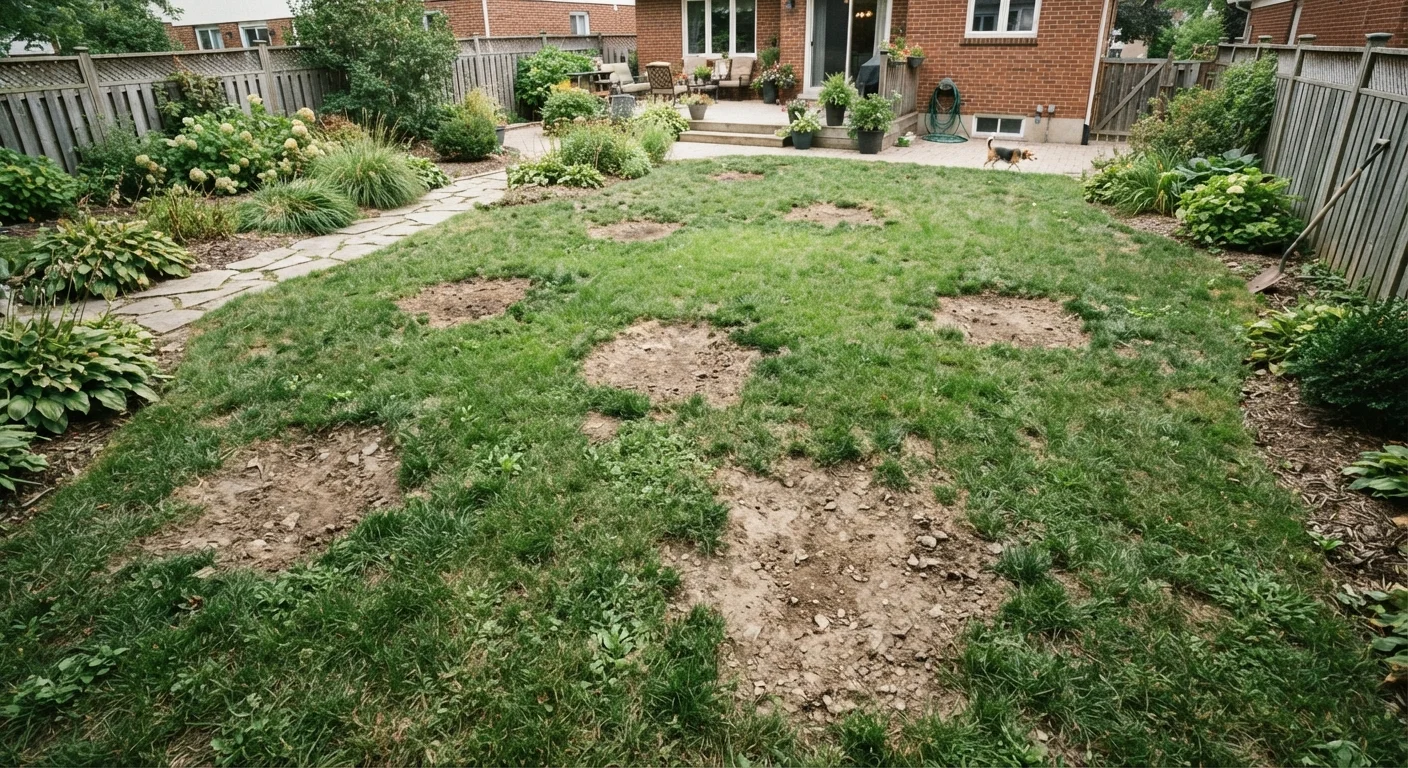
Key Takeaways
- Bare patches almost always signal an underlying problem that reseeding alone will not permanently fix.
- Soil compaction, shade, pests, and dog urine each create distinct patterns that help with diagnosis.
- Treating the root cause before reseeding is the single most important step for lasting results.
- Grubs, fungal disease, and dull mower blades are frequently overlooked contributors to lawn damage.
- Some persistent bare areas may reflect a site condition better suited to ground cover than grass.
Why Diagnosing First Makes All the Difference
It's tempting to grab a bag of grass seed the moment you spot a bare patch. But without understanding what killed the grass in the first place, you're setting yourself up for the same problem to return - sometimes within a single growing season. Bare patches are symptoms, not the condition itself.
Before you reseed or lay new sod, spend a few minutes examining the damage. Look at the shape of the bare area, the condition of the soil underneath, and whether there's a pattern - proximity to a fence, a downspout, a specific tree, or an area where people and pets regularly walk. These details point directly at causes. Our guide to understanding soil health can help you read the soil's signals before you start any repair work.
Reseeding without addressing soil compaction first.
Why it happens: Compacted soil is easy to overlook because the surface can look relatively normal. Homeowners focus on what's missing - the grass - rather than on the ground it needs to grow in.
Ignoring grub or pest damage beneath the surface.
Why it happens: Turf pests like white grubs feed on grass roots underground, so the damage appears as unexplained dead patches rather than visible insects. Many homeowners assume the problem is drought or poor seed quality.
Attributing every bare patch to dog urine without checking other causes.
Why it happens: Dog urine does cause distinctive roughly circular patches with sometimes-greener grass at the edges, but homeowners with pets often blame their dogs by default, even when the pattern doesn't fit.
Mowing too short or with a dull blade, weakening the turf.
Why it happens: A shorter lawn looks tidy, and mowing infrequently is convenient. Most homeowners don't realize that scalping grass or tearing it with a dull blade creates chronic stress that thins coverage over time.
Watering too frequently but too shallowly.
Why it happens: Daily light watering feels attentive, but it encourages shallow root systems that can't sustain grass through heat or brief dry spells. Roots stay near the surface where soil dries out fastest.
Conditions That Set the Stage for Persistent Bare Areas
Even after you correct specific mistakes, certain site conditions make it difficult for grass to thrive long-term. Heavy shade from mature trees is among the most common. Most traditional lawn grasses need several hours of direct sunlight daily, and even shade-tolerant varieties struggle beneath a dense canopy where roots also compete for water and nutrients.
Chronic drainage problems create another difficult environment. Low spots that hold standing water after rain deprive roots of oxygen and invite fungal disease. Similarly, areas directly under roof eaves may receive almost no rainfall due to the overhang, creating localized drought stress the rest of your irrigation schedule doesn't address.
Don't Seed Until the Cause Is Corrected
Reseeding a bare patch before fixing the underlying cause - whether compaction, shade, drainage, or pests - almost guarantees the patch will return. New grass planted into unfavorable conditions rarely establishes well enough to persist through a full growing season. Address the root cause first, then repair.
If a bare area keeps returning despite correct reseeding technique and appropriate watering, it's worth considering whether grass is genuinely the right plant for that spot. Ground covers, ornamental gravel, or shade-tolerant plantings can be practical, attractive alternatives. For a thorough look at one low-maintenance option and its real trade-offs, see our article on artificial turf in residential gardens.
Getting the Repair Right
Once you've identified the cause and corrected it, successful reseeding comes down to seed-to-soil contact, consistent moisture, and timing. Loosen compacted or crusted soil to a depth of two to three inches before seeding. Rake lightly after spreading seed to press it into the surface rather than leaving it sitting on top where birds and rain can displace it.
Fall is typically the best window for cool-season grasses in most of the country, while warm-season varieties establish best in late spring and early summer. Keep newly seeded areas consistently moist - not waterlogged - until germination is well established. Avoid foot traffic on repairs for at least four to six weeks, and hold off on fertilizing until the new grass has been mowed two or three times.
~40%
Lawn failures traced to soil compaction
Turfgrass specialists commonly estimate that compaction is a contributing factor in a significant proportion of residential lawn thinning and bare-patch complaints, particularly in high-traffic areas.
1 inch/week
Recommended weekly water depth for most lawns
The University of California Cooperative Extension notes that most established lawns need approximately one inch of water per week, including rainfall, to maintain healthy root depth.
Patience matters here. Rushing back to normal use too soon is one of the leading reasons repaired patches fail and the cycle starts over.