

Key Takeaways
- Artificial turf eliminates mowing and watering but requires upfront installation costs that can be significant.
- Synthetic grass surfaces can reach dangerously high temperatures in direct summer sun.
- Artificial turf does not support soil biology, which affects surrounding garden health over time.
- It offers practical value in high-traffic or drought-prone areas where natural grass struggles.
- Environmental impact - including heat retention and stormwater runoff - varies by product and installation.
Eliminates mowing, edging, and lawn care labour
Once installed, artificial turf requires no regular cutting or edging. This saves meaningful time for homeowners, particularly those managing larger lawn areas.
Significantly reduces or eliminates irrigation needs
Synthetic turf requires no watering to stay green, offering real water savings in drought-prone regions or during hosepipe restrictions.
Stays green year-round regardless of weather
Unlike natural grass, artificial turf doesn't go dormant, brown in drought, or die back in freezing conditions, maintaining consistent appearance across seasons.
Durable in high-traffic and heavy-use areas
Quality residential turf is engineered to withstand heavy foot traffic, pet activity, and play. It recovers better than natural grass in spots that receive constant wear.
Reduces ongoing chemical inputs
Removing a natural lawn removes the need for synthetic fertilizers, herbicides, and pesticides on that surface - an appeal to homeowners wanting fewer chemicals in their yard.
Significant upfront installation cost
Professional artificial turf installation typically costs several dollars per square foot including materials and base preparation - often substantially more than seeding or sodding the same area. Exact costs vary widely by region and product quality.
Surface temperatures become dangerously hot
On sunny summer days, synthetic turf can reach temperatures far exceeding the air temperature, making surfaces uncomfortable or unsafe for children and pets and reducing usability during peak hours.
Eliminates living soil biology beneath it
The ground under installed turf becomes biologically inactive over time, which can affect the health of adjacent plants, tree root systems, and the broader garden microbiome.
Reduces natural stormwater absorption
Unlike natural lawn, synthetic turf does not absorb rainfall the way living ground cover does. Without properly designed drainage, installations can increase surface runoff.
Limited lifespan and end-of-life disposal issues
Most residential turf products have a functional lifespan of 10-20 years. At end of life, the materials - typically plastics and rubber - are difficult to recycle and often end up in landfill.
Provides no habitat value for local wildlife
Synthetic surfaces offer nothing to pollinators, ground-nesting insects, birds, or small mammals - replacing a planted lawn removes a meaningful ecological resource from the garden.
Our Verdict
Artificial turf delivers genuine value in specific contexts - tight urban spaces, drought-prone climates, and high-traffic zones where natural grass repeatedly fails. However, it comes with real environmental and comfort trade-offs that homeowners should weigh honestly before committing. For most gardens, a hybrid approach - synthetic surfaces in heavily used zones, planted borders elsewhere - tends to perform better than a full lawn replacement.
Homeowners with small, high-traffic lawns in dry climates who prioritize low maintenance and can tolerate the upfront cost and heat-related limitations.
What Artificial Turf Actually Is
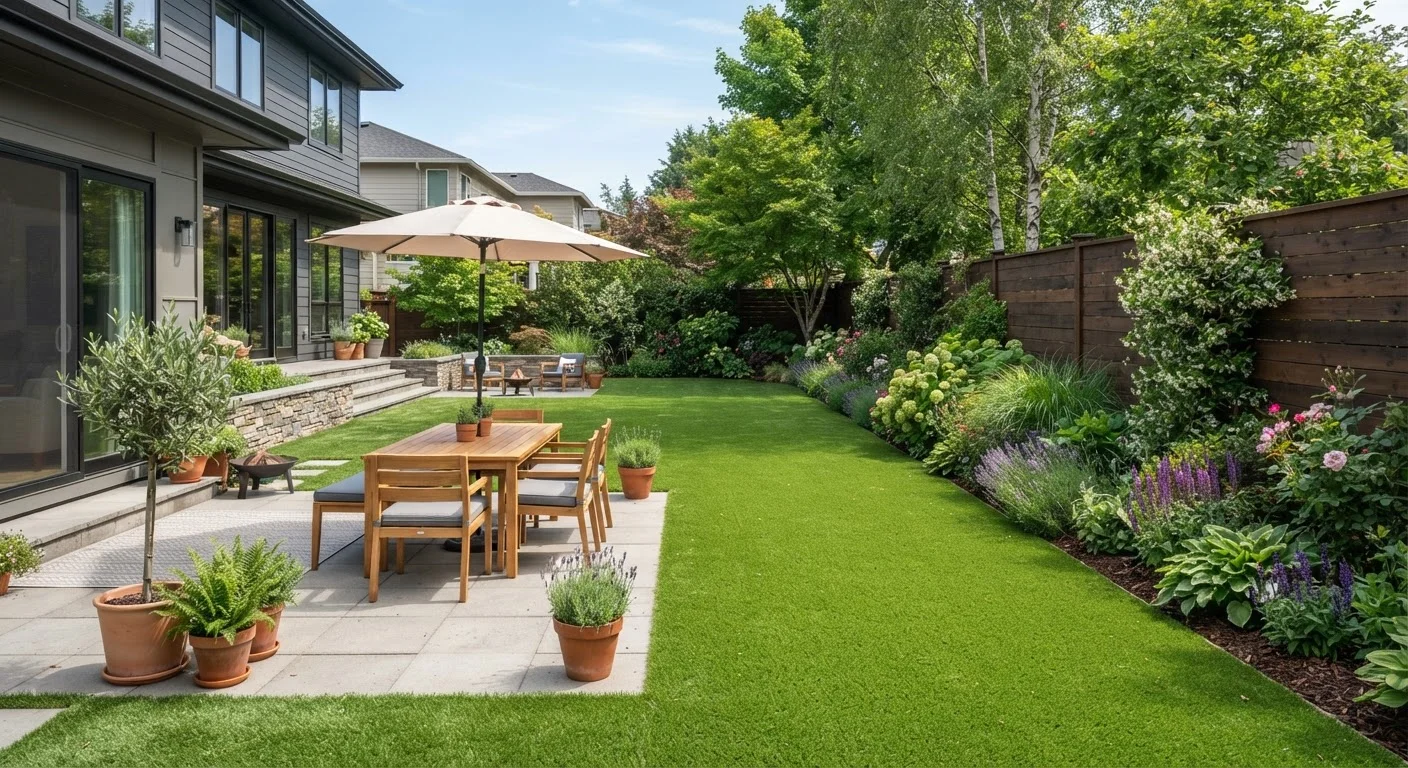
Artificial turf - also called synthetic grass - is a surface made from plastic fibers (typically polyethylene or polypropylene) engineered to resemble natural grass. Modern residential products are more sophisticated than the flat, bright-green carpet of earlier generations, often featuring varied blade heights, brown thatch layers underneath, and weighted infill materials (commonly crumb rubber or silica sand) to give the surface a more natural feel and appearance.
Installation typically involves removing existing lawn, laying a compacted aggregate base for drainage, and securing the turf over a weed barrier. Most residential installations are permanent or semi-permanent commitments. Understanding this from the outset helps homeowners frame the decision correctly - this is a landscaping investment, not a seasonal product. For guidance on broader outdoor design choices, see designing an outdoor space that gets used.
The Advantages Worth Considering
For the right property and lifestyle, artificial turf solves real problems that natural lawn owners know well.
Eliminates mowing, edging, and lawn care labour
Once installed, artificial turf requires no regular cutting or edging. This saves meaningful time for homeowners, particularly those managing larger lawn areas.
Significantly reduces or eliminates irrigation needs
Synthetic turf requires no watering to stay green, offering real water savings in drought-prone regions or during hosepipe restrictions.
Stays green year-round regardless of weather
Unlike natural grass, artificial turf doesn't go dormant, brown in drought, or die back in freezing conditions, maintaining consistent appearance across seasons.
Durable in high-traffic and heavy-use areas
Quality residential turf is engineered to withstand heavy foot traffic, pet activity, and play. It recovers better than natural grass in spots that receive constant wear.
Reduces ongoing chemical inputs
Removing a natural lawn removes the need for synthetic fertilizers, herbicides, and pesticides on that surface - an appeal to homeowners wanting fewer chemicals in their yard.
40-70°F
Temperature rise above ambient air on sunny days
Research on synthetic turf heat retention consistently documents surface temperatures significantly exceeding air temperature in direct summer sun, raising safety concerns for children and pets.
10-20 years
Typical functional lifespan of residential turf
Most manufacturers estimate residential artificial turf lasts between one and two decades before pile degradation, UV damage, or infill breakdown requires replacement.
In regions facing water restrictions - particularly across the Southwest and parts of the Mountain West - turf eliminates irrigation demands entirely for that section of the yard. Homeowners dealing with shaded spots, compacted soil, or heavy foot traffic from children and pets often find natural grass repeatedly fails in those conditions; synthetic turf holds up where grass struggles. It also removes the recurring costs of fertilizers, herbicides, and lawn care services, which add up substantially over a lawn's lifespan.
The Drawbacks Homeowners Often Underestimate
Many homeowners are surprised by limitations that aren't prominently discussed at the point of purchase.
Significant upfront installation cost
Professional artificial turf installation typically costs several dollars per square foot including materials and base preparation - often substantially more than seeding or sodding the same area. Exact costs vary widely by region and product quality.
Surface temperatures become dangerously hot
On sunny summer days, synthetic turf can reach temperatures far exceeding the air temperature, making surfaces uncomfortable or unsafe for children and pets and reducing usability during peak hours.
Eliminates living soil biology beneath it
The ground under installed turf becomes biologically inactive over time, which can affect the health of adjacent plants, tree root systems, and the broader garden microbiome.
Reduces natural stormwater absorption
Unlike natural lawn, synthetic turf does not absorb rainfall the way living ground cover does. Without properly designed drainage, installations can increase surface runoff.
Limited lifespan and end-of-life disposal issues
Most residential turf products have a functional lifespan of 10-20 years. At end of life, the materials - typically plastics and rubber - are difficult to recycle and often end up in landfill.
Provides no habitat value for local wildlife
Synthetic surfaces offer nothing to pollinators, ground-nesting insects, birds, or small mammals - replacing a planted lawn removes a meaningful ecological resource from the garden.
Surface temperature is perhaps the most underappreciated issue. Studies have found that artificial turf surfaces can reach temperatures 40-70°F hotter than the surrounding air on sunny summer days - well above what's comfortable or safe for bare feet and pets. This heat-island effect is a genuine consideration in warm US climates.
The environmental picture is also complex. Unlike natural lawns, synthetic turf provides no soil-building benefit - in fact, the ground beneath it becomes biologically inactive over time. This matters for the wider garden: healthy soil supports adjacent plants and tree root systems. Our guide to soil health explains why living soil biology matters beyond just growing grass. Artificial surfaces also reduce natural water infiltration, which can increase stormwater runoff depending on drainage design.
Wildlife impact is another concern. Replacing a planted lawn with synthetic turf removes habitat and foraging ground for insects, birds, and small mammals. Homeowners interested in supporting their local ecosystem should read about wildlife-friendly gardening approaches as an alternative framing.
Infill Materials: Worth Investigating
The infill used in artificial turf - the material packed between the synthetic blades - varies widely and has its own set of considerations. Crumb rubber (often made from recycled tires) is common but has been the subject of ongoing research regarding its chemical properties. Alternatives include silica sand, cork, and coated sand products. When evaluating an installation, ask specifically about the infill type and what independent research exists on its safety and environmental profile, particularly if children or pets will use the surface regularly.
Questions to Ask Before You Decide
Artificial turf isn't inherently the right or wrong choice - context determines its suitability. Work through these practical questions before committing:
- Why does your natural lawn fail? If the problem is shade, compaction, or poor drainage, explore whether those issues could be addressed directly first. Our article on diagnosing bare lawn patches walks through common causes.
- How much of your yard are you replacing? A small high-traffic side yard is a very different decision from removing an entire backyard lawn that supports tree roots and soil life.
- What is your climate like in summer? The hotter and sunnier your region, the more the surface-temperature issue matters for comfort and safety.
- What's your drainage baseline? Properties with existing runoff challenges need careful drainage planning under any synthetic surface.
- What are the local regulations? Some municipalities have HOA rules or local codes that govern synthetic turf installations - verify requirements before installation begins.
For broader outdoor planning, the home maintenance hub covers related upkeep considerations that apply across landscaping decisions.