

Key Takeaways
- Caulk is the right choice for stationary gaps where surfaces don't move against each other.
- Weatherstripping is designed for moving joints - door edges, window sashes, and similar operable parts.
- Using caulk where weatherstripping belongs will crack and fail quickly due to repeated movement.
- Many energy-loss problems require both products applied to different parts of the same door or window.
- Proper surface preparation is essential for either product to adhere and seal effectively.
- Both materials have a limited lifespan and should be inspected and replaced on a regular maintenance schedule.
Option A
Caulk
The permanent, flexible seal for stationary gaps.
Best for: Filling fixed, non-moving gaps around window frames, door frames, and where trim meets walls or floors.
Option B
Weatherstripping
The compressible barrier designed for moving parts.
Best for: Sealing the dynamic gaps around operable doors and windows that open, close, and flex regularly.
If you're sealing a fixed gap where two stationary surfaces meet
Caulk
Caulk bonds permanently to immovable surfaces and fills irregular gaps with a flexible, airtight bead that won't crack under thermal expansion.
If you're stopping drafts around a door or operable window sash
Weatherstripping
Weatherstripping compresses and releases with each use, making it the only durable option where surfaces move against each other repeatedly.
If you're doing a full window energy upgrade
Both
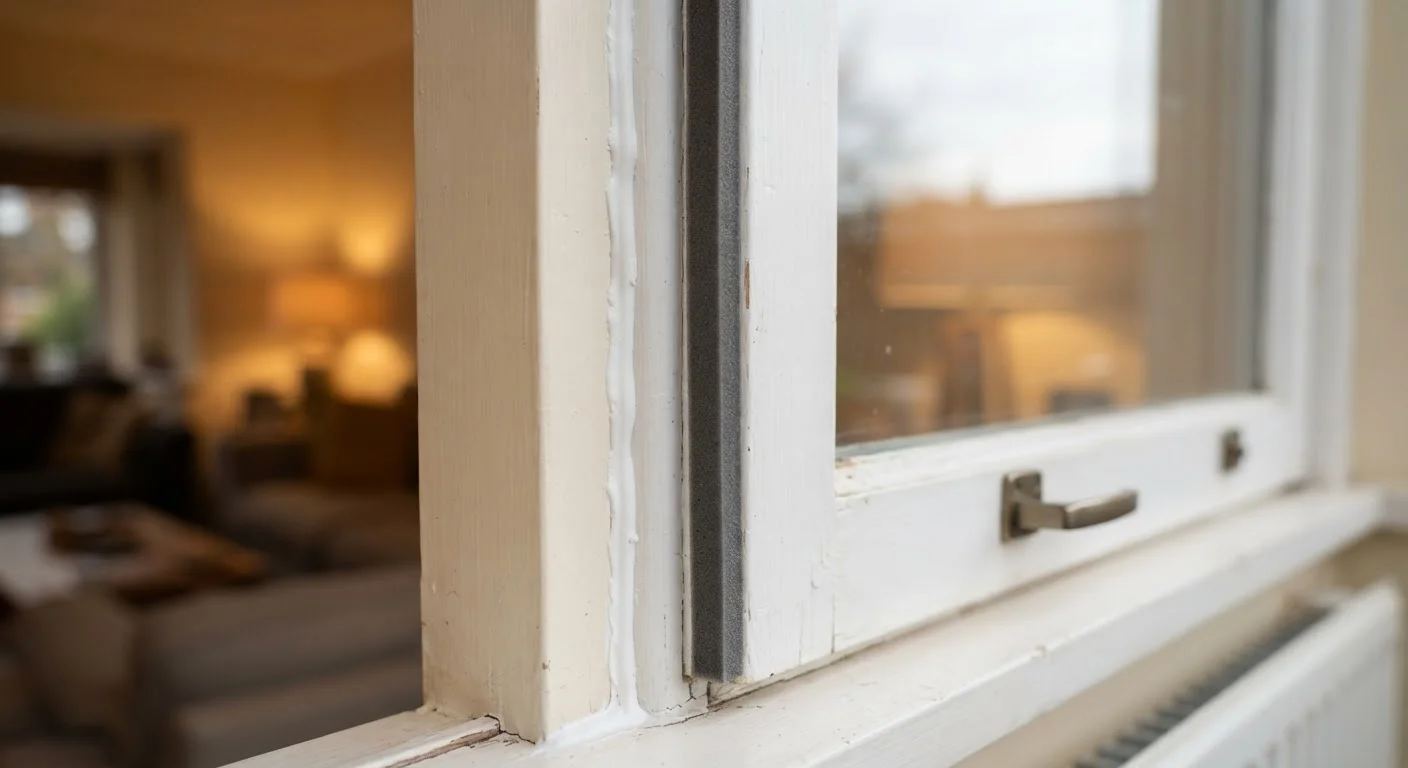
Apply caulk along the fixed exterior frame where it meets siding, and weatherstripping along the movable sash - each product handles its appropriate joint.
Why the Distinction Matters
Many homeowners reach for whichever sealing product is closest, but applying the wrong material to the wrong gap can leave your home just as leaky as before - and waste a weekend's work. The core principle is simple: caulk is for stationary joints; weatherstripping is for moving joints.
A drafty home isn't just uncomfortable. Air leaks around doors and windows can meaningfully raise heating and cooling costs. Understanding which product belongs where is a foundational step in any seasonal maintenance plan. For a broader look at preparing your home before cold weather sets in, see our guide to weatherproofing your home before winter.
| Criterion | Caulk | Weatherstripping |
|---|---|---|
| Best application | Stationary, fixed gaps | Moving joints that open and close |
| Common locations | Window frames, trim, siding joints | Door edges, sashes, thresholds |
| Material forms | Silicone, latex, polyurethane bead | Foam tape, V-strip, door sweep |
| Flexibility to movement | Low - cracks under repeated flex | High - designed to compress and recover |
| Typical lifespan | 5-10 years (exterior) | 2-5 years depending on use |
| DIY skill level | Beginner to moderate | Beginner |
| Tools required | Caulk gun, utility knife, smoothing tool | Scissors or knife, tape measure |
When to Use Caulk
Caulk is a sealant applied in a continuous bead that cures into a flexible, durable barrier. It bonds to surfaces and fills gaps that don't shift or separate during normal use. Common caulking locations include:
- Around window and door frames where the frame meets exterior siding or interior trim
- Along baseboards and crown molding where trim meets the wall
- Where pipes or wires pass through walls to the exterior
- At foundation sill plates and other fixed structural joints
Silicone-based caulks offer excellent moisture resistance and are a common choice for exterior use, while paintable latex formulations are typically used indoors. Never apply caulk across a joint that opens and closes - the repeated flexing will cause it to crack and separate within one or two seasons.
25-30%
Home heating/cooling lost through air leaks
The U.S. Department of Energy estimates that air leaks around windows, doors, and other openings account for roughly a quarter to a third of a typical home's heating and cooling energy loss.
$0.50-$6
Cost per linear foot of weatherstripping
Weatherstripping materials vary widely in price depending on type and quality, making it one of the more cost-accessible home maintenance tasks available to DIYers.
When to Use Weatherstripping
Weatherstripping is installed along the edges of doors and operable windows to create a seal only when the door or window is closed. Because these surfaces move every time they're used, the seal material must compress and recover repeatedly without losing its shape or adhesion. Common weatherstripping types include:
- Foam tape - inexpensive and easy to apply, suited to low-traffic windows and secondary doors
- V-strip (tension seal) - a durable plastic or metal strip that springs open to fill the gap, good for the sides of sliding windows and double-hung sashes
- Door sweeps and door shoes - seal the gap between the door bottom and the threshold
- Compression strips - typically found on the door stop, they compress when the door closes
Inspect weatherstripping annually. Signs of failure include visible daylight around a closed door, drafts at the door bottom, or strips that are torn, flattened, or pulling away from the surface.
Using Both Products on the Same Opening
A single door or window often needs both materials applied to different parts of the same assembly. Consider a standard exterior door: the door frame where it meets siding on the exterior is a fixed joint - that gets caulked. The door stop and threshold, where the door itself makes contact when closed, require weatherstripping to accommodate repeated movement.
Treating both zones correctly is what produces a genuinely airtight seal. Skipping either step leaves an energy pathway open. Pairing effective air sealing with adequate wall insulation creates an even stronger barrier; our overview of common insulation materials explains how insulation and air sealing work together.
Don't Caulk the Weep Holes
Exterior window frames often include small weep holes or slots at the bottom rail designed to drain any water that enters the frame. These openings are intentional and should never be sealed with caulk. Blocking them can trap moisture inside the frame, leading to rot or water intrusion into the wall assembly. If you're unsure which gaps are structural drainage points, consult a window installer or your window manufacturer's documentation.
Installation Tips for Lasting Results
Regardless of which product you're applying, surface preparation determines how long the seal lasts. Follow these practical steps:
- Clean the surface thoroughly. Remove old caulk, dust, grease, and moisture. Neither caulk nor adhesive-backed weatherstripping bonds well to a dirty surface.
- Apply in the right temperature range. Most caulks and adhesives perform best when applied between 40°F and 80°F. Avoid applying to frozen or very hot surfaces.
- Size the gap correctly. Caulk is designed to fill gaps up to about half an inch. Larger gaps may need a backing material (backer rod) before caulking. For weatherstripping, choose a product whose compressed thickness matches your gap measurement.
- Test before committing. For weatherstripping on a door, close the door on a strip of paper. If it slides out easily, the seal isn't tight enough.
Both products have a finite lifespan - typically two to five years for weatherstripping and five to ten years for exterior caulk, depending on conditions and product quality. Build a quick inspection into your annual fall maintenance routine.