

Key Takeaways
- Poor attic ventilation raises cooling costs by trapping radiant heat in the living spaces below.
- Moisture buildup from inadequate airflow can lead to mould growth and structural wood rot.
- Ice dams in winter form when a poorly ventilated attic creates uneven roof surface temperatures.
- Proper ventilation extends the life of both your roof deck and your shingles.
- Ventilation problems are often silent - damage accumulates long before visible signs appear.
Attic Ventilation
Attic ventilation is the system of intake and exhaust vents that allows outside air to circulate through your attic space. It regulates temperature and moisture levels year-round, preventing heat and humidity from building up under your roof. A well-ventilated attic protects your roof structure, insulation, and the living spaces below it.
The general industry guideline calls for a minimum of 1 square foot of net free ventilation area per 150 square feet of attic floor space, often split evenly between intake (soffit) and exhaust (ridge or gable) vents.
The Attic Is Not Isolated from the Rest of Your Home
Many homeowners treat the attic as dead space - somewhere insulation lives and boxes get stored. In reality, your attic is an active part of your home's thermal and moisture management system. What happens up there directly influences the comfort, durability, and running costs of everything below it.
Without adequate airflow, your attic becomes a heat trap in summer and a moisture incubator in winter. Both conditions stress building materials and your HVAC system simultaneously. Understanding this connection is the first step toward smarter preventive maintenance.
Ventilation and Insulation Work Together
Attic ventilation and insulation are complementary, not interchangeable. Insulation slows heat transfer between the attic and living areas; ventilation removes accumulated heat and moisture from the attic itself. A common mistake is piling extra insulation near the eaves and inadvertently blocking soffit vents - this undermines both systems at once. When upgrading either, check that the other isn't compromised.
How Heat Buildup Drives Up Energy Costs
On a hot summer day, attic air temperatures can reach 150°F or higher when ventilation is poor. That superheated air radiates downward through your ceiling into living spaces, raising indoor temperatures even when your air conditioner is running. Your cooling system then cycles longer and harder to compensate, increasing energy consumption and wear on the equipment.
This is why top-floor rooms often feel stuffy regardless of thermostat settings - the ceiling itself is acting as a radiant heat source. Improving airflow through ridge vents, soffit vents, or powered attic fans reduces this thermal burden significantly. For related air quality and system efficiency concerns, the principles overlap with HVAC filter upkeep - both are about reducing unnecessary load on your home's systems.
150°F+
Peak attic air temperature in summer without ventilation
Poorly ventilated attics can reach extreme temperatures on hot days, significantly increasing radiant heat load on living spaces below.
1:150
Minimum vent-to-floor-area ratio (sq ft)
The general industry guideline calls for at least 1 sq ft of net free ventilation per 150 sq ft of attic floor space, balanced between intake and exhaust.
Up to 25%
Potential reduction in cooling load with improved ventilation
Industry estimates suggest that reducing attic heat buildup through proper ventilation can meaningfully reduce the thermal burden on residential cooling systems, though results vary by home.
Winter Risks: Ice Dams and Moisture Damage
In cold climates, poor attic ventilation creates a different but equally damaging problem. When warm air from your living spaces leaks into an under-ventilated attic, it warms the roof deck unevenly. Snow on the roof melts near the peak, flows toward the colder eaves, and refreezes - forming ice dams. These ice ridges force meltwater back under shingles, where it can penetrate the roof deck and damage ceilings, walls, and insulation inside.
Beyond ice dams, warm humid air condensing on cold attic surfaces leads to moisture accumulation on rafters and sheathing. Over time, this creates conditions for mould growth and wood rot - both of which are expensive to remediate. Homes in humid climates face heightened risk; regional maintenance differences are worth understanding through resources like maintaining a home in a humid climate.
The Impact on Your Roof's Lifespan
Roofing materials are rated for certain service lives under normal temperature conditions. A chronically overheated attic accelerates shingle aging - asphalt shingles in particular become brittle faster when subjected to excessive heat cycling. Manufacturers' warranties can even be voided if ventilation requirements specified in installation guidelines aren't met.
The roof deck underneath shingles is equally vulnerable. Moisture from condensation weakens the plywood or OSB sheathing, causing it to swell, delaminate, or rot - turning what should have been a minor ventilation fix into a full roof replacement. This kind of compounding damage is why attic ventilation belongs in every annual home maintenance review.
What Proper Attic Ventilation Looks Like
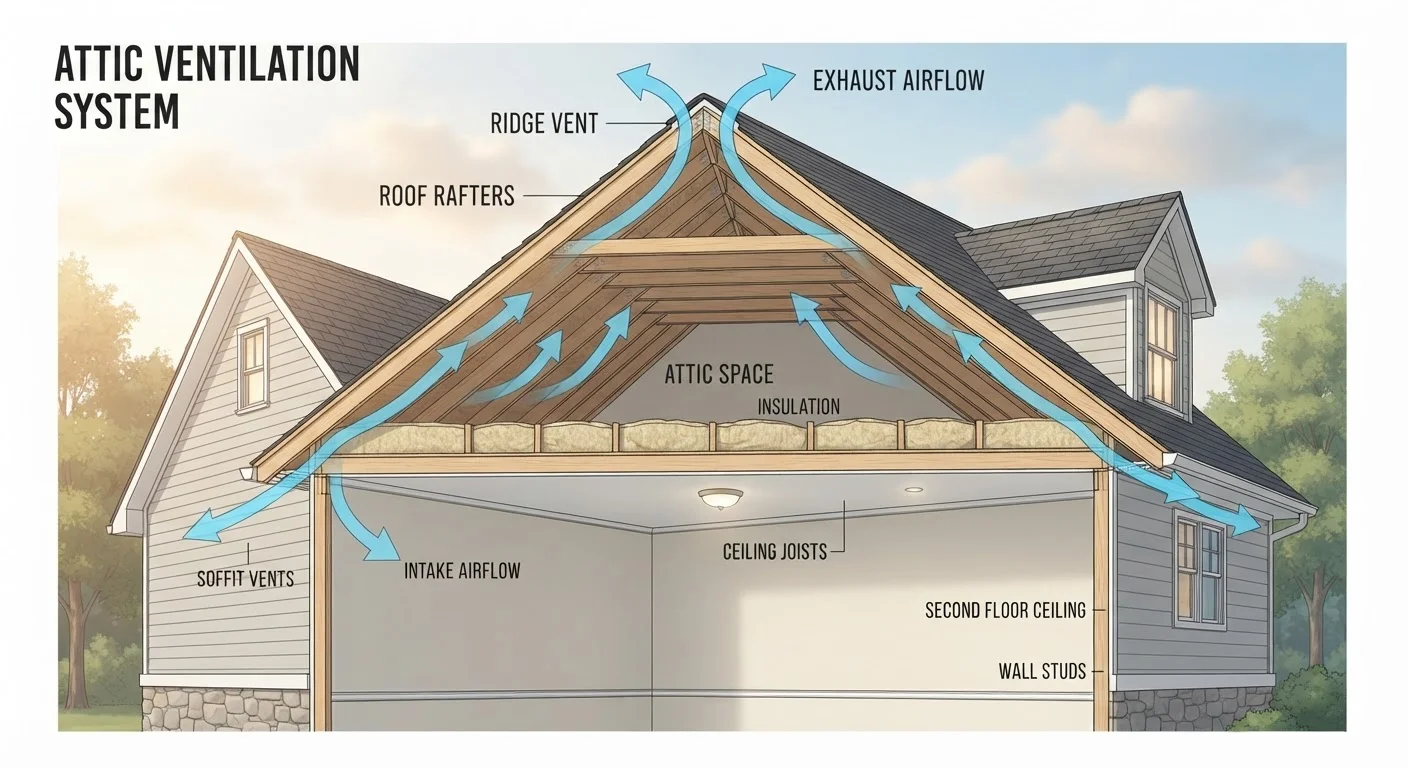
A balanced ventilation system pairs intake vents - typically soffit or eave vents along the bottom of the roofline - with exhaust vents at or near the ridge. Air enters cool at the soffits, flows upward through the attic, and exits at the peak, creating a continuous loop that moderates temperature and removes moisture-laden air.
Common problems include blocked soffit vents (often covered by insulation pushed to the edges), damaged ridge vents, or mismatched intake-to-exhaust ratios. A roofing professional or home energy auditor can assess whether your current system is balanced and performing as designed. Just as gutters deserve more attention than most homeowners give them, attic vents are easy to overlook until visible damage forces the issue.
This article provides general home maintenance education and is not a substitute for a professional inspection of your specific home's attic and roofing system. Requirements vary by climate, roof design, and local building codes - consult a licensed contractor for guidance tailored to your situation.