

Key Takeaways
- Humid climates prioritize mold prevention, moisture barriers, and ventilation above almost everything else.
- Arid climates demand attention to wood shrinkage, cracked caulk, UV damage, and dust infiltration.
- Both climates require tailored HVAC maintenance, but for very different reasons.
- Deferred maintenance compounds faster in extreme climates - prevention is significantly cheaper than repair.
- A climate-specific maintenance calendar helps homeowners stay ahead of their region's most costly failure points.
Our Verdict
Neither humid nor arid climates are inherently harder to maintain - they simply punish different types of neglect. Humid-climate homeowners must treat moisture management as a year-round discipline, while arid-climate homeowners need to prioritize sealing, UV protection, and dust control. Matching your maintenance routine to your environment is the most effective way to protect your investment.
| Best for | Recommended |
|---|---|
| Homeowners in the Gulf Coast, Southeast, or Pacific Northwest | Humid Climate Maintenance Approach |
| Homeowners in the Southwest, Mountain West, or high desert regions | Arid Climate Maintenance Approach |
| Homeowners transitioning between climate zones or in transitional regions | Combined seasonal checklist strategy |
Why Climate Is the Starting Point for Any Maintenance Plan
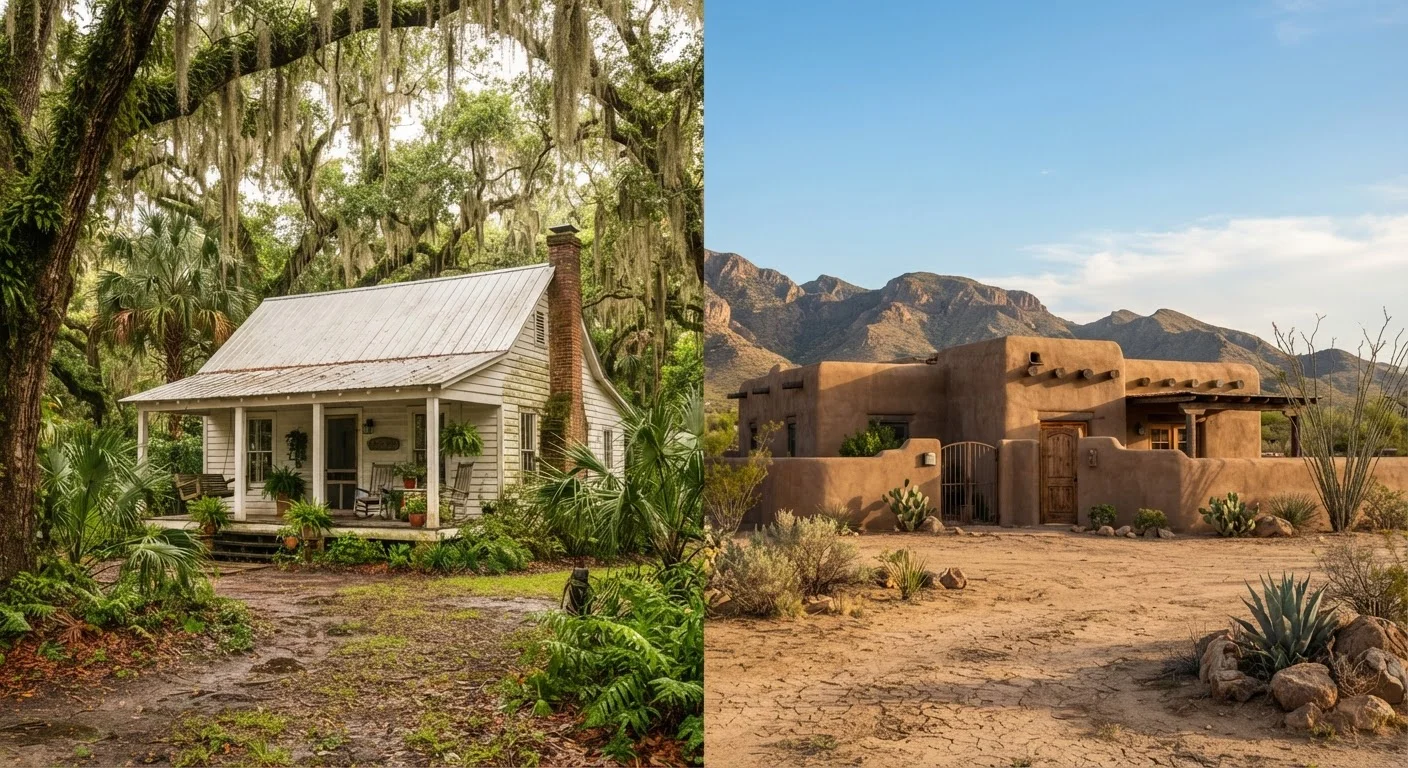
Most home maintenance advice is written as though every house faces the same pressures. In reality, a home in Houston and a home in Phoenix age very differently - not because one is better built, but because moisture and aridity each create distinct, predictable failure patterns. Understanding which stressors apply to your region lets you prioritize tasks that actually matter and avoid spending time on problems you're unlikely to face.
For a structured, month-by-month framework you can adapt to your climate, see the seasonal home maintenance calendar covering tasks for every region and season.
| Maintenance Area | Humid Climate | Arid Climate | |
|---|---|---|---|
| Primary threat | Moisture, mold, rot | UV damage, cracking, dust | |
| Crawl space / basement | Vapor barriers, dehumidifiers essential | Less critical; focus on pest entry sealing | |
| Caulk & sealants | Inspect for mold, peeling | Inspect for shrinkage and cracking annually | |
| HVAC filter frequency | High - moisture and particulates | High - fine dust and prolonged run times | |
| Roof concerns | Algae, moss, rot, ice dams | UV degradation, thermal cracking | |
| Foundation risk | Hydrostatic pressure, water intrusion | Soil shrinkage, differential settlement | |
| Pest focus | Subterranean termites, mold mites | Drywood termites, scorpions, rodents | |
| Landscaping impact | Drainage, grading, root intrusion | Perimeter watering to stabilize soil |
The Core Challenges of Humid Climate Maintenance
In high-humidity regions - the Southeast, Gulf Coast, Mid-Atlantic, and parts of the Pacific Northwest - moisture is the primary adversary. Relative humidity above 60% for extended periods creates the conditions mold and mildew need to colonize walls, crawl spaces, attic decking, and HVAC ducts.
Ventilation and Air Circulation
Attic and crawl space ventilation is non-negotiable in humid climates. Trapped heat and moisture accelerate wood rot, compromise insulation, and shorten roof life. Poor airflow in an attic doesn't stay an attic problem - it affects your whole home's energy performance and indoor air quality. The relationship between attic ventilation and whole-home health is worth understanding before issues develop.
Moisture Barriers and Drainage
Grading around the foundation, functional gutters, and vapor barriers in crawl spaces work together to prevent ground moisture from migrating inward. Any lapse in this system - a clogged downspout, a torn vapor barrier - can allow moisture intrusion that goes undetected for months.
HVAC Demands
In humid climates, air conditioning systems do double duty: cooling and dehumidifying. Filters clog faster with airborne particulates, and drain pans can overflow if not cleared regularly. HVAC filter maintenance carries extra urgency here, as a restricted system loses dehumidification efficiency precisely when you need it most.
Test Your Indoor Humidity Year-Round
In humid climates, aim to keep indoor relative humidity between 30% and 50%. An inexpensive hygrometer placed in the main living area gives you a quick read on whether your HVAC system's dehumidification is keeping pace. If levels consistently exceed 60%, investigate ventilation, drainage, and HVAC performance before mold takes hold.
The Core Challenges of Arid Climate Maintenance
In low-humidity regions - the Southwest, Southern California, the high desert, and parts of the Mountain West - the hazards shift from too much moisture to too little. Dry air causes building materials to contract and crack, UV radiation degrades exterior surfaces faster, and dust infiltration is a persistent operational issue.
Wood, Caulk, and Sealants
Wood trim, window frames, and door casings shrink and gap in arid conditions. Caulk that seals perfectly in moderate humidity can crack and pull away within a single summer. Annual inspection and resealing of all exterior joints, windows, and roof penetrations is a higher-frequency task in dry climates than elsewhere. The guide to preparing your home's exterior for a hot, dry summer outlines specific steps for protecting paint, wood, and masonry.
Foundation Movement
Clay-heavy soils in arid climates shrink significantly during dry periods and expand when rain arrives. This cycle stresses foundations more than stable-moisture soils do. Consistent, shallow watering around the perimeter during dry months helps maintain soil volume and reduce differential settlement.
HVAC and Dust
Desert homes run HVAC systems hard through long, hot summers, and dust is a constant filter adversary. Fine particulate matter common in arid regions clogs filters faster and can damage equipment if not managed. Checking and changing filters more frequently than manufacturer defaults recommend is standard practice in dusty, dry climates.
Shared Priorities - Just Applied Differently
Several maintenance categories matter in both climates, but the reasoning and methods differ:
- Roofing: Humid climates battle algae, moss, and rot; arid climates face UV degradation and thermal cycling that cracks shingles and tiles faster.
- Plumbing: Humid-climate pipes sweat and corrode externally; arid-climate pipes can dry out fixture seals and require attention to water softening due to hard water concentration.
- Exterior paint: Moisture drives peeling and bubbling in humid regions; UV intensity causes chalking and fading in dry ones. Both require regular inspection and timely repainting.
- Pest control: Termites are active in both environments - humid soil termites in the Southeast, drywood termites in the Southwest - but prevention strategies differ.
Regardless of climate, deferred maintenance compounds. Understanding what skipped maintenance actually costs over time can help frame maintenance as investment rather than expense. A comprehensive annual home maintenance checklist provides a useful baseline to adapt for your climate's specific demands.