

Key Takeaways
- Using the wrong filter size allows unfiltered air to bypass the system entirely.
- Most filters need replacement every 60-90 days, though households with pets or allergies may need monthly changes.
- A clogged filter forces your HVAC system to work harder, raising energy bills and shortening equipment life.
- Filter MERV rating matters - too high can restrict airflow in systems not designed for dense filtration.
- Installing a filter backward is a surprisingly common mistake that dramatically reduces its effectiveness.
Why Such a Simple Task Goes Wrong So Often
HVAC filter maintenance ranks among the easiest home upkeep tasks on paper - buy the right filter, swap it out regularly, done. Yet it's also one of the most consistently neglected. The consequences ripple outward: reduced indoor air quality, higher utility bills, and accelerated wear on expensive equipment. Understanding why homeowners get this wrong is the first step to getting it right.
Part of the problem is that filter failure is invisible. A clogged filter doesn't trigger an alarm. Your home still feels temperature-controlled - right up until the system labors under the strain long enough to break down. The home maintenance myths that quietly cost homeowners money often include the assumption that HVAC systems are self-sustaining. They're not.
The mistakes below represent the most frequent missteps - each avoidable with a little know-how and a consistent routine.
Using a filter that doesn't match the unit's required dimensions.
Why it happens: Homeowners often grab a close-enough size at the hardware store, or assume a snug fit is good enough. Even a small gap allows unfiltered, dusty air to flow around the filter entirely.
Waiting too long between filter changes.
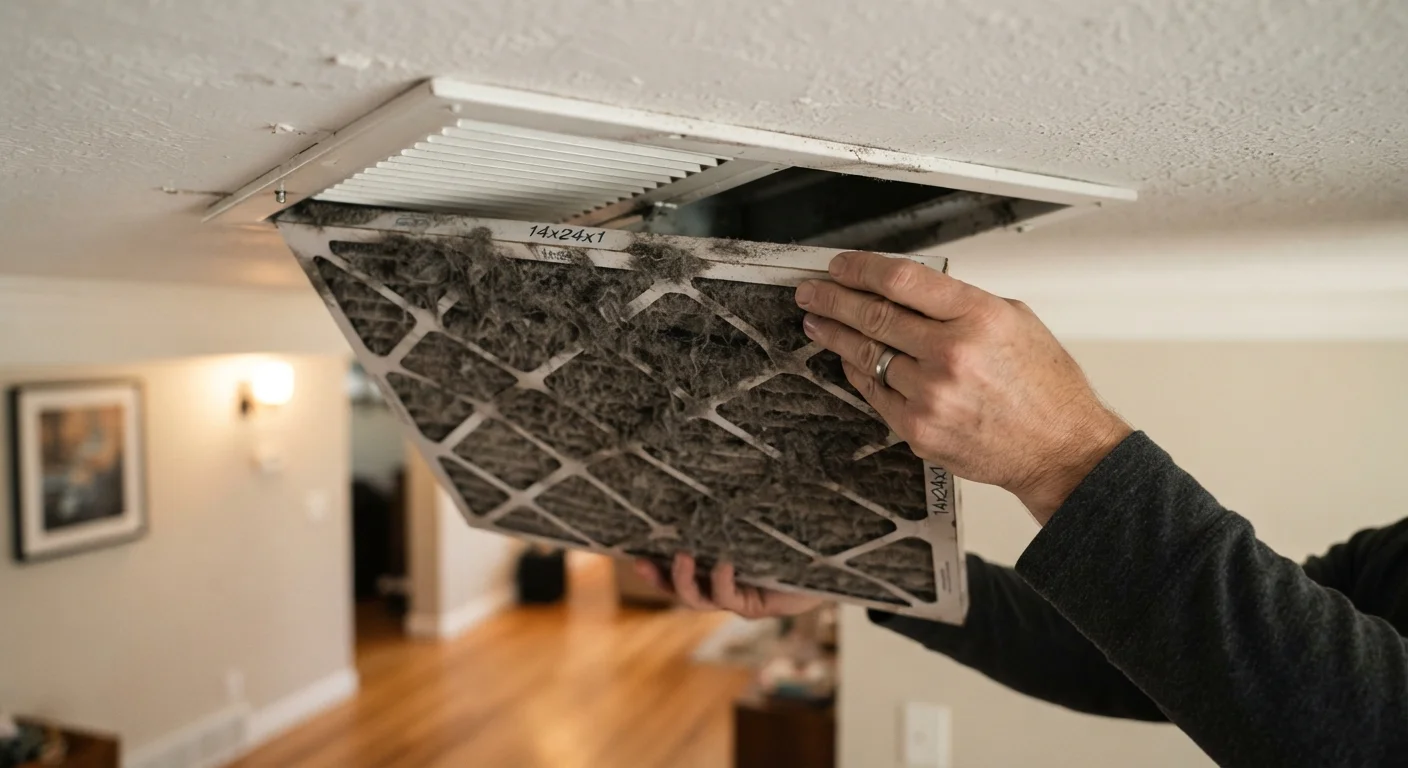
Why it happens: Most homeowners underestimate how quickly filters load up with dust, pollen, and debris, especially in high-use seasons or homes with pets. Without a visual check or calendar reminder, it's easy to go months past the replacement window.
Installing the filter in the wrong direction.
Why it happens: Filter packaging often shows an airflow arrow that's easy to miss or misread, especially in poorly lit mechanical closets. A backward filter catches far less particulate and can collapse under pressure.
Choosing a MERV rating that's incompatible with the HVAC system.
Why it happens: Marketing language around air quality makes higher-rated filters seem universally superior. Many homeowners upgrade to a MERV 13+ filter without checking whether their system's blower can pull air through the denser media.
Skipping filter maintenance in mild-weather months when the system runs less.
Why it happens: Homeowners often assume that low system use means the filter stays clean. In reality, dust accumulates on a static filter even without heavy airflow, and mold can develop in humid conditions.
Building a Filter Maintenance Habit That Actually Sticks
One-off fixes help, but what protects your system season after season is a repeatable process. Start by noting your filter's specifications - size and MERV rating - directly in your phone or on a notecard taped inside the furnace closet. This eliminates guesswork at the store.
Don't Chase the Highest MERV Rating
It's tempting to buy the densest filter available, assuming more filtration is always better. However, filters rated MERV 13 and above can restrict airflow in residential systems not engineered for that resistance. Consult your HVAC unit's manual or a technician to confirm the highest MERV rating your system can handle without strain.
Next, anchor your filter checks to events you already track. Many HVAC professionals recommend syncing filter inspections with the annual home maintenance checklist cycle - at the start of heating season, at the start of cooling season, and once during each. Homes in humid climates may need to increase that frequency; the unique demands of maintaining a home in a humid climate include faster filter loading from airborne moisture and particulates.
A Clogged Filter Can Damage Your HVAC System
When airflow is severely restricted by an overdue filter, the HVAC blower motor works under excess strain - a leading cause of premature system failure. In heating mode, restricted airflow can also cause the heat exchanger to overheat and crack, creating a potential carbon monoxide risk. If your system has been running with a long-overdue filter, have a licensed HVAC technician inspect it before the next heavy-use season.
Finally, keep one spare filter on hand at all times. When you install a new filter, add a replacement to your next shopping list. That simple habit closes the gap between noticing a dirty filter and actually replacing it.
Consistent filter upkeep is one of the highest-return habits a homeowner can build - and a direct investment in the longevity of one of your home's most expensive systems. For a broader look at how airflow conditions affect your home's overall performance, see our article on how attic ventilation affects the rest of your home.