

Key Takeaways
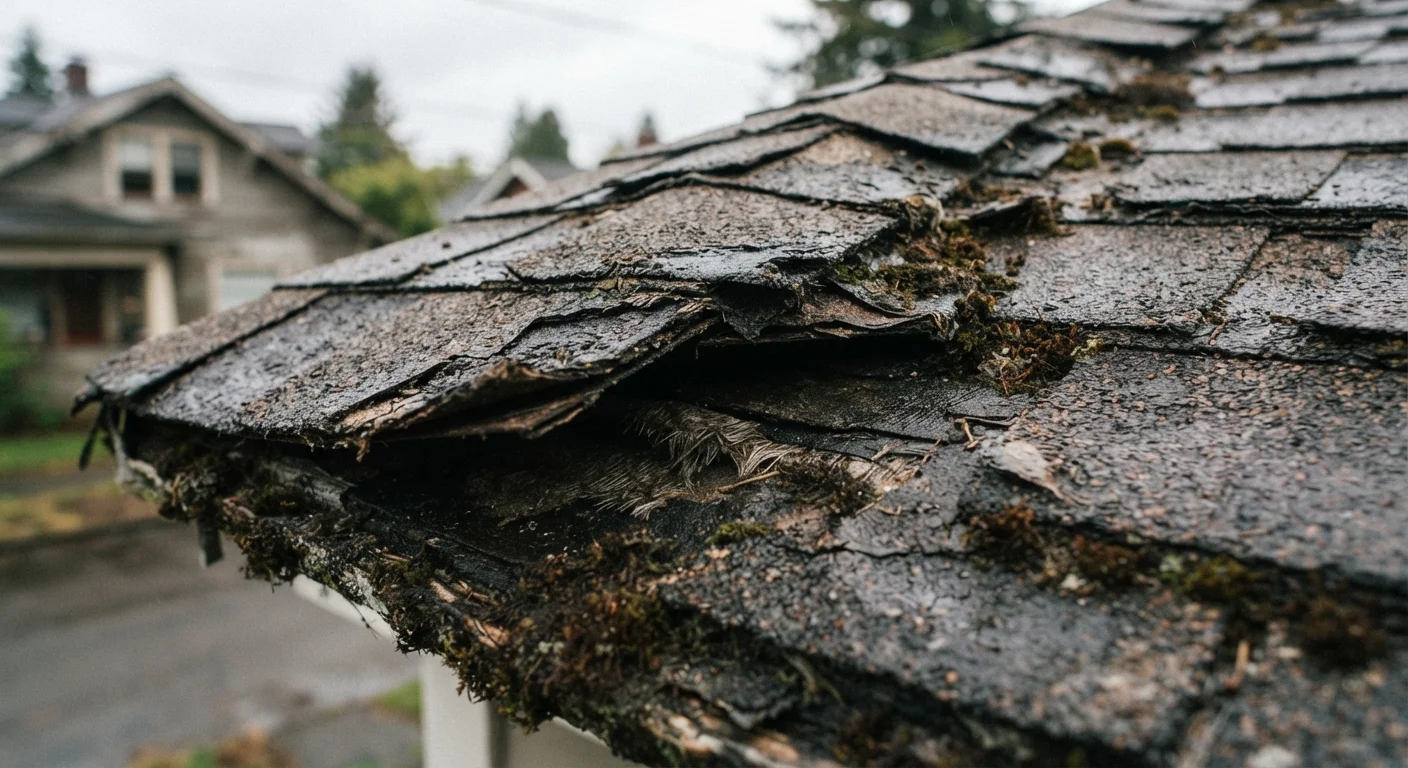
- Curling, cracking, or missing shingles are among the earliest and most visible warning signs of roof deterioration.
- Water stains on interior ceilings often mean the problem started outside weeks or months earlier.
- Granule loss accelerates shingle aging and is easy to spot in gutters and downspout runoff.
- Moss and algae growth trap moisture against your roof surface, quietly causing structural damage over time.
- Most roof problems caught early can be repaired affordably; ignored issues often require full replacement.
- An annual visual inspection - from the ground or attic - is one of the most valuable home maintenance habits.
Why Roofs Rarely Fail Without Warning
A failing roof almost never gives out all at once. Instead, it communicates distress through gradual, readable signs - changes in shingle texture, subtle staining on interior walls, or granules collecting in gutters after rain. The challenge for most homeowners is knowing what to look for and understanding when a minor observation deserves professional attention.
This is a maintenance issue that rewards curiosity and consistency. Just as dashboard warning lights signal car trouble early, your roof sends its own version of alerts long before a leak appears in your living room. Learning to read those signals is one of the most cost-effective home skills you can develop.
Below are the most common - and often overlooked - signs that your roof needs attention, along with practical guidance on what each one typically indicates.
Curling or Buckling Shingles
Shingles that are curling upward at the edges (called cupping) or lifting in the middle (called clawing) are telling you they've reached or exceeded their useful lifespan. Both patterns happen when shingles absorb moisture unevenly or when the underlying roof deck shifts. Curled shingles are more vulnerable to wind uplift and water infiltration, especially during storms.
You can often spot this from the ground with binoculars. If curling appears across a significant portion of the roof rather than isolated spots, a professional inspection is a sensible next step.
Curling shingles are more vulnerable to wind uplift and water infiltration during storms.
Granule Loss in Gutters or Downspouts
Asphalt shingles are coated with mineral granules that protect the underlying mat from UV rays and weather. Over time - especially as shingles age - these granules shed and wash into gutters. Finding a significant accumulation of dark, sand-like granules in your gutters or at the base of downspouts is a reliable indicator that your shingles are degrading.
New roofs shed a small amount of granules initially, which is normal. Ongoing or heavy loss on an older roof, however, means the shingles are losing their protective capacity and will deteriorate more rapidly.
Heavy granule loss signals that shingles are losing their UV protection and deteriorating faster.
Water Stains on Interior Ceilings or Walls
Yellowish or brownish rings on your ceiling are a strong indicator that water has found a path through your roof assembly. The tricky part: the stain rarely appears directly below the entry point. Water can travel along rafters or sheathing for several feet before dripping onto insulation or drywall.
Check your attic after heavy rain with a flashlight for wet insulation, dark staining on wood, or active drips. Interior staining caught early - before mold establishes - is far less costly to address than damage discovered after months of slow infiltration. This is also a point where common home maintenance myths can mislead homeowners into underestimating urgency.
Interior ceiling stains often mean water entered the roof weeks before the stain appeared.
Moss, Algae, or Lichen Growth
Dark streaking is typically caused by a type of algae that feeds on the limestone filler in asphalt shingles. Moss - the thicker, cushiony growth - is a more serious concern. It holds moisture against the shingle surface, accelerating deterioration and, in colder climates, contributing to ice dam formation.
Lichen, which appears as crusty gray-green patches, is particularly stubborn. It can bond to shingles and physically lift granules as it grows. All three are more common on north-facing slopes or areas shaded by trees that limit drying time after rain.
Moss traps moisture against shingles, accelerating wear and ice dam risk in cold climates.
Damaged or Deteriorated Flashing
Flashing is the thin metal (usually aluminum or galvanized steel) used to seal transitions - around chimneys, skylights, vents, and where the roof meets a wall. It's one of the most failure-prone areas of any roof because it expands and contracts with temperature changes and can corrode or pull away from sealant over time.
Cracked caulk, visible gaps, rust staining, or lifted flashing edges are all warning signs. Flashing failures are a leading cause of localized leaks that are often mistaken for broader shingle failure. A roofer can often repair or re-seal flashing without replacing the entire roof surface.
Flashing failures are a leading cause of localized leaks that look like widespread shingle damage.
Sagging Roof Deck or Ridge Line
A roof ridge or deck that appears to dip, wave, or sag is among the most serious warning signs - and one that demands professional evaluation promptly. Sagging can indicate compromised rafters, a saturated and rotting roof deck, or inadequate structural support. In some cases, it reflects long-term moisture damage that has gone unaddressed for years.
This is not a DIY assessment situation. Structural roofing concerns may involve permits and inspections depending on your municipality. Always consult a licensed contractor, and if the sag is severe, avoid the attic space until you have a professional opinion on safety.
A sagging roof ridge is a structural red flag requiring professional evaluation without delay.
What to Do After You Spot a Warning Sign
Identifying a problem is only half the equation. Once you've noticed one or more of the signs above, your next step depends on severity. For isolated issues like a handful of missing shingles or minor granule loss, a licensed roofing contractor can often carry out a targeted repair without replacing the entire system. For widespread curling, significant moss coverage, or interior water damage, a full inspection is warranted before winter or storm season sets in - see our guide on weatherproofing your home before winter arrives for broader seasonal preparation steps.
Make Roof Checks Part of Your Seasonal Routine
Aim to do a visual inspection from the ground - or from inside the attic - at least twice a year: once in spring after winter weather stress, and once in fall before cold and storm season. Use binoculars to get a closer look at shingles, ridgelines, and flashing without climbing on the roof. Documenting changes with photos over time makes it easier to show a contractor exactly what you've observed and when.
It's also worth remembering that roof health is closely tied to gutter performance. Blocked or sagging gutters can back water up under your roof edge, compounding damage from other issues. Our article on why your gutters deserve more attention explains the connection in detail.
When in doubt, err on the side of a professional inspection. Most roofing contractors offer assessments, and an independent evaluation - not tied to a sales pitch - gives you the clearest picture of what's actually happening above your head. Document what you've observed, ask for a written report, and verify that any contractor you hire is licensed and insured in your state.