

Key Takeaways
- Red warning lights always signal an urgent issue - stop driving as soon as it is safe to do so.
- Amber lights indicate a condition that needs attention within days, not weeks.
- The check engine light can mean anything from a loose gas cap to a misfiring cylinder - a code reader clarifies which.
- A TPMS alert doesn't necessarily mean a flat; temperature drops can also trigger it.
- Ignoring oil pressure or engine temperature warnings can cause permanent, costly engine damage.
- Your owner's manual is the single most reliable reference for your specific vehicle's symbols.
Start here
How the Warning Light System Works
Urgent situations
Red Lights: Stop and Act Now
Routine attention
Amber Lights: Attention Required Soon
Most misunderstood
The Check Engine Light: What It Actually Means
Decision guide
When to Drive On and When to Pull Over
How the Warning Light System Works
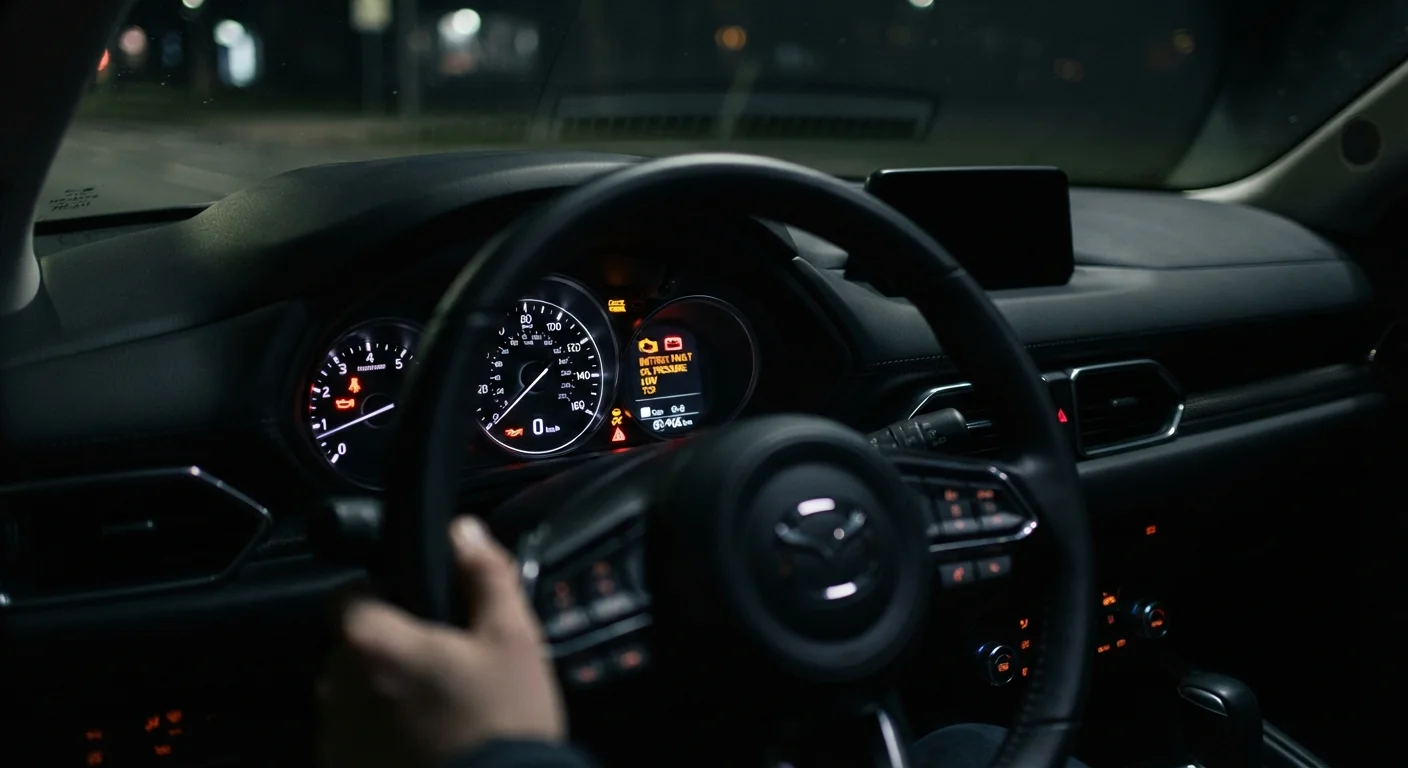
Every modern vehicle contains a network of sensors that continuously monitor critical systems - engine, transmission, brakes, tyres, and more. When a reading falls outside the acceptable range, the vehicle's onboard computer logs a fault code and triggers the corresponding dashboard light to alert you.
Warning lights use a simple color convention to communicate urgency:
- Red: Immediate action required - continued driving risks serious damage or a safety hazard.
- Amber/Yellow: Attention needed soon - monitor the situation and schedule service within days.
- Green or Blue: System active and operating normally (e.g., high beams, turn signal).
A light that flashes is always more urgent than one that glows steadily. If you're unsure about a symbol, your owner's manual contains a full index specific to your vehicle - far more reliable than a generic internet search. You might also want to consult our pre-trip vehicle checklist to build a broader picture of vehicle readiness.
OBD-II
On-Board Diagnostics, second generation - a standardised system built into most vehicles sold in the US after 1996 that records fault codes when sensors detect a problem. A scan tool plugged into the OBD-II port reads these codes.
TPMS
Tyre Pressure Monitoring System - sensors inside each wheel (or in some designs at the valve stem) that alert the driver when tyre pressure drops below a safe threshold.
Oil pressure warning
A dashboard indicator that activates when engine oil pressure falls too low, meaning the engine's moving parts are not being properly lubricated and damage can occur rapidly.
Catalytic converter
An emissions control device in the exhaust system that converts harmful combustion byproducts into less toxic gases. Engine misfires can overheat and permanently damage it.
Fault code
A numeric or alphanumeric identifier stored by the vehicle's computer when a sensor reading falls outside acceptable parameters - retrieved using a scan tool to pinpoint the issue.
Charging system
The combination of the battery and alternator that powers a vehicle's electrical systems and keeps the battery charged while the engine runs.
Red Lights: Stop and Act Now
Red warning lights are not suggestions - they indicate that something is wrong right now and driving on can cause irreversible damage or create a safety risk for you and others on the road.
Oil Pressure Warning
This icon - typically a dripping oil can - means engine oil pressure has dropped dangerously low. Pull over safely, turn off the engine, and check the oil level on the dipstick. Low level or a mechanical pump failure can both trigger this light. Do not restart the engine until you understand the cause. For more detail on what oil and other fluids tell you, see our guide on reading your vehicle's fluid levels.
Engine Temperature Warning
A thermometer symbol (sometimes with wavy lines) signals that the engine coolant has reached a critical temperature. Overheating can warp cylinder heads and cause gasket failure - both expensive repairs. Pull over, turn off the engine, and allow it to cool before opening the hood. Never open a hot radiator cap.
Brake System Warning
If this light appears while driving (and you haven't left the parking brake engaged), it may indicate low brake fluid or a hydraulic fault. Have the braking system inspected before driving further. Learn more about brake wear signals in our article on what brake noises are telling you.
Never Ignore a Flashing Warning Light
A flashing or blinking warning light - whether it's the check engine, oil, or temperature indicator - always signals a more urgent condition than a steady light. Reduce your speed, avoid hard acceleration, and head to a safe stopping point. Continuing to drive normally can rapidly escalate minor faults into major repairs.
Amber Lights: Attention Required Soon
Amber lights won't necessarily strand you, but they shouldn't be ignored for weeks. These warnings typically mean a system is operating outside its ideal range or a scheduled service is overdue.
TPMS (Tyre Pressure Monitoring System)
An illuminated TPMS icon - a cross-section of a tyre with an exclamation mark - means at least one tyre is significantly underinflated. Cold weather can cause this without any actual puncture, since air contracts in lower temperatures. Check all four tyres with a gauge and inflate to the pressure shown on your door jamb placard, not the number on the tyre sidewall. Our dedicated guide on what your TPMS warning actually means explains the nuances in full, and you can find hands-on inflation guidance in checking your tyre pressure the right way.
Battery / Charging System
The battery icon can signal a failing battery, a failing alternator, or a loose connection. While the vehicle may continue running momentarily on reserve power, the charging system needs immediate diagnosis. See our related article on battery warning signs drivers miss for context on typical battery lifespan and symptoms.
Low Fuel
Straightforward, but worth noting: running a tank very low repeatedly can strain the fuel pump, which relies partly on fuel for cooling. Most vehicles display a range estimate when the low fuel light appears - use it, but don't treat it as a guarantee.
Keep Your Owner's Manual Accessible
Store your owner's manual in the glove compartment so it's always within reach. Most manuals include a dedicated symbol index - scanning it takes two minutes and can save you from an unnecessary (or dangerously delayed) trip to the shop.
The Check Engine Light: What It Actually Means
No warning light causes more anxiety - or more unnecessary panic - than the check engine light (CEL). It can be triggered by something as minor as a loose gas cap or as significant as a failing oxygen sensor or engine misfire.
The key distinction is steady vs. flashing:
- Steady CEL: The vehicle's computer has detected a fault worth investigating, but it's not an emergency. Drive normally, but schedule a diagnostic scan within the next few days.
- Flashing CEL: An active engine misfire is occurring. Unburned fuel entering the exhaust can rapidly overheat and damage the catalytic converter. Reduce speed, avoid hard acceleration, and seek service promptly.
An OBD-II scan tool - available inexpensively and usable with a smartphone - will retrieve the stored fault code so you know what you're dealing with before you arrive at a shop. This prevents unnecessary repair upselling and helps you have a more informed conversation with your mechanic.
Symbols Vary by Manufacturer
While many warning symbols are standardised across the industry, some automakers use proprietary icons for brand-specific systems. If you encounter a symbol you don't recognise, your owner's manual is the authoritative source - not a generic online chart. This is especially true for hybrid, electric, and newer connected-vehicle platforms.
When to Drive On and When to Pull Over
A simple framework helps when a light appears unexpectedly:
- Note the color. Red means pull over when safe. Amber means plan service soon.
- Note the behavior. Flashing is always more urgent than steady.
- Notice any accompanying symptoms. Unusual smells, sounds, loss of power, or steering changes alongside a warning light sharply raise urgency - don't ignore combinations.
- Check your manual. Identify the exact symbol and its meaning for your vehicle.
- Act accordingly. For red lights and flashing amber, don't delay. For steady amber, schedule a scan within the week - not the month.
If you're evaluating a used vehicle and want to understand its history before warning lights become your problem, our guide on reading a vehicle history report is a useful companion resource. You can also explore broader vehicle technology topics in our Car Safety & Tech hub.
Dashboard warning lights are your vehicle's way of communicating - learning to listen to them accurately is one of the most practical skills a driver can develop.