

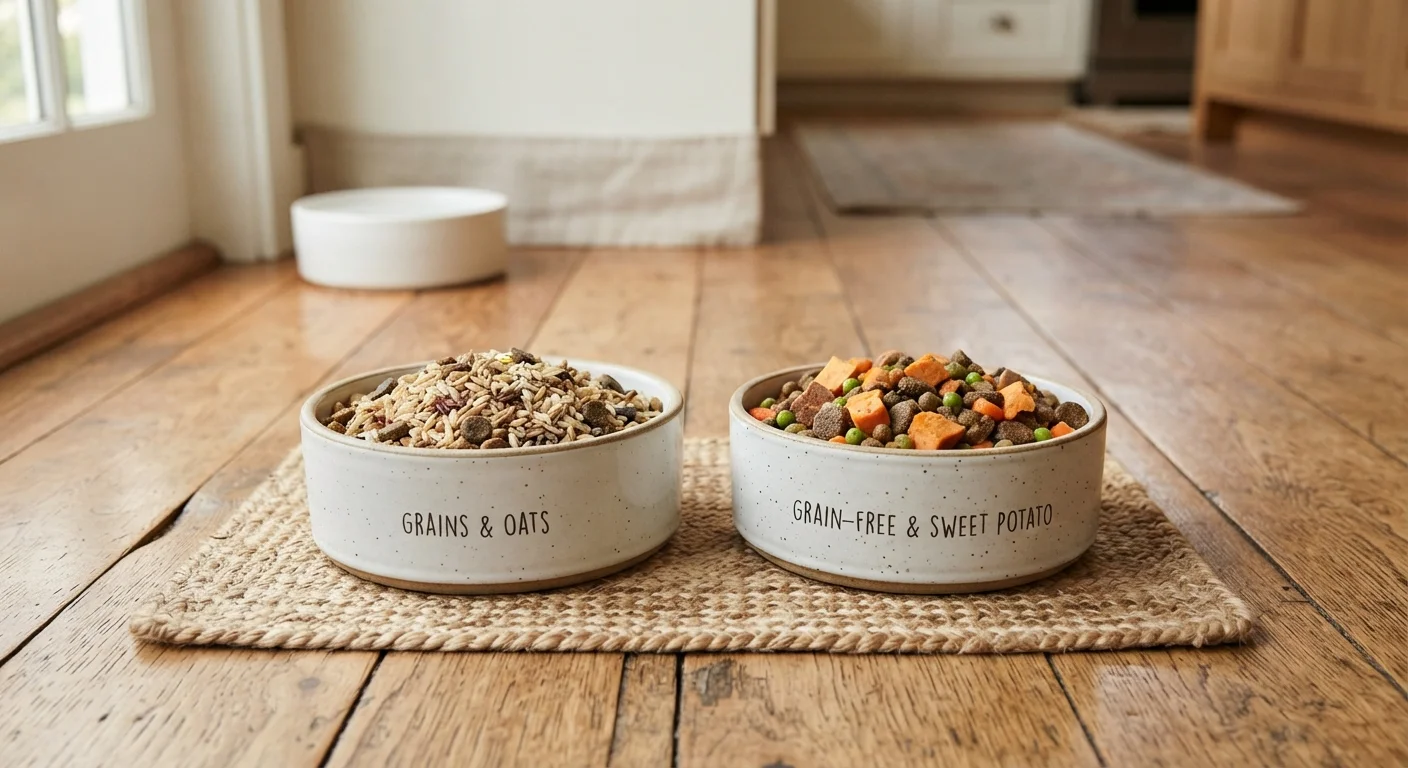
Key Takeaways
- True grain allergies in dogs are rare; most food sensitivities are linked to animal proteins, not grains.
- The FDA investigated a potential link between grain-free diets and a heart condition called dilated cardiomyopathy (DCM) in dogs.
- Grain-inclusive diets have a longer safety track record and are supported by decades of formulation research.
- Neither diet is universally superior - the right choice depends on your individual dog's health needs.
- Always consult your veterinarian before making significant changes to your dog's diet.
Option A
Grain-Free Dog Food
The popular alternative that swapped grains for legumes and starches.
Best for: Dogs with confirmed grain allergies or sensitivities, as verified by a veterinarian.
Option B
Grain-Inclusive Dog Food
The long-established standard with a strong nutritional track record.
Best for: Most healthy adult dogs seeking complete, balanced nutrition backed by decades of formulation research.
If your dog has no diagnosed food sensitivity
Grain-Inclusive Dog Food
Most dogs thrive on grain-inclusive formulas, which have a well-established nutritional profile and decades of safety data behind them.
If your vet has confirmed a grain allergy or intolerance
Grain-Free Dog Food
In the rare cases where a dog genuinely cannot tolerate grains, a veterinarian-guided grain-free diet is a clinically appropriate choice.
If you're concerned about heart health or DCM risk
Grain-Inclusive Dog Food
Given ongoing FDA investigation into a possible DCM association with grain-free diets, grain-inclusive formulas are generally considered the lower-risk option until research is resolved.
If your dog has a confirmed legume or potato sensitivity
Grain-Inclusive Dog Food
Many grain-free diets replace grains with legumes and root vegetables, which can themselves trigger sensitivities in some dogs.
How the Grain-Free Trend Got Started
The grain-free dog food movement gained momentum in the mid-2000s, driven largely by a parallel trend in human diets - the rise of low-carb and gluten-free eating. Marketing positioned grains as fillers or allergens, and the idea that dogs are closer to wolves - and therefore suited to a meat-heavy, grain-free diet - spread quickly among devoted owners.
The premise sounds plausible, but it doesn't hold up cleanly to scrutiny. Dogs diverged from wolves thousands of years ago, and research published in Nature has shown that domestic dogs evolved increased copies of the AMY2B gene, which aids starch digestion - an adaptation consistent with co-evolving alongside grain-eating humans. For a deeper look at claims like this, see our piece on pet nutrition myths that refuse to go away.
That doesn't mean grain-free diets are inherently harmful - but it does mean the ancestral-diet argument is more complicated than the marketing suggests.
What Grains Actually Do in Dog Food
Grains such as brown rice, oats, barley, and corn serve multiple nutritional roles in dog food. They provide digestible carbohydrates for energy, dietary fiber that supports gut health, and micronutrients including B vitamins and trace minerals. In well-formulated diets, grains are far from empty fillers.
True grain allergies in dogs exist, but they're considerably less common than many owners assume. Veterinary dermatologists have noted that the most frequent food allergens in dogs are animal proteins - particularly beef, dairy, and chicken - not grains. If your dog shows signs of a food sensitivity, such as chronic itching or recurring gastrointestinal upset, an elimination diet trial under veterinary supervision is the appropriate diagnostic step, rather than switching to grain-free food preemptively.
| Criterion | Grain-Free Dog Food | Grain-Inclusive Dog Food |
|---|---|---|
| Primary carbohydrate source | Legumes, potatoes, tapioca | Rice, oats, barley, corn |
| Grain allergy suitability | Appropriate if confirmed | Not suitable for confirmed cases |
| DCM research concern | Under FDA investigation | No identified association |
| Formulation track record | Newer; less long-term data | Decades of safety research |
| Digestibility | Varies by ingredient | Well-established for most dogs |
| AAFCO-compliant options | Available | Widely available |
Understanding what's actually on the label matters here too. Our guide to what pet food labels are actually telling you can help you interpret ingredient lists and nutritional claims more confidently.
The DCM Investigation and What It Means
In 2018, the U.S. Food and Drug Administration (FDA) began investigating a potential association between grain-free dog diets and dilated cardiomyopathy (DCM) - a serious heart condition in which the heart muscle weakens and enlarges. The agency received an unusual number of DCM reports in breeds not genetically predisposed to the condition, and many of the affected dogs were eating grain-free formulas high in legumes (peas, lentils, chickpeas) or potatoes.
FDA Investigation: Still Ongoing
The FDA's inquiry into grain-free diets and DCM has not concluded with a definitive finding as of its most recent public communications. The agency continues to gather data and has not issued a recall or formal ban on grain-free foods. If your dog is currently eating a grain-free diet and appears healthy, consult your veterinarian before making abrupt changes - sudden diet switches can themselves cause digestive upset.
Critically, the FDA investigation identified an association, not a proven causal relationship. The mechanism - whether it relates to taurine availability, ingredient interactions, or other formulation factors - remains under study. The investigation was ongoing as of its last public update, and no final regulatory conclusion has been published. This is an area where the science is still developing, and it's reasonable to discuss the matter with your veterinarian, particularly if your dog is a breed at elevated cardiac risk.
For context on how dogs' dietary needs compare to ancestral assumptions, our coverage of raw diets for dogs addresses similar questions about "natural" versus researched diets.
Making a Decision That's Right for Your Dog
Neither grain-free nor grain-inclusive food is the right answer for every dog. The most important factors are your dog's individual health status, any confirmed sensitivities, and the quality of the overall formulation - not simply whether grains appear on the ingredient list.
~1-2%
Dogs with confirmed food allergies
Veterinary estimates suggest food allergies affect a small minority of dogs overall, with grains rarely identified as the primary trigger.
Top 3
Most common dog food allergens
Beef, dairy, and chicken are consistently identified as the most frequent food allergens in dogs, according to veterinary dermatology literature.
524+
DCM cases reported to FDA (2014-2019)
The FDA received over 500 reports of DCM in dogs during its investigation period, with a notable proportion linked to grain-free diets.
When evaluating any dog food, look for an AAFCO (Association of American Feed Control Officials) nutritional adequacy statement, which indicates the food meets established minimum standards for a complete and balanced diet. You can learn more about how to decode those claims in our article on reading a pet food label without getting lost in the jargon.
If you're considering switching your dog's diet - especially to or from grain-free - a conversation with your veterinarian is the most valuable step you can take. They can assess your dog's cardiac health, rule out genuine allergies through proper testing, and help you choose a formula with a strong nutritional track record.
This article is for general informational and educational purposes only and does not constitute veterinary or medical advice. Always consult a licensed veterinarian before making significant changes to your dog's diet, particularly if your dog has an existing health condition.