

Key Takeaways
- Raw diets can offer real benefits but also carry genuine risks that shouldn't be minimized.
- Bacterial contamination in raw meat poses health risks to dogs and the humans who handle it.
- Nutritional completeness is the biggest practical challenge of homemade raw feeding.
- Puppies, elderly dogs, and immunocompromised individuals in the household face elevated risk.
- A veterinarian or board-certified veterinary nutritionist should be consulted before switching diets.
High-quality protein from whole, recognizable sources
Raw diets built around whole muscle meat and organs can deliver bioavailable protein and fat without the processing steps applied to kibble. This may suit dogs that tolerate fresh, minimally processed food well.
Full ingredient visibility for sensitive dogs
Owners managing a dog with a confirmed food intolerance can construct a raw diet around a single protein source, avoiding fillers, binders, or additives that may be harder to isolate in commercial formulas.
Reported improvements in coat and stool quality
Many owners report firmer stools and improved coat condition after transitioning to raw feeding. While large-scale clinical evidence is limited, these observations are consistent enough to be worth noting alongside individual variation.
Potential for lower processing-related additives
Commercial kibble often requires preservatives and stabilizers to maintain shelf stability. A fresh or frozen raw diet can reduce exposure to some of these additives, which some owners prefer for their dogs.
Significant pathogen risk for dogs and humans
Raw meat commonly harbors Salmonella, Listeria, and E. coli. Dogs can shed these bacteria without appearing ill, and multiple studies have confirmed their presence in commercially prepared raw pet foods, creating a genuine household transmission risk.
Nutritional imbalance is common in home-prepared diets
Peer-reviewed research has found the majority of homemade raw recipes fail to meet recognized canine nutritional standards. Deficiencies in calcium, phosphorus, and key vitamins can cause serious health problems, particularly in young or growing dogs.
Bone feeding carries injury risk
Raw meaty bones are a staple of many raw diet frameworks, but they carry real risks including fractured teeth, esophageal obstruction, and gastrointestinal perforation - especially if bones are inappropriately sized for the dog.
Elevated risk for vulnerable household members
Children, elderly people, and immunocompromised individuals face meaningful health risk from contact with raw meat and pathogen-laden dog feces, making raw feeding a household decision rather than solely a pet health one.
Time, cost, and formulation demands are high
Properly balanced raw feeding requires significant time investment, reliable sourcing of quality ingredients, and ideally professional nutritional guidance - making it considerably more demanding than feeding a complete commercial diet.
Our Verdict
Raw diets sit in a genuinely contested space - neither the miracle some advocates claim nor the unqualified danger some critics suggest. The potential benefits are real but heavily dependent on careful formulation, rigorous food handling, and your individual dog's health status. The risks, particularly around pathogen exposure and nutritional imbalance, are also real and well-documented.
Best suited to healthy adult dogs whose owners are willing to consult a veterinary nutritionist, follow strict food-safety protocols, and commit to ongoing monitoring - not recommended as a casual or trend-driven switch.
What Raw Feeding Actually Means
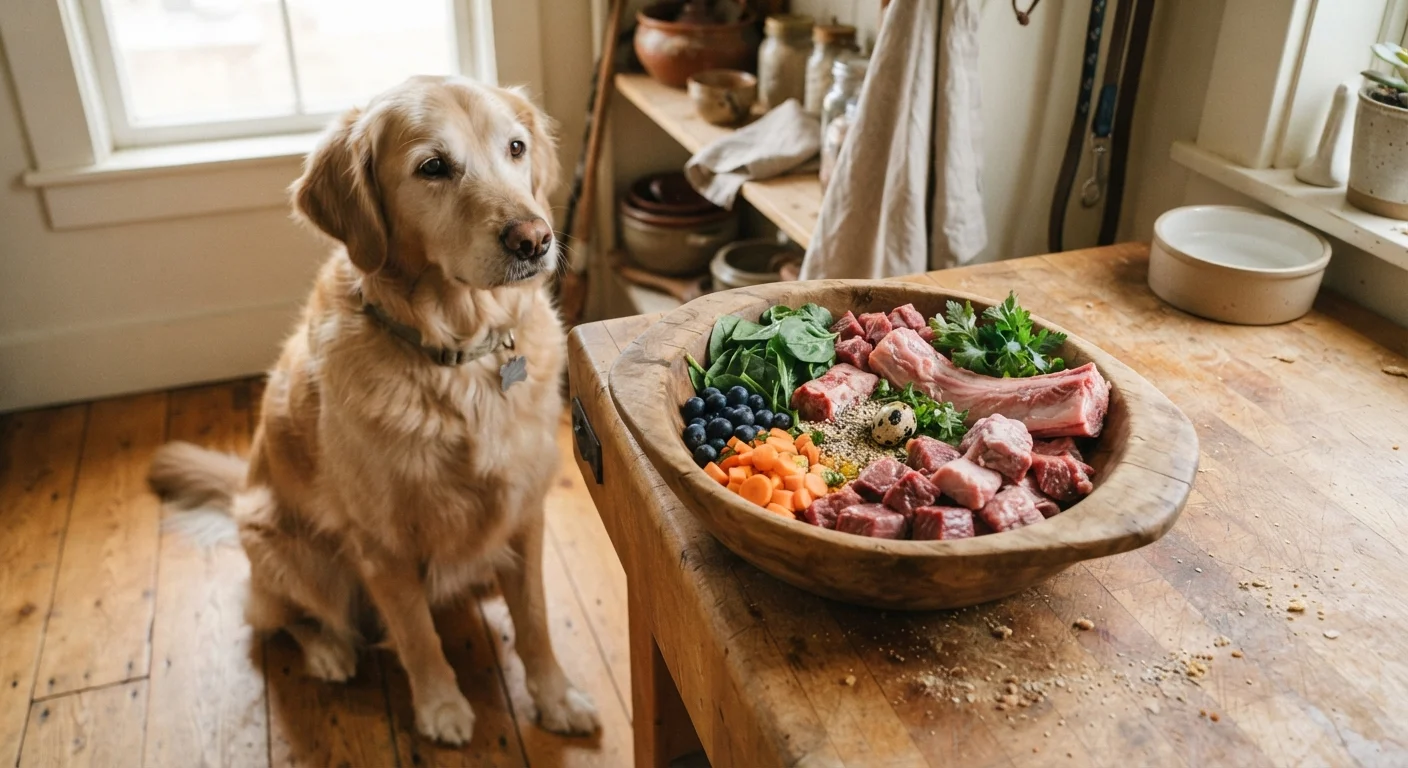
Raw diets for dogs - sometimes called BARF diets or "prey model" diets - typically consist of uncooked muscle meat, organ meat, raw meaty bones, and often fruits and vegetables. Some owners prepare these meals at home; others purchase commercially formulated raw products that arrive frozen or freeze-dried.
The foundational argument is intuitive: dogs descended from wolves, and wolves eat raw prey. Proponents suggest this mirrors what dogs evolved to digest. However, as our article on pet nutrition myths explains, the "dogs are wolves" framing oversimplifies thousands of years of domestication during which dogs adapted significantly to human diets, including cooked and starchy foods.
Understanding what raw feeding actually involves - and what it demands of owners - is the right starting point before weighing the arguments.
The Case for Raw Feeding
High-quality protein from whole, recognizable sources
Raw diets built around whole muscle meat and organs can deliver bioavailable protein and fat without the processing steps applied to kibble. This may suit dogs that tolerate fresh, minimally processed food well.
Full ingredient visibility for sensitive dogs
Owners managing a dog with a confirmed food intolerance can construct a raw diet around a single protein source, avoiding fillers, binders, or additives that may be harder to isolate in commercial formulas.
Reported improvements in coat and stool quality
Many owners report firmer stools and improved coat condition after transitioning to raw feeding. While large-scale clinical evidence is limited, these observations are consistent enough to be worth noting alongside individual variation.
Potential for lower processing-related additives
Commercial kibble often requires preservatives and stabilizers to maintain shelf stability. A fresh or frozen raw diet can reduce exposure to some of these additives, which some owners prefer for their dogs.
Proponents and some veterinary voices point to observed improvements in coat condition, stool quality, and energy levels in dogs switched to well-formulated raw diets. High-quality protein and fat from whole-food sources are digestible and nutrient-dense when properly balanced. For dogs with sensitivities to certain processing methods or additives in commercial kibble, a carefully constructed raw diet removes many of those variables.
Ingredient transparency is another genuine advantage - owners know exactly what goes into each meal. If your dog has a confirmed protein intolerance, a raw diet can be built around a single novel protein source with precision. To understand what your dog nutritionally needs from any diet, see the nutrients every dog actually needs.
The Case Against Raw Feeding
Significant pathogen risk for dogs and humans
Raw meat commonly harbors Salmonella, Listeria, and E. coli. Dogs can shed these bacteria without appearing ill, and multiple studies have confirmed their presence in commercially prepared raw pet foods, creating a genuine household transmission risk.
Nutritional imbalance is common in home-prepared diets
Peer-reviewed research has found the majority of homemade raw recipes fail to meet recognized canine nutritional standards. Deficiencies in calcium, phosphorus, and key vitamins can cause serious health problems, particularly in young or growing dogs.
Bone feeding carries injury risk
Raw meaty bones are a staple of many raw diet frameworks, but they carry real risks including fractured teeth, esophageal obstruction, and gastrointestinal perforation - especially if bones are inappropriately sized for the dog.
Elevated risk for vulnerable household members
Children, elderly people, and immunocompromised individuals face meaningful health risk from contact with raw meat and pathogen-laden dog feces, making raw feeding a household decision rather than solely a pet health one.
Time, cost, and formulation demands are high
Properly balanced raw feeding requires significant time investment, reliable sourcing of quality ingredients, and ideally professional nutritional guidance - making it considerably more demanding than feeding a complete commercial diet.
The concerns raised by veterinary organizations - including the American Veterinary Medical Association - center on two primary issues: pathogen risk and nutritional imbalance.
Raw meat routinely carries bacteria such as Salmonella, Listeria, and E. coli. Dogs may shed these pathogens in their feces even without showing symptoms, creating a transmission risk for people in the household - particularly children, elderly individuals, and anyone who is immunocompromised. Multiple published studies have detected these pathogens in commercially prepared raw pet foods.
Nutritional completeness is the second major concern. Research published in peer-reviewed veterinary journals has found that a substantial proportion of homemade raw diet recipes fail to meet established nutritional standards. Deficiencies in calcium, phosphorus, zinc, and specific vitamins can cause serious developmental and skeletal problems, especially in growing dogs. This is a meaningful contrast to commercial diets formulated to meet AAFCO standards - a topic worth exploring when evaluating any pet food.
~60%
Homemade raw recipes failing nutritional standards
Multiple published veterinary studies have found that a majority of homemade raw diet recipes do not meet AAFCO minimum nutritional profiles for dogs.
Up to 35%
Commercial raw foods testing positive for pathogens
Studies published in peer-reviewed veterinary journals have detected Salmonella or Listeria in a significant proportion of commercially prepared raw dog food samples tested.
Who Should Be Most Cautious
Not all dogs carry the same level of risk. Puppies, senior dogs, and animals already managing chronic illness have less robust immune systems and are more vulnerable to both pathogen exposure and nutritional deficiency. Pregnant or nursing dogs have particularly precise nutritional requirements that are difficult to meet reliably through a home-formulated raw diet.
Household composition also matters. If anyone in your home is immunocompromised, very young, or elderly, the zoonotic disease risk from raw meat handling and pathogen shedding becomes a more serious household health consideration - not just a dog health one.
Commercial Raw vs. Home-Prepared: Key Differences
Commercially prepared raw diets are subject to manufacturing standards and some are formulated to meet AAFCO nutritional profiles, which provides a baseline that home-prepared meals often lack. However, commercial status alone does not guarantee pathogen safety - freezing reduces but does not eliminate bacterial risk. If you're considering this route, look for products that have undergone high-pressure processing (HPP) and carry a verified nutritional adequacy statement.
For owners who are just beginning to navigate dog nutrition broadly, our guide on feeding a dog for the first time provides a grounded foundation before exploring specialized diets.
Making an Informed Decision
If you're seriously considering a raw diet, the most responsible path begins with a conversation with your veterinarian or a board-certified veterinary nutritionist. They can assess your individual dog's health status, flag any contraindications, and - if you proceed - help you build a nutritionally complete recipe or identify commercially prepared options that meet recognized nutritional standards.
Food-safety practices are non-negotiable: dedicated preparation surfaces, thorough handwashing, proper freezer storage, and prompt cleanup of feeding areas all reduce but do not eliminate pathogen risk. The debate over raw feeding shares some conceptual territory with the grain-free vs. grain-inclusive discussion - in both cases, emotionally compelling trends deserve scrutiny against the available evidence.
This article is for general informational purposes only and does not constitute veterinary or medical advice. Always consult a qualified veterinary professional before making significant changes to your dog's diet.