

Key Takeaways
- National parks are federally managed and typically offer larger, more iconic landscapes with higher entry fees.
- State parks are managed by individual states, tend to cost less, and are often far less crowded.
- The America the Beautiful annual pass covers national parks but generally does not apply to state parks.
- State parks frequently allow amenities like full-hookup camping and pets that some national parks restrict.
- Crowd levels at popular national parks can significantly affect your experience, especially in peak season.
- Both park systems offer genuine outdoor value - the right choice depends on your trip goals and budget.
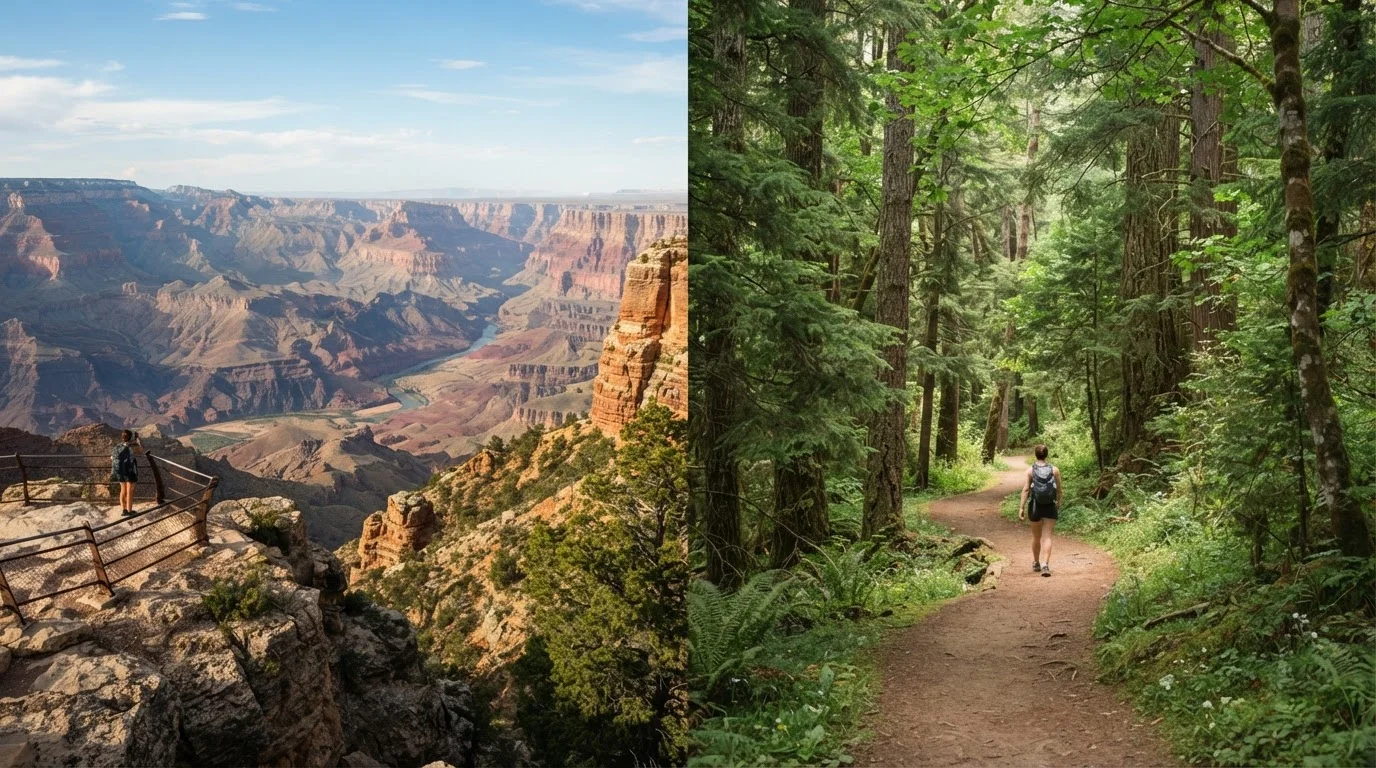
Option A
National Parks
The grand-scale, federally managed wilderness experience.
Best for: Travelers seeking iconic landscapes, multi-day backcountry adventures, and protected ecosystems at a large scale.
Option B
State Parks
The accessible, locally managed alternative closer to home.
Best for: Travelers wanting affordable, less-crowded outdoor escapes with regional character and flexible day-trip logistics.
If you want iconic, once-in-a-lifetime scenery and don't mind planning ahead
National Parks
Landmarks like the Grand Canyon, Yellowstone, and Yosemite deliver scale and ecological diversity that state parks rarely match. Reserve campsites and entry permits well in advance.
If you're looking for a low-cost weekend escape without crowds
State Parks
State parks often charge $5-$10 per vehicle, require no advance permits for day visits, and see a fraction of the foot traffic of their federal counterparts.
If you're a frequent outdoor traveler who visits parks several times a year
National Parks
The America the Beautiful annual interagency pass (around $80) pays for itself after just a few national park visits, making it cost-effective for regular visitors.
If you're traveling with pets or need more campground flexibility
State Parks
State parks generally have more lenient pet policies and offer a wider variety of campsite types, including full-hookup RV sites that are harder to find in national parks.
If you want to explore regional landscapes and lesser-known natural history
State Parks
State parks often protect landscapes unique to their region - coastal bluffs, prairie reserves, river gorges - that never made the national park list but are genuinely impressive.
Who Manages These Parks - and Why It Matters
National parks are overseen by the National Park Service (NPS), a federal agency. This means consistent standards for signage, ranger programs, and facilities - but also centralized rules that apply coast to coast. Entry fees flow to the federal government and are partially reinvested in park infrastructure. State parks, by contrast, are managed by each individual state's department of natural resources or equivalent agency. Quality, amenities, and policies vary considerably from state to state.
This management difference shapes everything from how you pay to get in, to whether your dog can join you on the trail. For travelers building an itinerary, it's worth treating them as two distinct systems rather than interchangeable options.
| Criterion | National Parks | State Parks |
|---|---|---|
| Managing authority | Federal (National Park Service) | Individual state agencies |
| Typical day-use fee | $20-$35 per vehicle | $5-$15 per vehicle |
| Annual pass option | America the Beautiful (~$80) | State-specific passes ($50-$100) |
| Number of sites (U.S.) | 63 designated national parks | 10,000+ state park units |
| Crowd levels (peak season) | High; timed entry often required | Generally lower; walk-in friendly |
| Pet policies | Restricted on most trails | More permissive in many states |
| Campground amenities | Basic to moderate; limited hookups | Varies widely; full hookups available |
| Landscape scale | Large, often multi-ecosystem | Focused, single-feature common |
Cost, Crowds, and Access: The Practical Breakdown
Entry costs diverge meaningfully. Many national parks charge $35 per vehicle for a 7-day pass. The America the Beautiful interagency annual pass (approximately $80) covers all NPS sites and many other federal lands - a strong value for anyone who visits three or more national parks in a year. State park fees typically run $5-$15 per vehicle for day use, with annual state passes often available for $50-$100 depending on the state.
Crowds are a more significant factor than many first-time visitors anticipate. During peak summer months, popular national parks like Acadia, Zion, and Rocky Mountain require timed entry reservations that sell out weeks in advance. Parking can become nearly inaccessible by mid-morning. State parks rarely face this level of congestion, which translates into a noticeably different - often more relaxed - on-the-ground experience.
325M+
Annual visits to U.S. national parks
The National Park Service reported over 325 million recreational visits across its sites in recent years, reflecting sustained and growing demand.
10,000+
State park units across the U.S.
The National Association of State Park Directors estimates more than 10,000 state park units collectively, covering diverse ecosystems in every state.
~$80
Cost of America the Beautiful annual pass
The interagency annual pass covers entrance fees at NPS sites and many other federal recreation areas, typically recouping its cost after two or three national park visits.
Accessibility also differs in a practical sense. The U.S. has 63 designated national parks, but over 10,000 state park units nationwide. There's likely a state park within a two-hour drive of most Americans, while many national parks require significant travel. If you're weighing overall trip cost, see how nature trips compare to city trips on budget before committing to a long drive to a national park destination.
What You Actually Experience Inside Each
National parks are generally larger and preserve ecosystems at a scale that creates immersive wilderness. Backcountry camping, multi-day hiking routes, and wildlife viewing in open habitat are hallmarks. Ranger-led programs and interpretive visitor centers tend to be well-resourced. The tradeoff is that developed areas - lodges, shuttles, concession stands - can feel busy, and amenities inside parks are often limited to what NPS permits.
State parks offer a different texture. Many focus on a single compelling feature: a waterfall, a lake, a stretch of coastline, or a historic site. Infrastructure varies widely - some state parks have modern campgrounds with showers and playgrounds; others are primitive. This inconsistency means it's worth checking the specific park's website before you go, rather than assuming a standard experience.
For travelers unsure whether outdoor destinations fit their style at all, the broader question of city breaks versus nature retreats is worth working through before booking. And if setting matters to you - mountains versus coast - comparing mountain and beach destinations can sharpen that decision further.
How to Choose - and When to Combine Both
The choice isn't always either/or. Many seasoned outdoor travelers deliberately combine both systems on a single trip: arriving at a national park for a day or two of marquee highlights, then retreating to a nearby state park for quieter camping and lower costs. This approach stretches the budget and often produces a more varied experience.
When choosing between the two, start with these questions: How far are you willing to travel? How important is solitude versus iconic scenery? Do you need full campground amenities? Are you flexible on dates, or locked into peak season? Honest answers will usually point clearly toward one system or the other.
Understanding how these costs fit into your overall trip budget matters too. Whether park fees count as fixed or variable spending affects how you plan - see how fixed and variable travel expenses work for practical context.
Travel conditions, entry fees, permit requirements, and park policies change over time. Verify current details with the National Park Service (nps.gov) and your specific state park agency before your trip.