
Radar, Lidar, and Camera Sensors: The Eyes Behind Modern Car Safety Systems

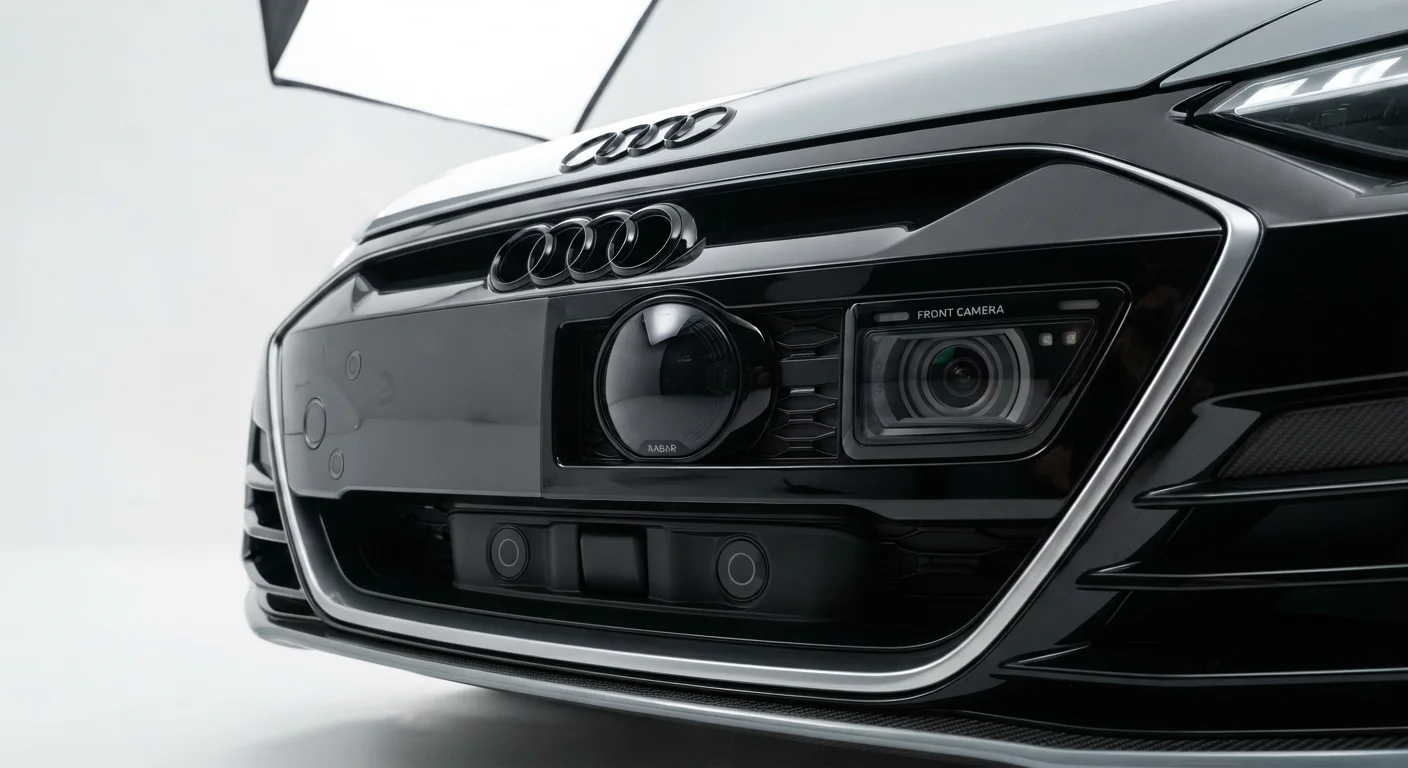
Key Takeaways
- Radar excels in adverse weather but cannot read lane markings or traffic signs.
- Lidar produces the most precise 3D maps but remains expensive and rare in mainstream vehicles.
- Cameras handle visual recognition tasks but struggle in rain, fog, and nighttime glare.
- Most production vehicles combine two or more sensor types to compensate for individual weaknesses.
- Sensor fusion - blending data from multiple sources - is what makes modern ADAS systems genuinely reliable.
Our Verdict
No single sensor type covers every driving scenario reliably. Radar handles range and speed in poor visibility, cameras interpret the visual environment, and lidar delivers unmatched spatial precision. The most capable safety systems are those that fuse all three, cross-checking each sensor's output to reduce blind spots and false readings.
| Best for | Recommended |
|---|---|
| Drivers prioritizing reliability in rain, snow, or fog | Radar-based systems |
| Situations requiring traffic sign, lane, and object recognition | Camera-based systems |
| Highest-precision obstacle detection across all conditions | Lidar-equipped systems |
| Comprehensive, everyday ADAS reliability for most drivers | Sensor-fusion systems combining radar, camera, and lidar |
Why Your Car Needs More Than One Set of Eyes
Advanced driver assistance systems (ADAS) - from automatic emergency braking to adaptive cruise control - depend entirely on what sensors can detect in real time. Each sensor type has a fundamentally different way of perceiving the world, which means each has distinct strengths and hard limits. Understanding those differences helps you appreciate why your car behaves the way it does, and when you should compensate with your own attention.
For a broader look at how these technologies fit into the larger story of vehicle safety, see the complete timeline of car safety technology.
| Radar | Camera | Lidar | |
|---|---|---|---|
| Primary detection method | Radio wave reflection | Image capture and processing | Laser pulse timing |
| Object classification | Limited - detects presence, not type | Strong - reads signs, lanes, object types | Good - distinguishes shapes and sizes |
| Performance in rain or fog | Excellent - minimal degradation | Poor - image quality degrades | Moderate - laser scatter in heavy rain |
| Effective detection range | Up to several hundred meters | Typically under 100 meters | Up to 200+ meters depending on unit |
| 3D spatial mapping | No - 2D range and velocity only | Partial - stereo cameras estimate depth | Yes - dense, accurate 3D point cloud |
| Cost in production vehicles | Low to moderate | Low | High - declining over time |
| Common ADAS applications | Adaptive cruise, blind-spot monitoring | Lane-keep assist, sign recognition | Advanced autonomous driving systems |
Radar: The All-Weather Workhorse
Radar (Radio Detection And Ranging) emits radio waves and measures how they bounce back from surrounding objects. The return signal tells the system how far away something is and, crucially, how fast it's moving relative to your vehicle. This makes radar exceptionally well-suited to adaptive cruise control and forward collision warning, where detecting a closing speed matters more than identifying exactly what type of object is ahead.
Radar's biggest advantage is resilience. Radio waves pass through rain, snow, dust, and fog with minimal degradation - conditions that blind or severely limit cameras. Modern vehicles often embed short-range radar in the rear bumpers for blind-spot monitoring and long-range radar behind the front grille for highway-speed detection up to several hundred meters.
The limitation is resolution. Radar returns a point cloud that can detect presence and velocity but cannot distinguish a pedestrian from a shopping cart, read a stop sign, or identify lane markings. It sees that something is there, not what it is.
Keep Sensor Areas Clear Year-Round
Radar units behind bumper covers, cameras mounted near the windshield, and lidar housings on rooflines or grilles all need unobstructed lines of sight. After a carwash, snowstorm, or muddy road, take a moment to clear the areas around known sensor locations. Consult your owner's manual for their exact placement - some automakers indicate sensor zones with subtle markings on the bodywork.
Cameras: Visual Intelligence at a Low Cost
Cameras are the only sensor type that captures the same kind of visual information human drivers rely on. Paired with image-processing software, a forward-facing camera can read speed limit signs, detect lane markings, recognize pedestrians and cyclists, and even interpret traffic light states. This visual classification capability is something neither radar nor lidar can replicate on its own.
Most production vehicles use monocular (single-lens) cameras for lane-keep assist and traffic sign recognition, while stereo cameras - two lenses spaced apart - can estimate depth by comparing the slight difference between each image, similar to how human binocular vision works. Camera systems are also relatively low-cost to manufacture, which is why camera-only or camera-primary setups are common in entry-level ADAS.
The drawbacks appear in difficult lighting and weather. Heavy rain, direct glare, bright sun low on the horizon, and nighttime driving all degrade image quality. A camera pointed into a snow-covered scene may struggle to locate the road edge where a radar would have no difficulty detecting a stopped vehicle. For details on how these limitations affect real-world braking performance, see how automatic emergency braking works and where it falls short.
Lidar: Precision Mapping in Three Dimensions
Lidar (Light Detection And Ranging) fires rapid pulses of laser light and measures the time each pulse takes to return after bouncing off a surface. The result is an extraordinarily dense, three-dimensional point cloud - a near-photographic map of the vehicle's surroundings updated many times per second. Lidar can measure distances to centimeter-level accuracy across a 360-degree field of view, making it the sensor of choice for autonomous vehicle development programs.
In production passenger vehicles, lidar remains rare primarily due to cost, though prices have dropped substantially over recent years as manufacturing has scaled. When present, it dramatically improves an ADAS system's ability to classify object shape and size - distinguishing a child on a bicycle from an adult pedestrian, for instance - which translates to fewer false alerts and more confident automatic interventions.
Lidar is not immune to conditions: heavy rain or dense fog can scatter laser pulses, and direct sunlight at certain angles can introduce noise. But its combination of range, resolution, and 3D mapping capability is unmatched by radar or cameras alone.
Sensor Fusion: Why the Sum Is Safer Than the Parts
The clearest insight from comparing these three technologies is that their weaknesses are largely complementary. Radar works when cameras fail in fog; cameras read what radar cannot classify; lidar adds spatial precision that neither radar nor cameras provide. This is why nearly every serious ADAS implementation - and every vehicle pursuing higher levels of driving automation - relies on sensor fusion: a software layer that continuously combines and cross-validates data from multiple sensor types.
A sensor fusion system might use radar to detect that an object is approaching rapidly, prompt the camera to classify it as a pedestrian, and then use lidar's depth data to confirm exact distance before triggering a brake intervention. Any single sensor producing an anomalous reading can be overruled or flagged by the other two, reducing both false positives (unnecessary braking) and false negatives (missed detections).
Understanding this architecture also explains why keeping sensors clean and unobstructed matters. A mud-covered rear bumper can disable radar-based blind-spot monitoring; a dirty windshield impairs the forward camera; a stone chip near a lidar unit affects its field of view. These are practical maintenance considerations, not just technical footnotes. To learn how to work with your car's safety systems effectively, see getting the most from your car's safety systems.
For a broader picture of which ADAS features deliver the most meaningful safety benefit in real-world driving, the car safety features that genuinely matter overview is worth reading alongside this one.