

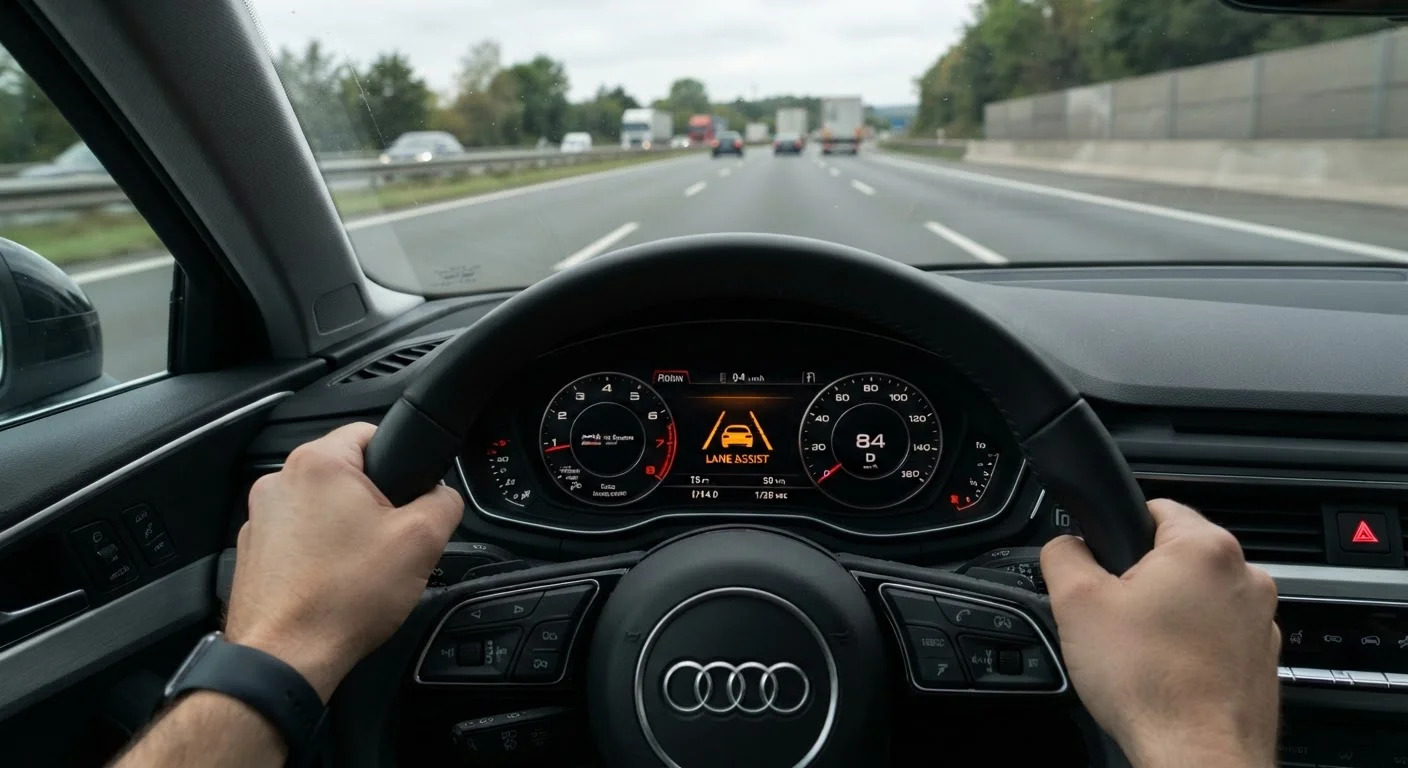
Key Takeaways
- Lane-keeping assist relies on cameras that can lose lane visibility in poor conditions or on faded markings.
- Dirty or obstructed sensors are one of the most common and easily fixed causes of unexpected disengagement.
- The system is a driver aid, not an autopilot - it requires continuous driver attention and input.
- Consistently ignoring steering wheel prompts trains the system to disengage more frequently.
- Understanding why LKA shuts off helps drivers stay safe rather than frustrated or over-reliant.
What Lane-Keeping Assist Actually Does
Lane-keeping assist (LKA) uses a forward-facing camera - typically mounted near the rearview mirror - to detect lane markings and apply subtle steering corrections or vibrations when the vehicle drifts without a turn signal active. It sounds straightforward, but the system is doing a lot of real-time image processing, and it has defined boundaries for when it can operate safely.
When conditions fall outside those boundaries, the system is designed to disengage rather than guess. That's intentional: an incorrect correction at highway speed is more dangerous than no correction at all. Understanding this design philosophy is the first step toward using LKA effectively.
For a broader picture of how LKA fits into the driver-assistance landscape, see our breakdown of Level 2 and Level 3 systems and what they actually require from drivers.
Common Mistakes That Cause Unexpected Disengagement
Most drivers assume the system has malfunctioned when it switches off repeatedly. In most cases, the cause is one of several avoidable mistakes - some driver behavior, some maintenance-related.
Failing to keep the camera lens area clean.
Why it happens: Drivers treat windshield cleaning as a visibility task for themselves, not for the vehicle's sensors. The LKA camera lens area can accumulate film, bug residue, or frost that blocks its view even when the rest of the glass looks fine.
Relying on LKA on roads with faded, missing, or temporary lane markings.
Why it happens: Drivers activate LKA at the start of a trip and assume it will handle any road type. The system needs clearly painted, high-contrast lane lines to track reliably - something rural roads, construction zones, and older urban streets often lack.
Not maintaining a light grip on the steering wheel.
Why it happens: Many drivers interpret LKA as a hands-free feature and remove their hands from the wheel entirely. Most systems require detectable driver torque at regular intervals to confirm the driver is present and in control.
Ignoring or overriding steering corrections repeatedly.
Why it happens: When drivers disagree with a correction - for example, when negotiating a tight curve or changing lanes informally - they counter-steer against the LKA input. Repeated overrides signal the system that the driver is actively steering, and some systems will disengage after multiple instances.
Operating LKA at speeds outside its designed range.
Why it happens: Drivers are often unaware that LKA has a minimum speed threshold - commonly around 37-45 mph depending on the vehicle - and sometimes a maximum threshold. Using it in slow city traffic or expecting it to activate immediately after merging from a stop leads to apparent 'failures.'
LKA Is Not a Substitute for Driver Attention
Lane-keeping assist is classified as a Level 1 or Level 2 driver-assistance feature, not an autonomous driving system. It can fail without warning when conditions change. Treating it as a substitute for attentive driving significantly increases crash risk - the driver remains fully responsible for vehicle control at all times.
When Disengagement Is Normal - and When to Seek Help
LKA disengaging temporarily in a construction zone with covered markings, during heavy rain, or when you apply the turn signal is expected and correct behavior. The system is working as designed. Frequent, unprompted shut-offs on clear roads with visible lanes, however, warrant attention.
3-5 sec
Typical hands-off warning interval before LKA disengages
Most current LKA and lane-centering systems issue a warning within 3-5 seconds of detecting no steering input, then disengage if the driver does not respond.
~40 mph
Common minimum speed for LKA activation
Many automakers set a minimum activation threshold around 37-45 mph; below this, the system remains inactive by design regardless of driver settings.
Start with a basic check: clean the windshield around the camera mount, inspect for any obstructions in front of the lens, and review your owner's manual for system-specific requirements. If the dashboard displays a persistent warning symbol rather than a temporary indicator, a diagnostic scan at a qualified shop is the appropriate next step.
LKA is one piece of a larger safety ecosystem. Active and passive safety features each play distinct roles, and knowing both helps you rely on them appropriately. For practical habits that keep all your driver-assistance systems performing well, our guide on getting the most from your car's safety systems offers actionable guidance.
This article is for general informational purposes. Always consult your vehicle's owner's manual and a qualified automotive technician for concerns specific to your car's safety systems.