

Key Takeaways
- Annuals complete their life cycle in one season, delivering bold, continuous colour but requiring replanting each year.
- Perennials return year after year, building stronger root systems and reducing long-term planting effort.
- Combining both types strategically gives you reliable structure plus the flexibility to refresh your garden's look seasonally.
- Upfront costs favour annuals, but perennials typically offer greater value over multiple growing seasons.
- Your climate and USDA hardiness zone should guide which perennials are likely to reliably overwinter in your area.
Our Verdict
Neither annuals nor perennials are universally superior - the most successful gardens use both. Perennials provide the backbone: reliable structure, deepening root systems, and lower replanting effort over time. Annuals fill gaps, extend the season, and let you experiment with colour and form without long-term commitment.
| Best for | Recommended |
|---|---|
| Gardeners who want low-maintenance, long-term planting value | Perennials |
| Those who enjoy seasonal colour changes and design flexibility | Annuals |
| Homeowners building a new garden bed from scratch | A combination of both |
| Budget-conscious gardeners in their first planting season | Annuals |
What Separates Annuals From Perennials
The distinction is rooted in plant biology. Annuals germinate, flower, set seed, and die within a single growing season. They pour all their energy into producing blooms and seeds, which is why they tend to flower prolifically from spring through frost. Common examples include zinnias, petunias, marigolds, and impatiens.
Perennials, by contrast, invest energy in their root systems and return for multiple seasons. Their above-ground growth dies back in winter (in most climates), but the roots survive and send up new growth in spring. Think coneflowers, hostas, black-eyed Susans, and daylilies.
A third category worth knowing: biennials (such as foxglove and hollyhock) complete their life cycle over two years, flowering in the second year before dying. They behave somewhere between the two main types and are worth understanding if you're drawn to cottage-garden aesthetics.
Your USDA Plant Hardiness Zone plays a meaningful role here. A plant considered a perennial in Georgia may behave as an annual in Minnesota. Always check zone suitability when selecting perennials - most plant tags and reputable nursery resources list this information clearly.
How Each Type Performs Season to Season
| Annuals | Perennials | |
|---|---|---|
| Lifespan | One growing season | Return for multiple years |
| Bloom duration | Continuous through season | Defined 2-6 week window typically |
| Upfront cost | Lower per plant | Higher per plant |
| Long-term cost | Recurring annually | Lower; can be divided for free |
| Labour demand | Replanting each spring | Dividing every 3-5 years |
| Establishment time | Immediate impact | 1-3 years to full performance |
| Design flexibility | High - change annually | Lower - plants grow larger over time |
| Root system | Shallow; needs regular watering | Deep; more drought-tolerant once established |
Annuals shine from the moment they're planted. Because their biological goal is to reproduce before dying, they bloom continuously and abundantly, making them ideal for filling containers, window boxes, and bare spots in new beds. The trade-off is replanting costs and labour every spring.
Perennials take a different trajectory. The common gardening saying - "sleeps, creeps, leaps" - describes it well. In year one, a newly planted perennial focuses on root establishment and may produce modest top growth. By year two, it begins to spread and flower more reliably. By year three, it's typically at full performance. This delayed payoff discourages some gardeners, but the long-term return is significant.
For a well-rounded planting calendar, see our month-by-month garden task checklist to time your planting, dividing, and feeding correctly across the year.
Cost, Labour, and Long-Term Value
Annuals generally cost less per plant at point of purchase. A flat of marigolds from a garden centre is typically affordable and delivers immediate impact. However, that cost recurs every single year. Over five years, the cumulative spend on annuals for a given bed can substantially exceed the one-time cost of establishing perennials in the same space.
Perennials require a higher upfront investment per plant, but many can be divided every few years - splitting one clump into three or four new plants at no additional cost. This propagation habit makes perennials genuinely economical over time.
Labour considerations also differ. Annuals require seasonal replanting, deadheading throughout summer, and often more watering due to shallower root systems. Established perennials, once settled in well-prepared soil, typically need dividing every three to five years, seasonal cutback, and less frequent watering thanks to deeper roots.
Divide Perennials to Expand Your Garden for Free
Most clump-forming perennials - such as daylilies, hostas, and ornamental grasses - benefit from being divided every three to five years. Use a sharp spade to split the root clump in early spring or fall, replant the divisions, and you've multiplied your stock at zero cost. This practice also reinvigorates older plants that may have become woody or sparse in the centre.
If you're planning a new garden bed, consider your planting method alongside your plant selection. Our guide on raised beds vs. in-ground planting explores how your bed structure affects drainage, soil quality, and the long-term health of both plant types.
Designing With Both: A Layered Approach
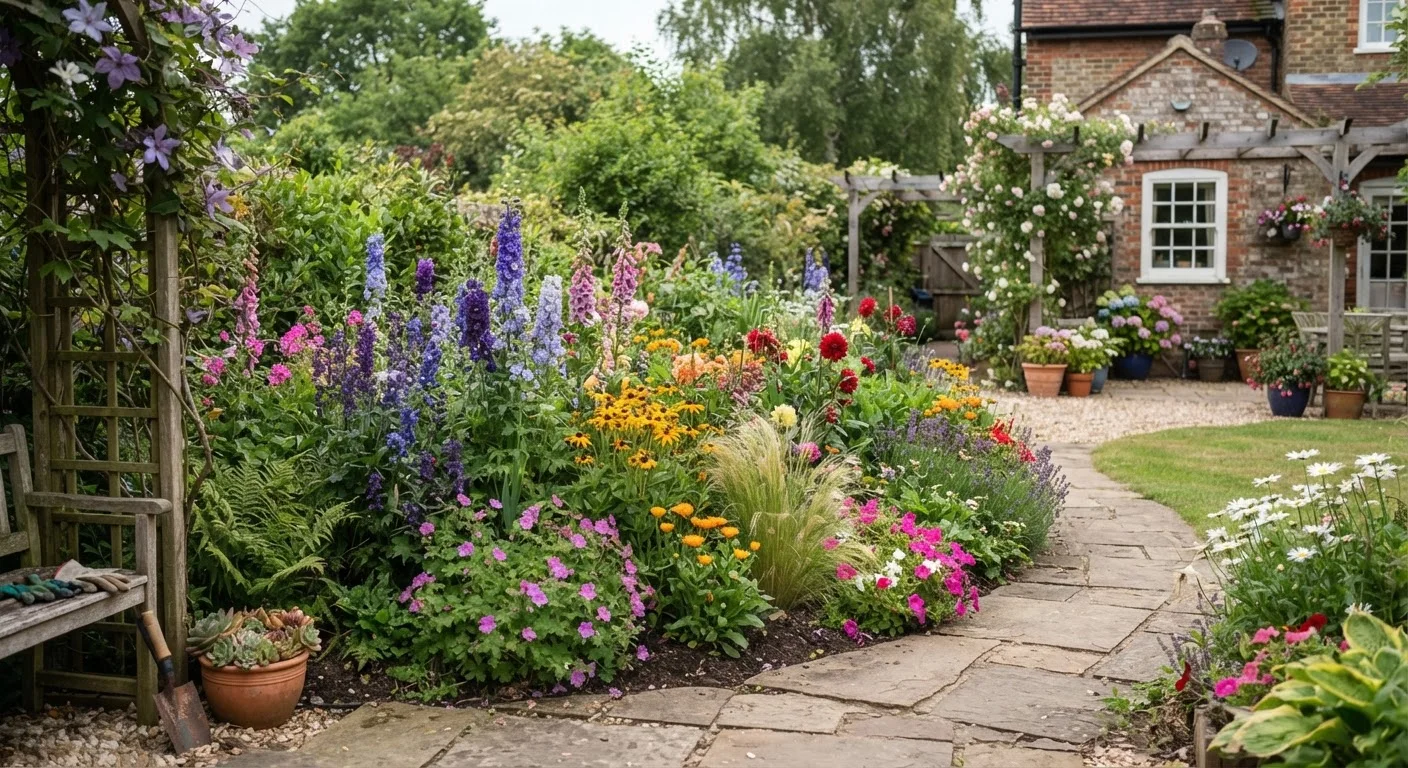
The most visually satisfying and practical gardens treat annuals and perennials as complementary tools, not competing options. A reliable design approach uses perennials as the structural framework - placed in the middle or back of borders - and annuals as the flexible foreground layer that changes with the seasons.
Consider bloom timing when planning. Many perennials have a defined bloom window of two to six weeks. Interplanting annuals that bloom continuously helps maintain colour through the gaps. For example, coneflowers may peak in midsummer, while an annual like salvia or calibrachoa carries colour from May through October.
Wildlife benefit from this layering too. Native perennials like coneflowers and black-eyed Susans support pollinators and seed-eating birds through multiple seasons. For more on designing with wildlife in mind, our article on wildlife-friendly gardening approaches offers practical planting strategies that don't sacrifice visual appeal.
For shaded areas of your garden - where plant selection becomes more constrained - both annuals (impatiens, begonias) and perennials (hostas, astilbe) have shade-tolerant representatives. Our shade plant reference guide helps narrow down which species suit low-light conditions specifically.
Making the Decision for Your Garden
Start by asking a few practical questions. How much time can you realistically dedicate to your garden each season? If replanting annually feels manageable and you enjoy seasonal redesigns, annuals may feature prominently in your plan. If you prefer a garden that largely takes care of itself once established, lean toward a perennial-heavy design.
Also consider your garden's life stage. A first-year garden with bare soil benefits from the quick impact of annuals while perennials get established. Over subsequent years, gradually reduce the annual footprint as perennials fill in and mature.
Regional climate is non-negotiable. In zones with harsh winters (generally USDA Zones 3-5), verify that chosen perennials are rated for your zone before investing heavily. A plant marketed as a perennial in warmer climates may simply not survive your winters.
Finally, think about how your plant choices connect to the broader design of your outdoor space. A thoughtfully planted garden - whether annual-forward or perennial-dominant - works best when it suits how you actually use the space. Our piece on designing outdoor living spaces you'll actually use ties planting choices to broader garden layout principles worth considering together.