

| Easiest beginner shade plant | Hosta |
| Most drought-tolerant shade fern | Autumn Fern (Dryopteris erythrosora) |
| Best native shrub for partial shade | Oakleaf Hydrangea (Hydrangea quercifolia) |
| Most challenging shade condition | Dry shade under dense evergreens |
| Recommended mulch depth | 2-3 inches (shredded bark or leaf litter) |
| Division frequency for hostas | Every 3-4 years |
Understanding Shade: Not All Low-Light Conditions Are the Same
Before selecting plants, it helps to know what kind of shade you're working with. Garden shade generally falls into three categories: partial shade (2-4 hours of direct sun), full shade (fewer than 2 hours), and dappled shade (filtered light through a tree canopy all day). North-facing beds, spots hemmed in by fences, and areas under dense evergreens each create different moisture and light conditions - and not every shade plant handles all of them equally well.
Soil quality matters especially in shaded areas. Tree roots compete for nutrients and moisture, so amending with compost before planting can make a significant difference in plant establishment and long-term vigor.
| Easiest beginner shade plant | Hosta |
| Most drought-tolerant shade fern | Autumn Fern (Dryopteris erythrosora) |
| Best native shrub for partial shade | Oakleaf Hydrangea (Hydrangea quercifolia) |
| Most challenging shade condition | Dry shade under dense evergreens |
| Recommended mulch depth | 2-3 inches (shredded bark or leaf litter) |
| Division frequency for hostas | Every 3-4 years |
Shade-Tolerant Plants by Category
Perennial Groundcovers
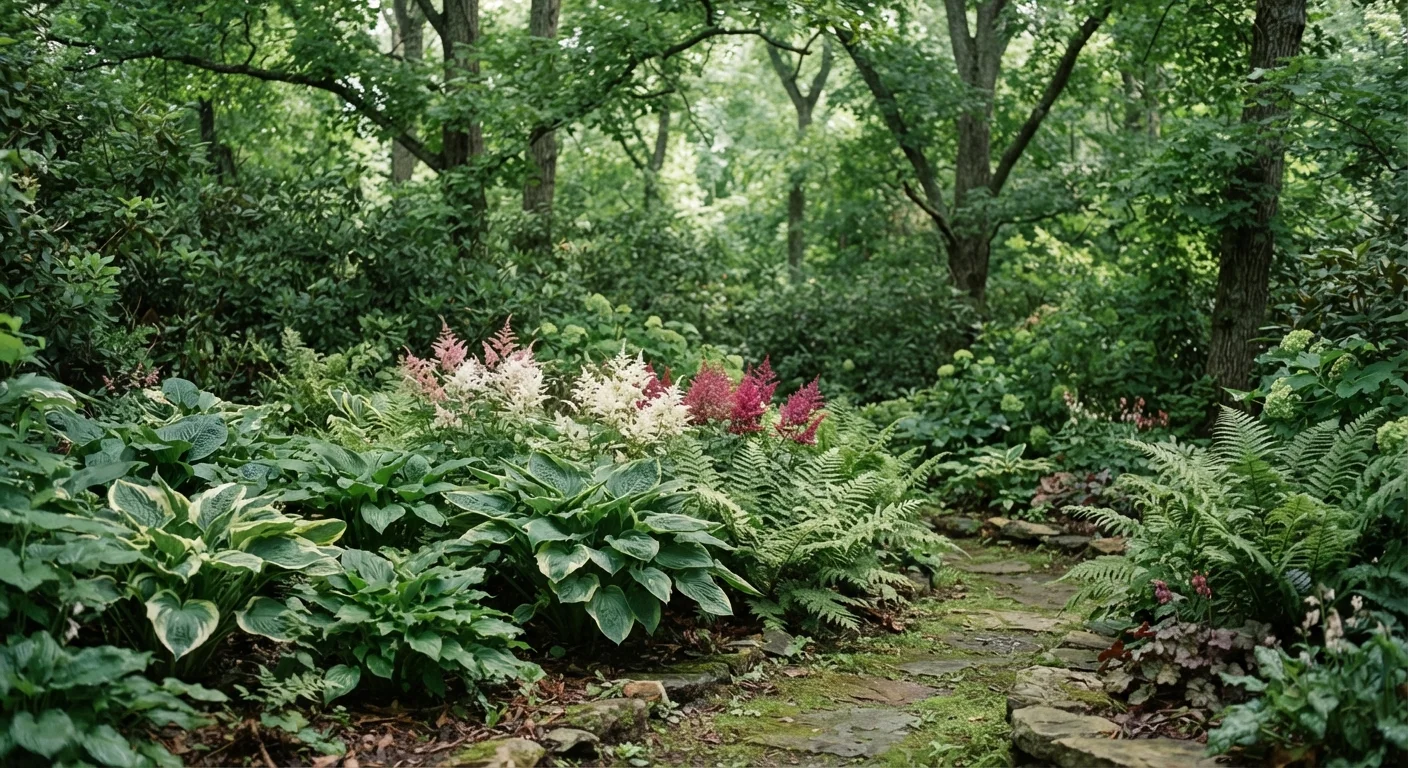
- Hostas - Grown primarily for dramatic foliage in green, blue-green, and variegated forms. Thrives in full to partial shade; prefers consistently moist, well-drained soil. Slug damage is common - mulching can help.
- Lily of the Valley (Convallaria majalis) - Spreads readily via rhizomes; produces fragrant white bell-shaped flowers in spring. Best in partial to full shade. Note: all parts are toxic if ingested.
- Creeping Jenny (Lysimachia nummularia) - Fast-spreading with bright chartreuse foliage; ideal for filling gaps under shrubs.
Ferns
- Autumn Fern (Dryopteris erythrosora) - Semi-evergreen; new fronds emerge coppery-red before maturing to deep green. Tolerates dry shade once established.
- Japanese Painted Fern (Athyrium niponicum) - Silvery, wine-tipped fronds that add texture and color contrast. Prefers consistent moisture.
- Ostrich Fern (Matteuccia struthiopteris) - Large, vase-shaped native fern suited to moist, shaded spots. Can colonize quickly.
Flowering Shade Perennials
- Astilbe - Feathery plumes in white, pink, red, or purple; blooms late spring through summer. Needs regular moisture; avoid dry shade.
- Bleeding Heart (Lamprocapnos spectabilis) - Arching stems of heart-shaped flowers in spring. Goes dormant in summer; pair with late-emerging plants to fill the gap.
- Coral Bells (Heuchera) - Grown for richly colored foliage (purple, caramel, lime) with small airy flower spikes. Tolerates partial to full shade.
Shrubs for Shade
- Mountain Laurel (Kalmia latifolia) - Native broadleaf evergreen with clusters of intricate flowers. Best in partial shade with acidic soil.
- Oakleaf Hydrangea (Hydrangea quercifolia) - Large white flower clusters, exfoliating bark, and brilliant fall foliage. Handles partial shade well.
- Japanese Kerria (Kerria japonica) - Bright yellow flowers in early spring; arching green stems are attractive in winter.
Dappled shade
Intermittent, filtered light created by tree canopy overhead. Light levels shift throughout the day rather than remaining consistently dim or bright.
Rhizome
A horizontal underground stem that allows certain plants to spread vegetatively. Plants like lily of the valley and ostrich fern spread this way, often colonizing large areas over time.
Semi-evergreen
A plant that retains some foliage through mild winters but may lose leaves in colder climates. Autumn fern is a common example in shade gardens.
Dry shade
A particularly challenging garden condition where low light combines with low soil moisture, often found under dense evergreens or large surface-rooting trees like maples.
Crown division
The process of splitting a clumping perennial at its root crown to produce multiple new plants. Commonly used for hostas, astilbe, and heuchera to refresh vigor.
For more on structuring your selections between annual and perennial types, see our guide to annual vs. perennial plants.
Design and Maintenance Tips for Shade Gardens
Shade gardens tend to rely on foliage contrast rather than color alone - pairing bold, broad hosta leaves with fine fern fronds or variegated coral bells creates visual interest without requiring sun-loving flowers. Layering heights (groundcovers, mid-height perennials, background shrubs) adds depth to spaces that might otherwise feel flat.
Watering needs vary: dappled shade under deciduous trees dries out faster in summer than you might expect. Check soil moisture 2-3 inches down before watering, especially during dry stretches. Mulching with 2-3 inches of shredded bark or leaf litter helps retain moisture and moderate soil temperature.
Divide clumping perennials like hostas and astilbe every 3-4 years to maintain vigor and prevent overcrowding. Spring, just as new growth emerges, is generally the best time for division in most US regions. For more timing guidance, the seasonal garden task checklist is a practical reference to keep nearby.
If your shaded area also sits on a slope, erosion can be an added challenge. Groundcovers like creeping jenny or ferns with fibrous root systems can help anchor soil - for more on this, see landscaping on a slope.
Shade gardens also naturally support local wildlife. Native ferns, coral bells, and oakleaf hydrangea provide shelter and foraging opportunities for insects and birds - a topic explored further in our wildlife-friendly gardening guide.