

Key Takeaways
- Erosion on slopes is driven by surface water runoff stripping away unprotected topsoil.
- Deep-rooted plants are one of the most effective long-term erosion control tools available.
- Retaining walls and terracing can turn steep, unusable slopes into functional garden beds.
- Proper drainage channels and swales prevent water from pooling at the base of a slope.
- Slopes steeper than a 2:1 ratio often require professional engineering input.
- Groundcover plants, mulch, and erosion-control fabric work best when used together.
Slope Landscaping
Slope landscaping refers to the practice of designing, planting, and engineering a hillside or inclined yard to prevent soil erosion, manage stormwater runoff, and create a usable, attractive outdoor space. Unlike flat gardens, sloped terrain requires specific techniques to keep soil in place and direct water safely. The goal is to work with the natural grade rather than against it.
Slopes steeper than 2:1 (a 2-foot horizontal run for every 1-foot drop) typically require engineered solutions such as retaining walls, geotextile fabric, or bioengineering - consult a licensed landscape contractor or civil engineer for grades in this range.
Why Slopes Create Unique Landscaping Challenges
A sloped yard is one of the more demanding landscaping scenarios a homeowner can face. Gravity works against you constantly: rainwater accelerates as it travels downhill, picking up topsoil and depositing it at the base of the slope or into storm drains. Over time, this process - called sheet erosion - strips away the fertile upper layer of soil, leaving compacted, nutrient-poor ground that's hard to plant in.
Beyond soil loss, sloped terrain concentrates runoff in ways that can damage foundations, undercut hardscaping, and create muddy low points in a yard. The steeper the grade, the faster these problems develop. Understanding the relationship between water movement and soil stability is the first step toward tackling a hillside effectively.
~1 billion tons
Topsoil lost to erosion in the US annually
The USDA estimates that the United States loses approximately 1 billion tons of topsoil per year to wind and water erosion, with sloped and unprotected land particularly vulnerable.
75-90%
Rainfall runoff reduction from dense groundcover
Research from land management studies consistently shows that dense vegetative cover - compared to bare soil - can intercept and absorb the majority of rainfall before it becomes surface runoff.
3:1
Slope ratio where mowing becomes unsafe
Landscape safety guidelines generally identify a 3:1 horizontal-to-vertical ratio as the threshold beyond which conventional lawn mowing equipment becomes unsafe to operate.
Structural Strategies: Retaining Walls and Terracing
When a slope is too steep for plants alone to hold, physical structures step in. Retaining walls hold back soil, create level planting beds, and can dramatically change how a hillside looks and functions. Common materials include natural stone, concrete block, timber, and gabion baskets (wire cages filled with rock). Each has different aesthetic, cost, and longevity profiles.
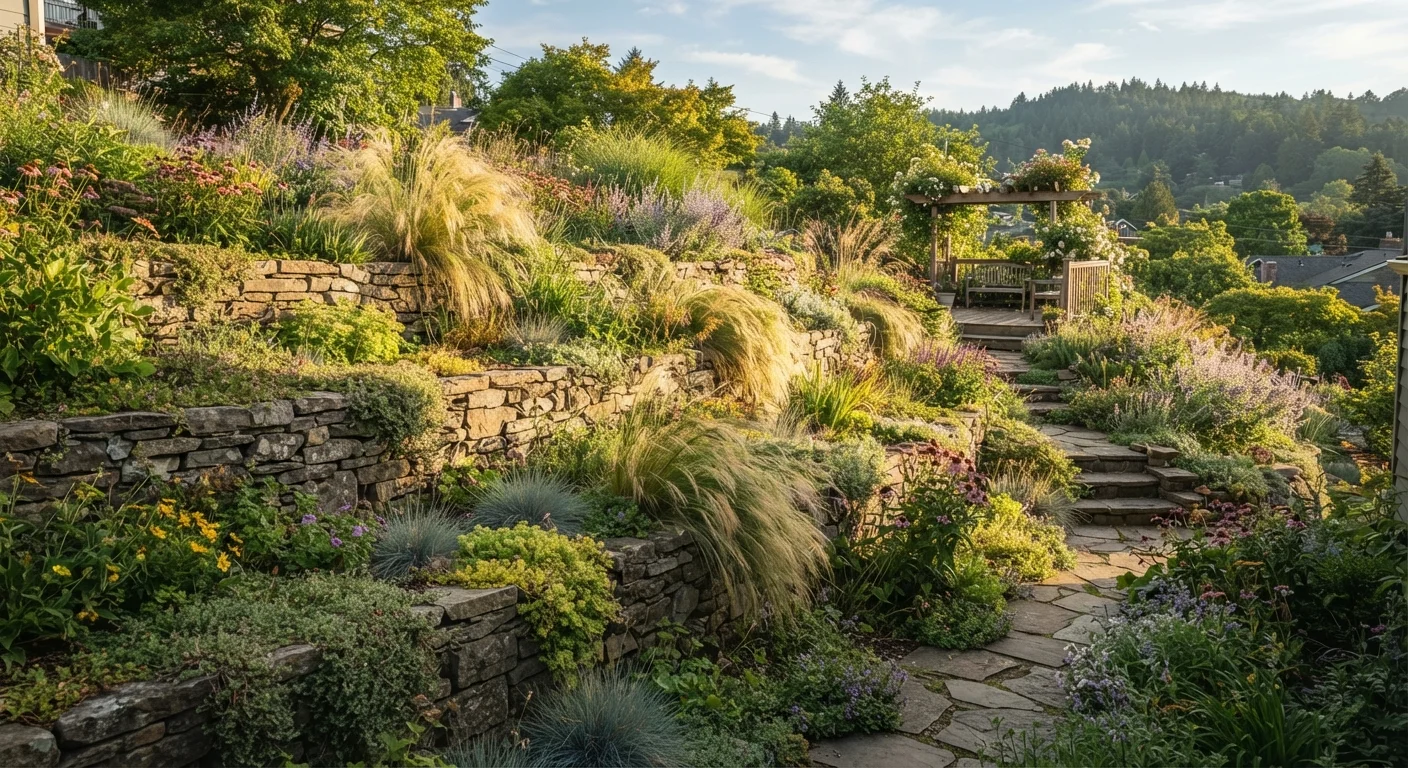
Terracing is essentially a series of retaining walls that step down a slope, converting a hillside into a series of flat or gently graded beds. This approach not only halts erosion but opens the slope to planting options - including raised beds - that would otherwise be impractical. See our guide to raised beds vs. in-ground planting to consider how terraced beds can suit different gardening goals.
Important note: In most US jurisdictions, retaining walls above a certain height (often 3-4 feet) require a building permit and must meet engineering standards. Check with your local building department before construction, and consult a licensed contractor for any wall supporting significant soil loads or located near structures.
Managing Drainage: Swales, French Drains, and Grading
Managing where water goes is just as important as holding soil in place. Uncontrolled runoff doesn't just cause erosion - it can pool against foundations or saturate areas at the base of a slope, creating drainage problems that persist long after a storm.
- Swales: Shallow, gently graded channels - often vegetated - that redirect surface water horizontally across a slope, slowing its descent and dispersing flow across a wider area.
- French drains: Subsurface perforated pipes wrapped in gravel and filter fabric that capture groundwater or concentrated surface flow and route it to a safe outlet point.
- Regrading: Reshaping the slope itself to create a more gradual grade or to redirect flow away from problem areas. This typically requires earthmoving equipment and professional expertise.
If your slope receives water from gutters or downspouts, extending downspout outlets away from the slope - or diverting them to a rain garden or dry creek bed - can significantly reduce the volume of water triggering erosion. For gardens with ongoing irrigation needs, drip irrigation is generally preferred on slopes over overhead sprinklers, which can saturate the surface and accelerate runoff.
Test Your Drainage Before Planting
Before committing to plants or hardscaping, observe your slope during and after a moderate rainstorm. Note where water concentrates, where it exits the property, and whether any areas stay wet for more than 24 hours. This simple observation tells you where drainage intervention is needed most - and prevents planting in spots that will stay waterlogged.
Planting Strategies That Stabilise and Beautify
Plants are the most sustainable long-term solution for slope stabilisation. Their roots bind soil particles, their canopies intercept rainfall before it strikes bare earth, and their organic matter improves soil structure over time. The key is choosing plants suited to the slope's specific conditions - aspect (sun vs. shade), soil type, and rainfall patterns.
Groundcovers like creeping phlox, English ivy alternatives (such as native species), and low-growing junipers spread horizontally to cover bare soil quickly. Ornamental grasses offer deep, fibrous root systems that are especially effective at holding soil. Shrubs - particularly those with aggressive lateral root spread - provide structural anchoring on steeper sections.
For shaded hillsides, shade-tolerant plants are essential; our reference guide to shade-tolerant plants covers options by growth habit and care needs. Where possible, native plants are particularly valuable: they're adapted to local rainfall patterns, support local wildlife (see our wildlife-friendly gardening guide), and often require less supplemental water once established.
During the establishment period - typically the first one to two growing seasons - mulch and biodegradable erosion-control fabric help hold soil until roots take over. Apply mulch at 2-3 inches deep, avoiding direct contact with plant stems, and use wood chip or shredded bark rather than lightweight materials that wash away easily.
Turning a Slope Into a Feature
A hillside doesn't have to feel like a problem to manage - it can become a defining element of your outdoor space. Cascading plantings, stone steps, and terraced seating areas can transform a challenging grade into a layered, visually compelling garden. For inspiration on integrating these elements into a broader outdoor design, explore our guide to designing outdoor living spaces that you'll actually use.
Think of steep sections as an opportunity to plant species you couldn't use in a flat bed - drought-tolerant plants often thrive on well-drained slopes, and specimen shrubs gain visual impact when viewed from below. The key is combining the structural work (drainage, walls, terracing) with the right plant palette so that form and function reinforce each other across the seasons.
Slope landscaping rewards patience. Plants need a season or two to establish, and drainage solutions may need minor adjustments after heavy rainfall. Approaching it as an evolving project - rather than a one-time installation - leads to better, more durable results.
“The most durable landscapes work with the land's natural tendencies rather than imposing a design that fights gravity, water, and soil movement at every turn. On a slope, that means understanding how water moves before you plant a single thing.”
— American Society of Landscape Architects, Professional association representing landscape architecture in the United States